

Par-3s are booming at resorts and private clubs, but decades of closures left gaps in local markets. Can operators reinvent short courses as bridges for the next generation?
————
This past July, Big Cedar Lodge in Ridgedale, Missouri, caught the entire golf industry’s attention when its latest course Cliffhangers, an 18-hole, par-3 layout, opened to the public.
Simply put, the course is absolutely stunning, as golfers may think they’re dreaming while playing it.
Imagine this: 400 feet of elevation changes, limestone cliffsides, panoramic mountain views, rock outcroppings, waterfalls and a hole inside of a cave.
The short course was created to enamor, inspire and entertain golfers, all while following suit with a movement: the flourishing of par-3s at resorts and private clubs across the United States.
Consider the other short courses that have opened throughout the last few years, many designed by some of the world’s most renowned course architects, as an example of this movement.
In 2012, Bill Coore and Ben Crenshaw created Bandon Dunes Golf Resort’s Bandon Preserve, a 13-hole course near the Pacific Ocean. Due to this layout’s success, they recently developed another short course, Streamsong Golf Resort’s The Chain.
In 2024, Whitman, Axland & Cutten (WAC Golf) designed another short course at Bandon Dunes, known as Shorty’s. And in 2017, Gil Hanse and Jim Wagner created Pinehurst Resort’s The Cradle, a par-3 course that many believe helped spark the modern-day short course explosion.
BOYNE Golf in Petoskey, Michigan, opened the 9-hole Doon Brae this year, and it’s preparing to create three more 9-hole, par-3 courses across the U.S.
Garland Lodge opened Sawyer Course this year in Lewiston, Michigan. A 10-hole, reversible par-3 course, Sawyer may lead the way to other reversible short courses down the road.
Even major champions have joined the short course train.
Tiger Woods and TGR Design are involved with Pebble Beach’s The Hay, along with an upcoming municipal par-3 course in Augusta, Georgia, known as the Loop at the Patch. Jack Nicklaus’s and Gary Player’s companies (Nicklaus Design and Gary Player Design) have created several short courses as well.
The bottom line? The short course “boom” has begun and it’s likely here to stay. It could change the game of golf in various ways — possibly forever.
The big boom
The National Golf Foundation released eye-catching statistics during its midyear update. The report said that over the past five years, 37% of all new golf course openings were short courses and three-fifths of these short courses opened at a higher-end private or resort destination.
In all, 41 short courses were created between July 2020 and July 2025. Without question, this is a noteworthy amount, especially since short courses account for 5% of the U.S. supply. It speaks to the newfound interest in short courses.
“Course development is up compared to recent years during the golf course industry’s supply correction,” said Greg Nathan, NFG president and CEO. “It’s still limited, so we don’t want to overplay the current development landscape but given the existing wealth of traditional supply and the gravitation towards offering golf in fresh, new ways, a much higher proportion of new construction is comprised of short courses.”
What are the reasons for a sharp rise in demand for short courses? Will this surge lead to a steady increase in supply too?
Recent trends depict some critical aspects that stand out. First, short courses are often unique and creative. They’re changing the way people play and perceive golf. Rather than using every club in their bag, golfers can learn how to score with just a few clubs, primarily short irons and wedges.
This variety is increasing the overall player base due to short courses being less intimidating than 18-hole layouts. Less daunting courses lead to more confidence among people, resulting in an expansion in golf’s audience. Age ranges are expanding too, as younger and older individuals are teeing up.
Amid the current movement, some facilities aren’t building new short courses. Older facilities are being transformed from traditional 9- or 18-hole layouts to short courses that feature modern amenities including full food and beverage menus, piped-in music and lights for night play.
8AM Golf is transforming courses, especially in metropolitan areas. In 2020, it opened 3’s in Greenville, South Carolina, a 12-hole, par-3 course with a casual dress code, along with a laid-back BBQ “grubhouse.” Such novel concepts may help diminish a primary issue with short course development: the lack of public options beyond destination properties.
“Most short course openings have been found at private clubs or resorts,” Nathan said. “The decline in short course supply is predominantly limited to individual, standalone daily fee facilities.”
The missing middle
The decline in short course supply is predominantly limited to standalone daily fee facilities. Roughly 800 par-3 and executive courses closed between 2004 and 2024, according to a report by NGF. As a result, the U.S. had 23% fewer par-3 and 17% fewer executive courses in 2004 versus last year. Short course shutdowns comprised 20% of all closures during that time span. Most of these short course closures were associated with privately-owned, daily fee facilities that had aging courses. These courses had financial issues, expensive infrastructure needs or both. A minimal number of course closures were connected to resorts. From time to time, some resorts would sell off a portion of their land or repurpose their property, leading to short course closures.
Major metropolitan areas were impacted by short course closures more than anywhere else. Why? They tend to have the most public and municipal par-3 and executive courses, and they’re located in areas that generally have higher land values. Golfers in these areas lose opportunities to potentially bridge between “golfertainment” and “green grass” options and lose potential new golfers.
“Short and par-3 courses present transitional facilities where off-course golfers can sample the on-course game with the least amount of friction,” Nathan said. “All short courses aren’t created equal, so we would encourage them to become places loaded with positive golf energy — embracing a more casual vibe built on music, street food and fun, unburdened by golf’s intimidating orthodoxies.”
NGF research shows that not only have course closure rates slowed in the past five years, but U.S. facilities are generally positioned much better financially today than before the pandemic.
“Short courses take less time to play, can be appealing to a broader range of players and aren’t as intimidating for newcomers or less experienced players,” Nathan said. “In certain situations and locations with strong demand, they’ve proven extremely popular and engaging.
“Right now, the more traditional short course trend is one driven by golf traveler needs and by smart resort operators who want to offer a golf experience for guests without the time window to play a big-course 18,” he said. “We see how popular these short courses are on arrival or departure days. It’s about entertaining guests and optimizing both golfer satisfaction and revenue.”
The opportunity
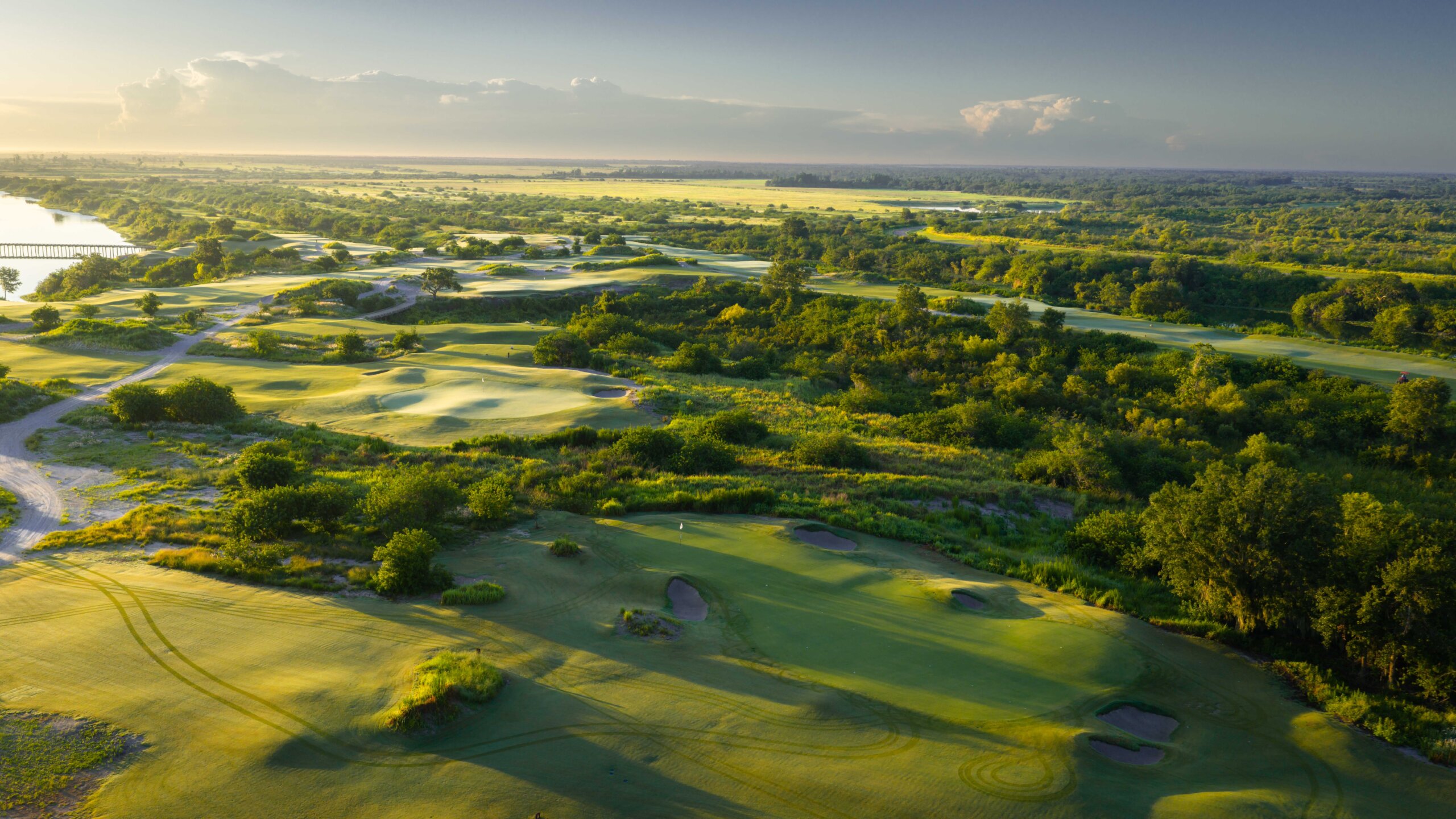
In 2023, the Streamsong Golf Resort in Bowling Green, Florida, opened a 19-hole short course known as The Chain. A Coore & Crenshaw design, the course was developed to prioritize “fun over difficulty and formality,” said Ben Rhodes, director of sales and marketing.
“Coore & Crenshaw has created an intentional departure from standard golf. No tees, no par, just fun,” Rhodes said. “It leaves the experience up to the golfer and their group and makes it a more social, casual golf experience.”
Since there aren’t any tee markers, golfers can choose where they’d like to start playing each hole. The course can be one long hole, nearly 300 yards, or short. The experience of each hole is up to every golfer. And since there isn’t any par, there isn’t the stress of achieving a certain score.
The Chain is split between 6-hole and 13-hole loops. Groups on the 3,000-yard course have flexibility to choose which loop they prefer.
Rhodes said The Chain will help increase golf’s popularity since it’s less intimidating and time-consuming than a full 18-hole course, leading to a wider customer base.
“We’re seeing beginners enjoying their experiences at The Chain,” Rhodes said. “Besides the course’s fun atmosphere and timeliness, new golfers have also been drawn to its food truck and music. Our intentional departure from standard golf has led to a great atmosphere for our guests.”
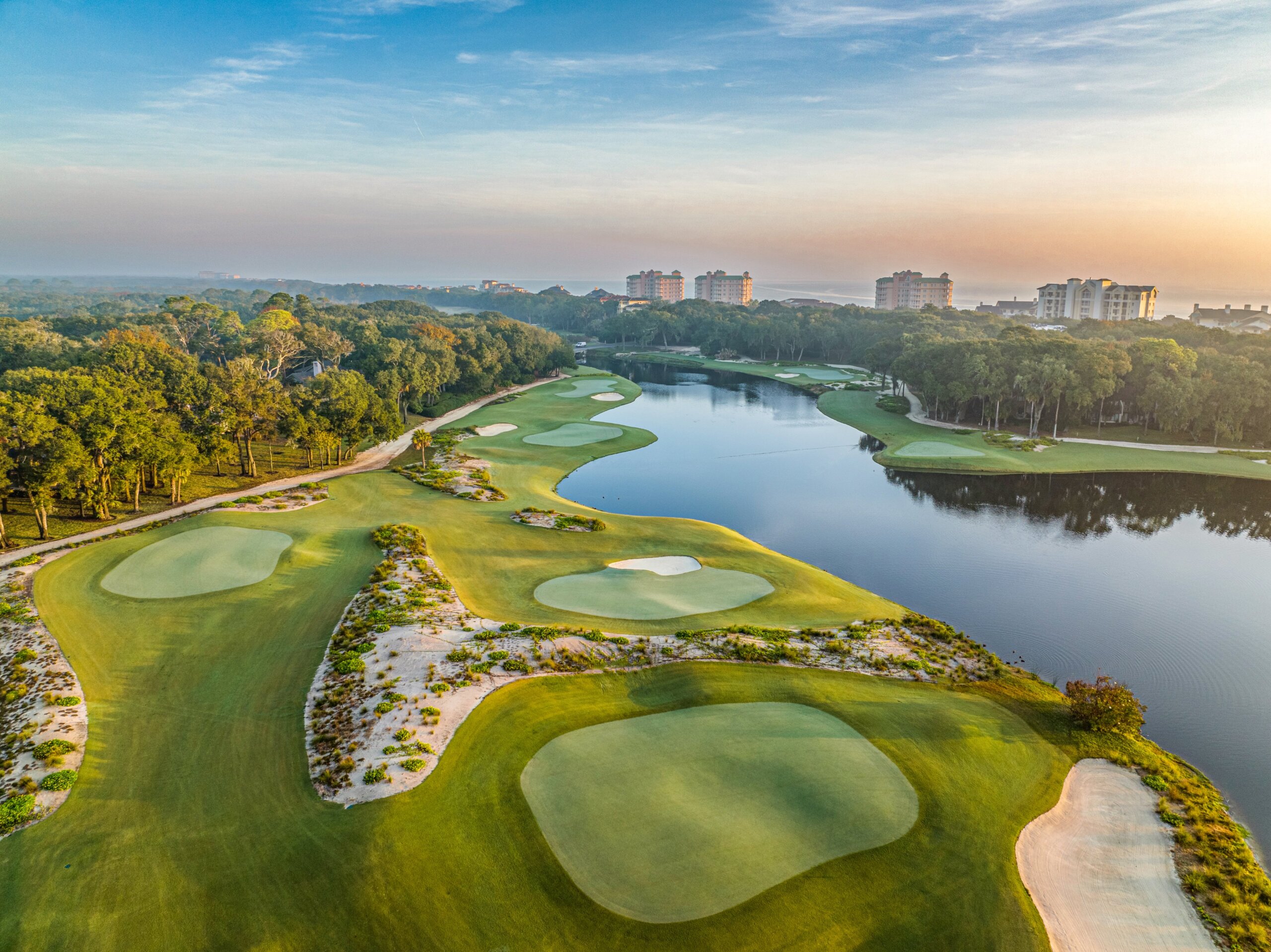
Bandon Dunes Golf Resort in Oregon has deviated from standard golf too, with Bandon Preserve, which opened in 2012, and Shorty’s in 2024. Both courses have had positive influences on guests and the community members.
“We allow eightsomes on the short courses,” said Michael Chupka Jr., director of communications. “Sometimes guests don’t have time to play 18 holes after arrival or on the day of departure. The short courses allow guests to stretch their legs, settle into the resort and kick off their trips.”
Between the two courses, guests have 32 holes they can play, allowing them to relish one layout when they first arrive and another before they leave.
“Time is valuable in our busy world,” Chupka Jr. said. “Our short courses take less time, yet golfers can still be social, get exercise and enjoy the game they love.”
All net proceeds from both courses directly fund the Bandon Dunes Charitable Foundation, which supports conservation, community and the economy on Oregon’s southern coast. Golfers directly help other people, while teeing off on holes built to “stand their own” on any of Bandon Dunes’ six 18-hole courses.
“Our biggest advice for resorts and public and private facilities is to not view short courses as afterthoughts,” Chupka Jr. said. “Visualize them as complement experiences that can blend seamlessly into full-length golf experiences.”
Raymond Hearn Golf Course Designs, Inc. is preparing to create three private club short courses. Perhaps as a sign of what’s to come, the architecture company is set up to develop six public short courses too. Since COVID-19, president and founder Raymond Hearn has become more involved with short courses than ever before.
While reflecting on the past five years, Hearn believes the short course boom is due to three factors. First, the pandemic led to an increase in golf’s popularity. Second, he said that short courses enable golfers of all ages and experience levels to become involved in the game more affordably, in comparison to typical 18-hole layouts. Finally, short courses require less land than regulation courses.
“Short courses are here to stay,” he said. “The timing couldn’t be better.”
Although he doesn’t believe that existing 18-hole regulation or championship courses should be converted into short courses, he does think additional land next to these courses can — and should — be converted into short courses. He advises clubs to poll their members or customers to see if they’re interested in short courses. From there, he recommends clubs contact companies like his to determine future plans, costs and revenues.
Hearn’s company recently completed BOYNE Golf’s Doon Brae, a 9-hole, par-3 that combines fun with nature, golf history and greens inspired by Hearn’s favorite holes around the world.
“It’s great fun for everyone, and everyone can play it,” Hearn said.
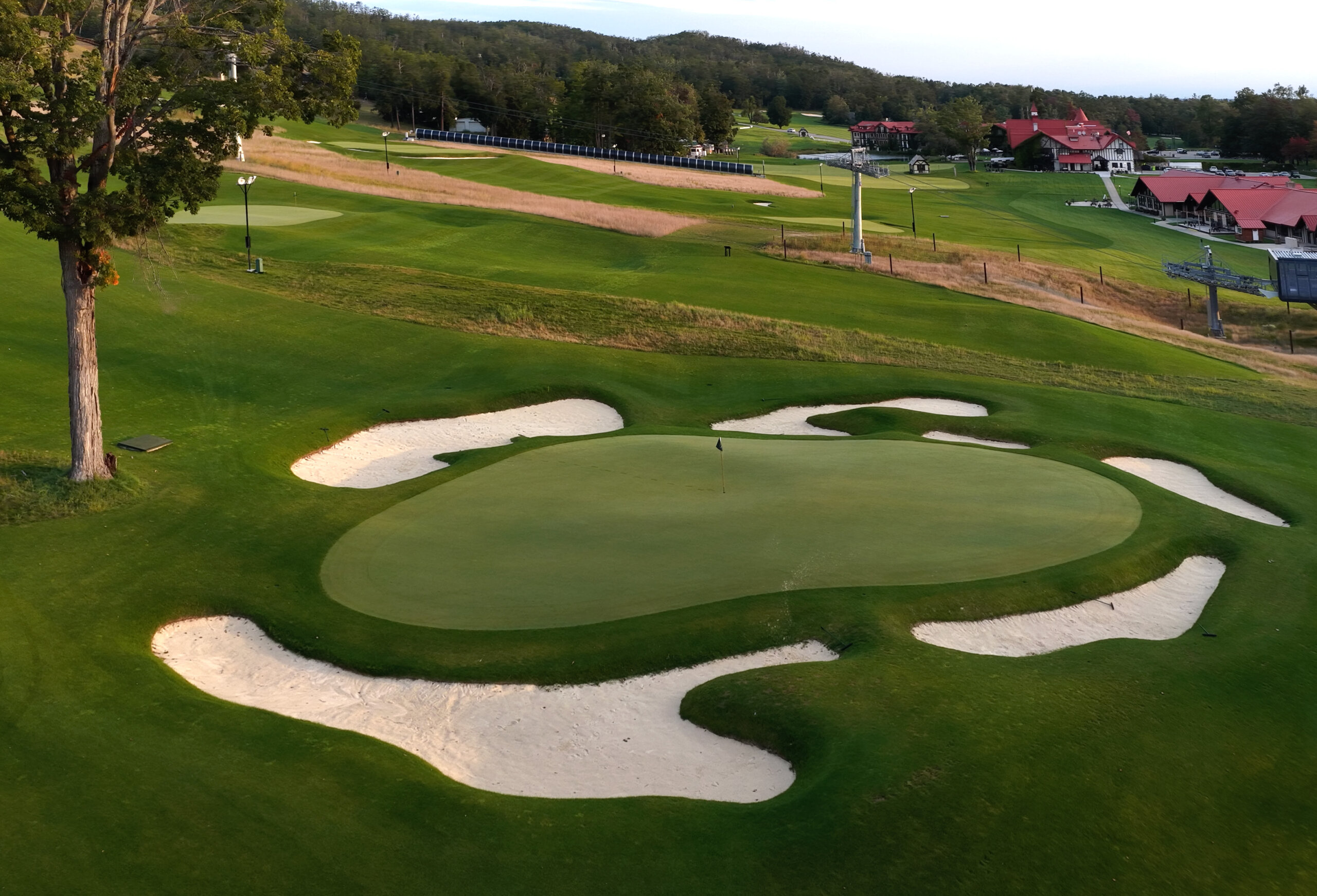
Beau Welling, founder and CEO of Beau Welling Design, said the popularity of recreational activities has increased substantially in the U.S. during the past 10 years.
A key reason?
“Short courses are unstructured by time, which resonates with people,” Hearn said.
Short courses’ playability is also critical. By removing long shots, short courses provide all golfers with a chance to compete.
“Short courses work best when they extend the range of what a golf facility can be,” he said. “Golf should be fun and recreational. It can also be more casual with lights and music.”
Welling recently co-designed Omni PGA Frisco’s The Swing, which is lit at night. Located at Fields Ranch in Frisco, Texas, the course operates out of a building known as The Icehouse, which has food and beverages.
Another design, Omni Amelia Island Resort & Spa’s Little Sandy in Fernandina Beach, Florida, has music playing throughout the course. Guests can enjoy food and beverages on each of the short course’s 10 holes.
The entry point
Due to short courses’ ever-rising popularity, Welling said they’ve also “become an entry point into golf for many people.” His team has approached its short courses’ designs with all players in mind.
“The ball can be played on the ground and greens can be approached with a rolling shot,” he said. “Our short courses are fun for really good players and super accessible for beginners. That’s important in presenting golf in a different way and helping to grow the game.”
As shown by some properties across the United States, short courses aren’t just fun additions, but they’re also valuable infrastructure for golf’s overall growth cycle. While considering their audiences, facilities of all types — private, public and resort — can potentially continue the short course movement for many years to come.
“In instances where short courses are reimagined by forward-thinking entrepreneurs and operators, it’s critical they’re in areas that have the golfer base and demand to support them,” Nathan said. “Some short courses will be better positioned toward newer, less-experienced players, while others, such as those we see at private clubs and high-end resorts, tend to be geared more toward avid participants.”
Over time, there might be a better balance between new short courses at public facilities and those at resorts and private facilities.
“Short courses can be great amenities for all types of facilities,” Hearn said. “With the right design team and plan, they’ll attract and retain golfers at resorts and public and private facilities alike.”
(This story originally appeared in the November/December 2025 issue of Golf Inc.)