

In recent years, more golf clubs — private, public and semi-private — have been breaking large course renovations into phases.
This shift has occurred for myriad reasons: reducing member disruption, spreading out costs, allowing more time for permits and materials and easing scheduling pressure.
To learn about the trend, and what it means for architects, contractors and suppliers, and how club and course owners can succeed long term, Golf Inc. spoke to several industry professionals. They shared strategies for managing phased renovations successfully.
Establishing realistic timelines
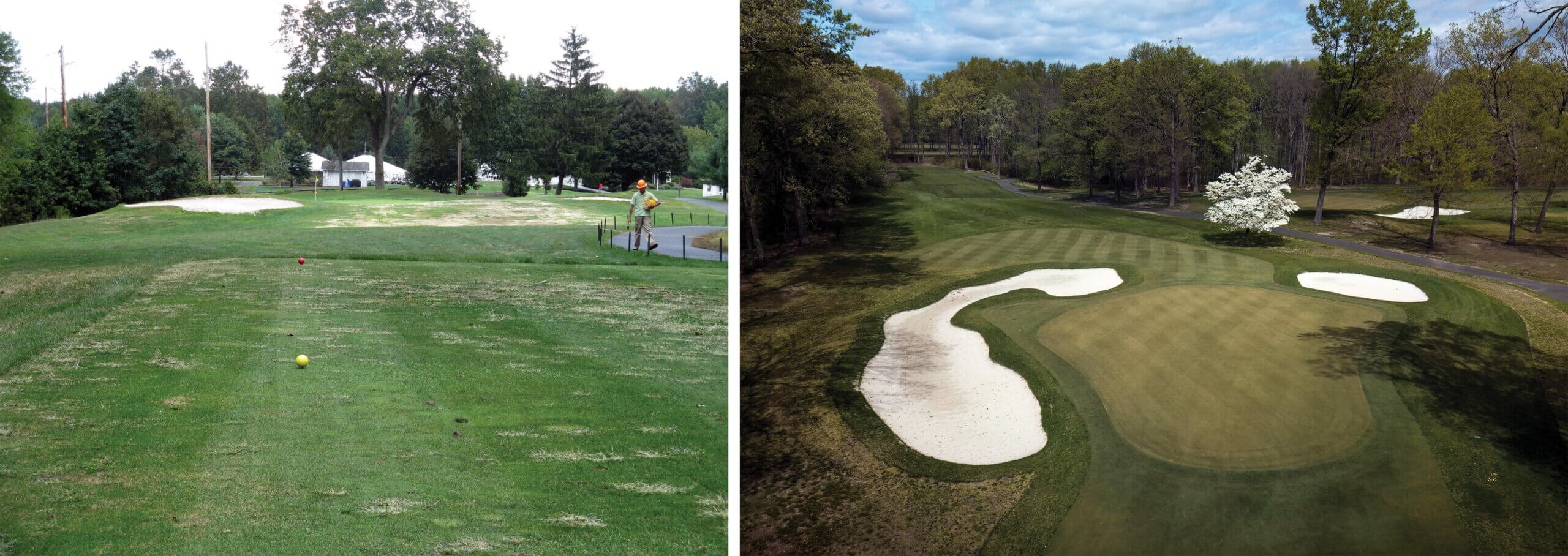
As phased renovations grow in popularity, Brian Costello, principal of JMP Golf Design Group, said timelines are a direct result of a project’s scope, a contractor’s availability and the length of the phasing.
“I’d say that the industry is focused on recruiting and retaining employees, as well as keeping an eye on the potential impacts of tariffs,” he said. “Regardless of these potential challenges, advanced planning still rules the day — from selecting your builder and checking their availability to ordering and securing materials in advance.”
Justin Apel, executive director of the Golf Course Builders Association of America, said owners and contractors have been planning further ahead, committing to consistent communication and setting realistic construction timelines and expectations.
“I can’t stress enough how important it is that all parties involved maintain a realistic understanding of a phased renovation project’s timeline,” he said. “Architects’ and builders’ workloads are steady right now.”
Larry Hirsh, president of Golf Property Analysts, agrees and noted that start and completion dates are being pushed because everyone is busy. He added that material availability and economic uncertainty are also prompting more multiyear projects.
Two other factors often lead clubs to phase work, said Chris Wilczynski, owner of C.W. Golf Architecture: project scope and crew size. Smaller crews may work only during shoulder seasons, stretching projects over years, while larger crews can finish in about three months or so depending on how much work they’re doing.
Jason Sloan, director and project manager at Frontier Golf, said construction timelines are impacted by anticipated opening dates, courses’ locations and weather conditions as well.
“Schedules can also be dictated by permit conditions on larger projects,” he said. “For example, earthwork operations might have to start after a certain date and be completed by a certain time of the year, based on environmental, erosion and sedimentation concerns.”
Mark Mungeam, owner of Mungeam Golf Design, said seasonal play patterns are another factor.
“Ninety percent of my projects are under construction from mid-September to late December and then resume in early March until mid-May,” he said. “Few courses want to be under construction during the peak summer season.”
Factoring in costs and availability
Clubs must also bear in mind construction costs. Although costs aren’t influenced by supply chain and shipping issues as much as they were during the pandemic, tariffs and international trade policies are now affecting clubs across the United States.
Since the pandemic, Matt Lohmann, project manager for Wadsworth Golf Construction Co., has noticed a 5% rise in materials costs on a year-to-year basis, on average. Wilczynski agrees, adding that costs will continue to rise by 5% to 10% annually.
“Construction costs on my projects increased significantly during COVID-19,” Mungeam said. “Costs are continuing to increase, based on some uncertainties in the market and contractor availability, but not nearly like they did during the COVID-19 years.”
Contractor availability is also tight. Costello said most are booked through at least 2027. Apel recommends securing a builder as early as possible.
“We are seeing most projects bidding out at least a year in advance, and some clubs are partnering with a contractor as far out as four years,” Apel said.
Wilczynski advises selecting contractors at least a year before work begins. Municipal projects face extra hurdles, Mungeam noted.
“Small contractors can’t get the bonding and larger contractors don’t want the hassle of the increased paperwork and prevailing wage rates,” he said.
At Wadsworth Golf Construction Co., Lohmann said since 2022, most work is now secured one to two years in advance.
The bottom line? Patience will lead to quality, ensuring the entire process is well worth the time and effort that’s required when all is said and done.
“In today’s market, golf course and club owners are spending a lot of money to improve their facilities,” Sloan said. “There is a lot at stake, and they are realizing the importance of quality more than ever.”
Planning for grow-ins and closures
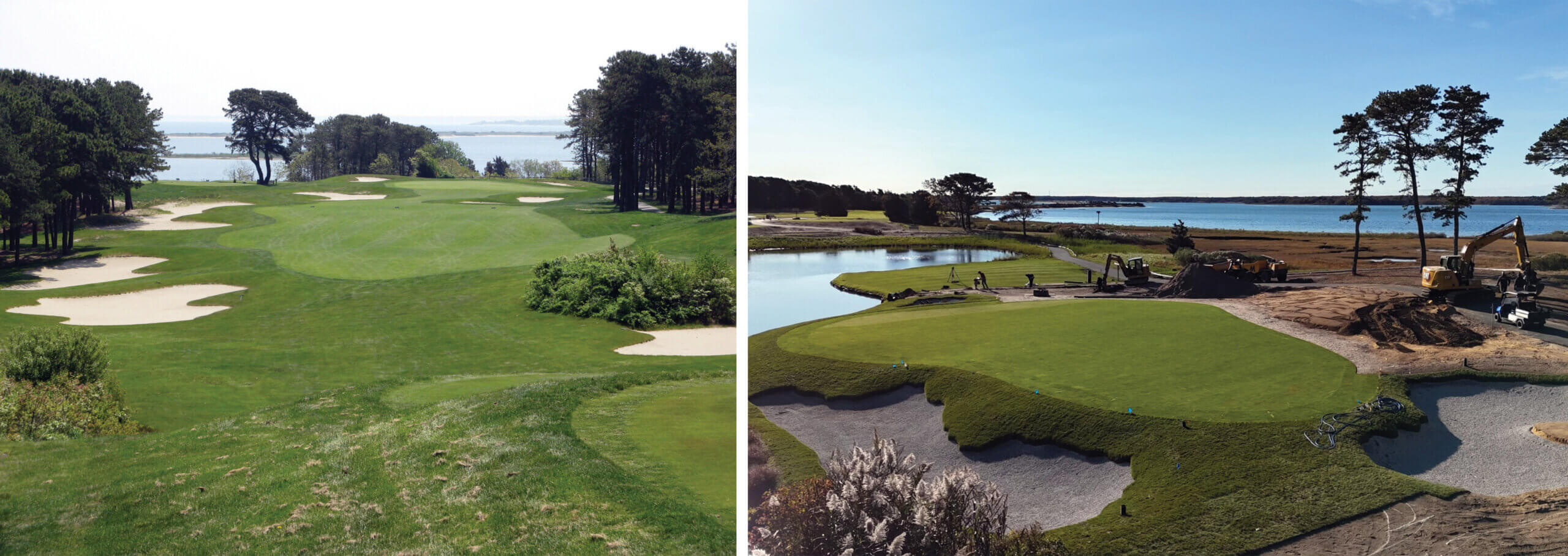
Clubs should plan for grow-in periods and decide whether the course will close in full or in part.
Costello advises clubs to anticipate longer grow-in periods than they originally envisioned and start construction windows earlier if possible.
“If a club’s renovation project goes according to schedule, great,” he said. “But if there are a few bumps in the road, clubs will be ready for them.”
Apel encourages involving superintendents early so grow-in schedules align with climate conditions.
“Builders always rely on golf course superintendents to let them know what the ideal grow-in window is and work their project schedule backwards from there, which is crucial to planning a successful golf course renovation project,” Apel said.
Using sod instead of seed can speed reopening, especially in the Midwest and Northeast, Wilczynski said.
“Superintendents prefer seeding, but sod is an insurance policy that protects the work that course renovators do,” he added. “It really depends on the weather and how long the fall — when sod or seeds are placed during most phased renovations — lasts.”
While phased projects often avoid full closures, partial shutdowns are common.
Mungeam’s four-year renovation of Tamarack Golf Course in New Jersey alternated between its two 18-hole layouts. This timing was critical for the municipal facility, as 18 holes were always available for guests.
At Farm Neck Golf Club in Massachusetts, each nine was closed for about seven months in separate years.
“This phased approach with nine-hole closings worked well because it allowed the work to be done when course play is lightest or non-existent,” Mungeam said. “Thus, the impact on play and revenue was reduced.”
Communicating timelines and setting expectations
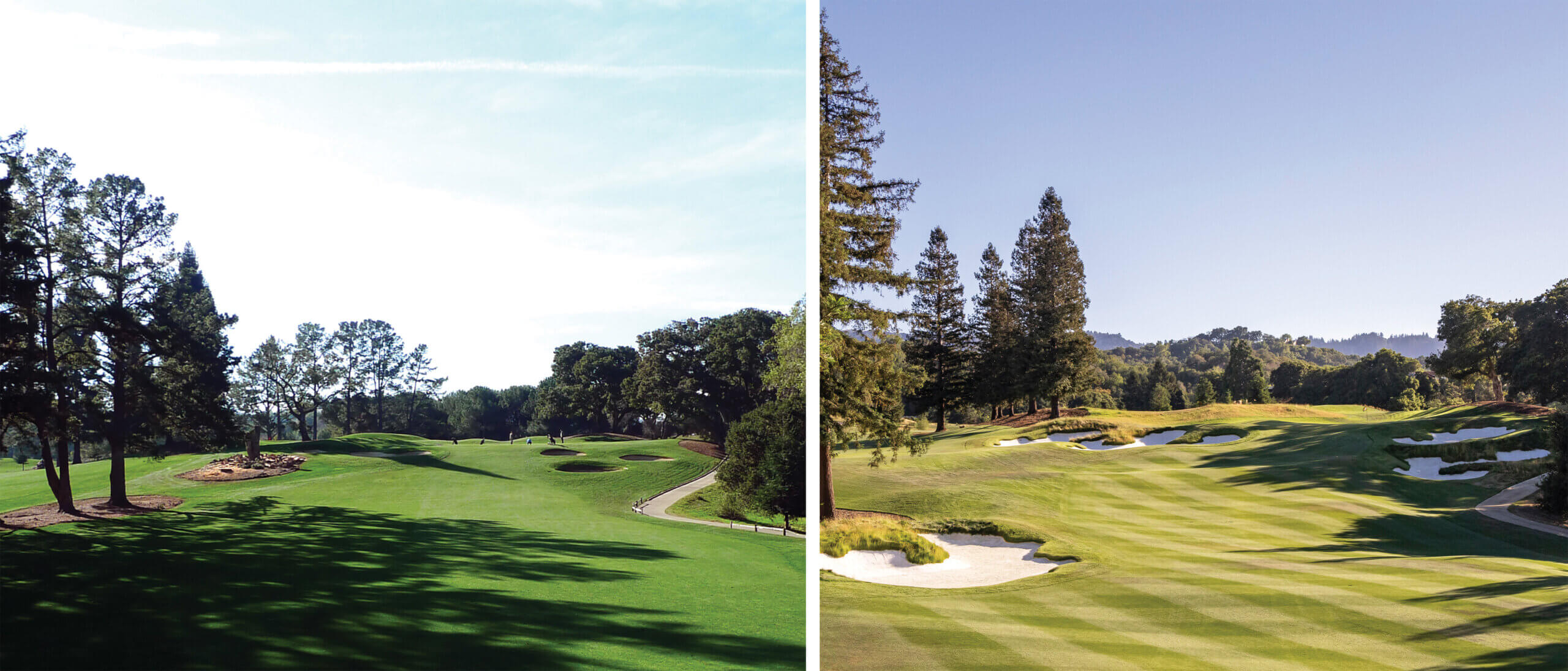
Clear communication with members and stakeholders is critical, experts say. Clubs use surveys, town halls, timelapse cameras, drone flyovers and social media to keep everyone informed.
“We set up timelapse cameras near green complexes to provide a glimpse into the sequencing of the construction process and then combine that with drone flyovers to illustrate the progress,” Costello said. “Effective communication is key throughout the entire project to maintain transparency.”
Apel stressed sequencing work to avoid disrupting later phases, such as installing deeper irrigation pipes before shallower lines. Hirsh advised “under-promising and over-delivering” by setting achievable timelines.
“It is critical that the timeline of the proposed work and how the course will be impacted is communicated,” Wilczynski said. “Everyone needs to be on the same page. Transparency and regular communication are keys to success.”
Mungeam displays renovation plans in the pro shop so all golfers see the schedule. Work is advertised on social media too, minimizing the likelihood of surprises. Contractors also track progress with software but rely heavily on in-person updates, Apel said.
“To keep things on track, contractors welcome open communication and collaboration between owners, architects and builders,” Apel said.
Completing phases
Early in the process, general managers and superintendents should define project goals, whether it’s altering course length, improving playability or reducing maintenance, Apel said. From there, they’ll determine which architects and builders can achieve these particular goals.
Wilczynski develops detailed drawings and often keeps play open by using temporary tees or greens. Whenever possible, he’ll strive to keep the course open for play during his phased renovations.
“For a tee renovation, we can use temporary tees at the beginnings of fairways,” he said. “To renovate greenside bunkers, we can create temporary greens in the fairways to the front of existing greens.”
Hirsh recommends tackling “required” projects, such as irrigation upgrades, before “desired” enhancements.
“For example, if irrigation and enhancements in areas like practice ranges will increase membership, they should focus on that first,” Hirsh said.
Lohmann added that knowing the audience helps determine whether to keep nine holes open or close more for faster completion.
Lohmann recently completed a “nine and nine” renovation at Lake Forest, Illinois’s Conway Farms Golf Club, which enabled all 18 holes to be open from May to August and nine holes to be open in the fall and early spring. They are also finishing a three-year renovation at Wheaton, Illinois’s Cantigny Golf Club, which has 27 holes.
Likewise, Costello’s renovation at Palo Alto Hills Golf & Country Club kept nine holes open at all times.
Wilczynski has managed decade-long phased renovations at Wanakah Country Club in Buffalo, New York, and Shenandoah Country Club in Detroit, Michigan, by maintaining consistent crews and approaches.
“Consistent, regular work must occur from one year to the next, all with the same contractor,” he said. “Consistency from one phase to the next is a must.”
Success for years to come
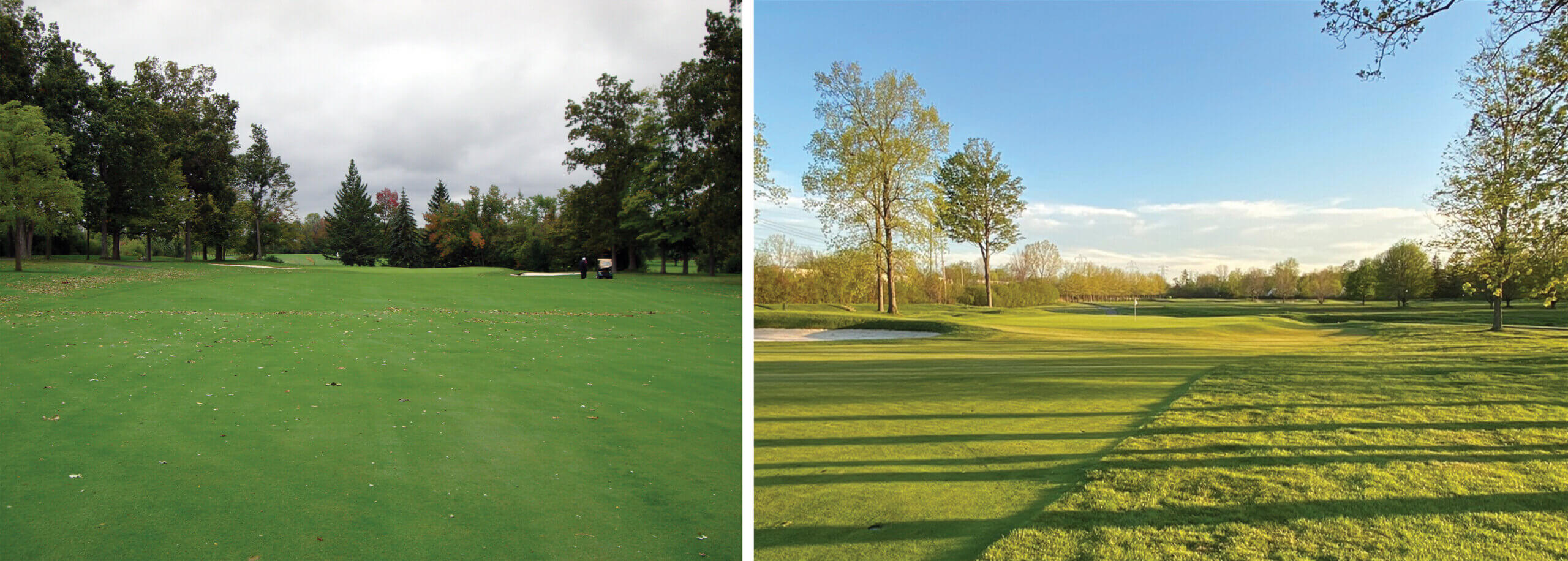
For long-term success, experts recommend keeping the same team together from start to finish. Consistency supports communication, transparency and quality.
“It’s important to get a team together as early as possible and then keep them together until the project is finished,” Costello said. “They’ll determine what needs to be addressed early on and remain focused on those goals.”
This consistency is so important that clubs and courses should consider paying more to confirm they’ll have longstanding phased renovation team members.
While low bids can be tempting, Apel said paying more for a reliable partner can be worth it.
“It’s often better to establish a relationship with a contractor who becomes a partner to the facility,” Apel said.
Great working relationships, among the contractor and other renovation team members, will also increase the likelihood of more successful planning efforts, which is a necessity for phased renovations.
“Successful planning initiatives among loyal team members will lead to smooth renovations, especially when they extend over a few years,” Apel said.
(This story originally ran in the September/October 2025 issue of Golf Inc.)