

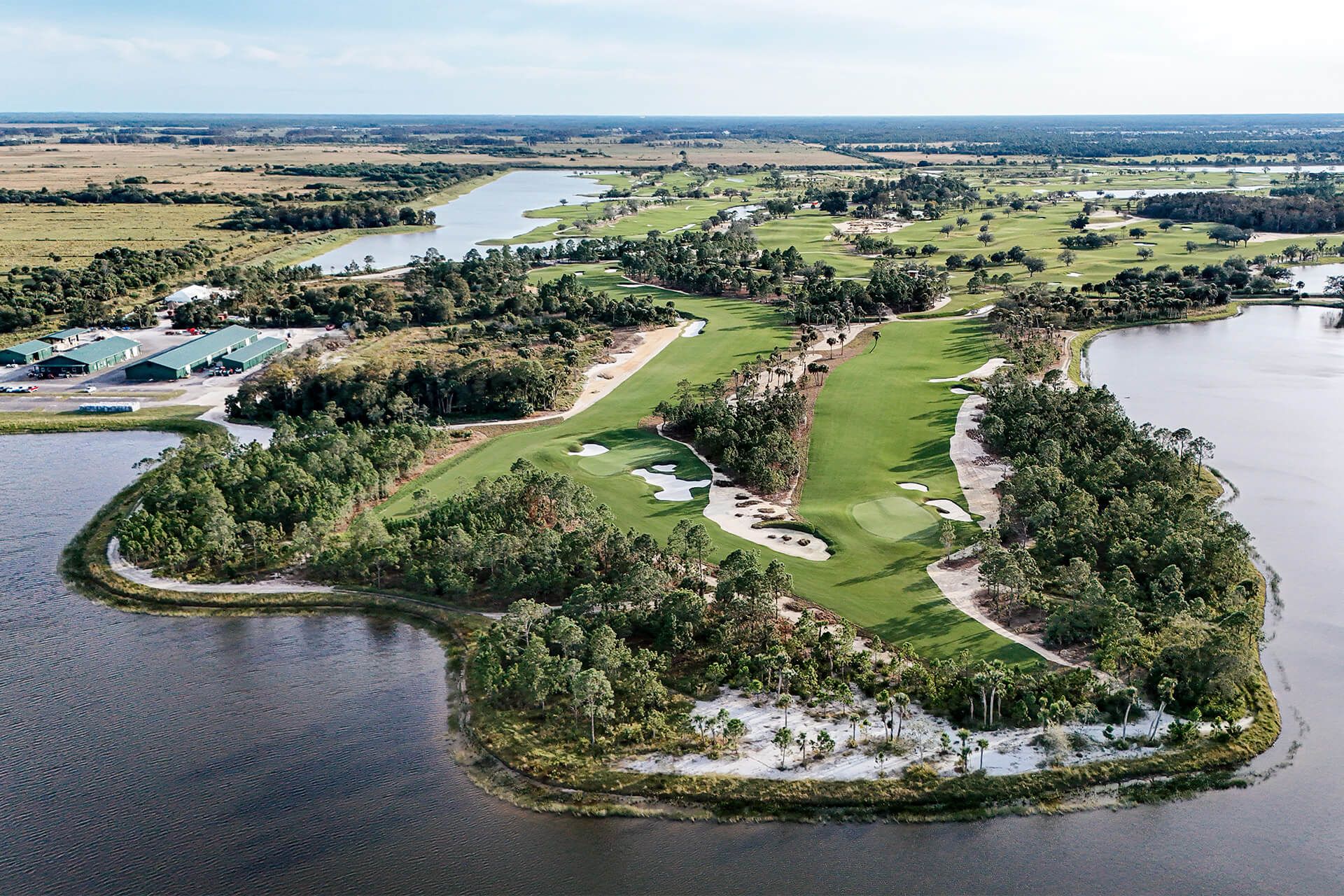
For nearly two decades, cranes were scarce on golf properties. After a historic construction surge fueled by real estate speculation and the global phenomenon of Tiger Woods, the mid-2000s marked a turning point. When the Great Recession hit in late 2007, course development slowed and nearly stopped.
What followed was a prolonged pause. For more than 15 years, new builds were the exception, not the rule, even in traditional hotbeds such as South Florida. Developers pulled back, financing tightened and the industry recalibrated.
Now, the fairways are growing again.
Golf is in the midst of its strongest development cycle since 2010, according to the National Golf Foundation. More than 140 new course projects are currently under construction or in active planning stages around the globe. In the United States alone, projects are underway in 35 states. This is a clear signal that confidence has returned to the market.
But the resurgence isn’t evenly distributed.
The big three
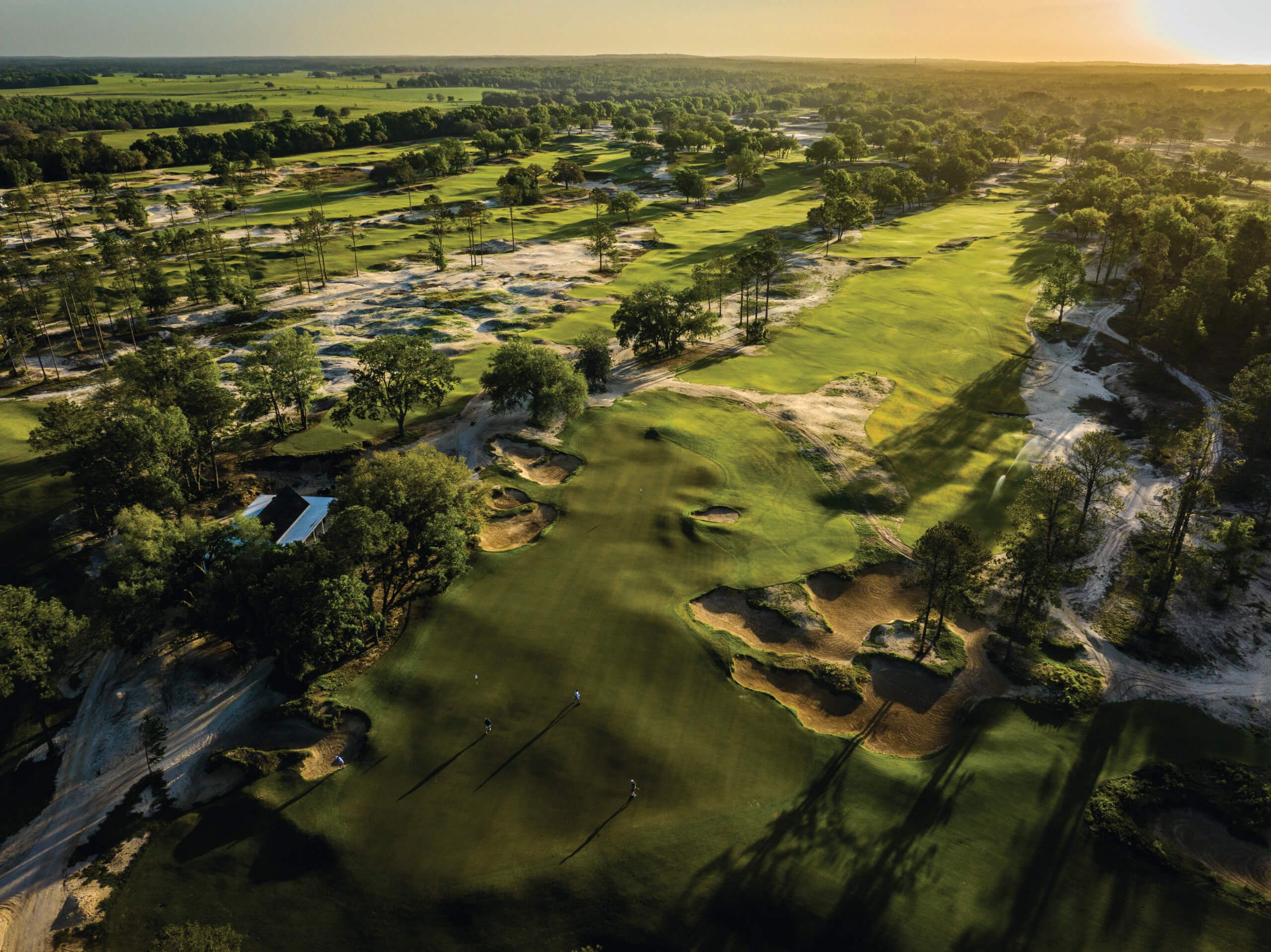
A distinct construction boom is unfolding in Florida, South Carolina and Texas. NGF data shows each of these states boasts at least twice as many active new course projects as any other, and together they account for roughly 35% of all U.S. golf development currently in motion. There are myriad reasons for this dominance within these three markets. First, Florida has a favorable climate for golf, a steady upturn in population, a consistently reliable tourism economy and ample available land (outside of major metro areas). Many high-end developments are occurring in The Sunshine State, including Atlantic Fields Club, Apogee Golf Club and Miakka Golf Club, reports NGF.
South Carolina and Texas enable golfers to play year round since both states typically have favorable golf weather. The populations are rising in each of these states and both states’ permitting and zoning processes are faster and more affordable than most other states’ processes.
Beau Welling, owner of Beau Welling Design, agrees. He said he has noticed Dallas, Texas-based clubs’ waiting lists increasing, leading to new courses being built in the greater Dallas-Fort Worth area.
“Because of their long waiting lists, clubs in these areas are more comfortable making bigger investments,” Welling said. “You are starting to see a lot of big capital investments being made and renovations of existing golf courses in these hotter markets.”
Welling said more destination type golf courses are being developed too, particularly in Florida, South Carolina and Texas. He and his team are involved with a new residential and golf offering at Kiawah Island Club. Known as Orange Hill, it will include an 18-hole championship course and practice grounds, located on Johns Island.
“After COVID-19, many people from the Northeast who have a home in Kiawah are now spending eight to 10 months a year there, rather than two or three,” Welling said. “So, the private club part of Kiawah is compacted in terms of use, and it’s more challenging to get optimal tee times and dinner reservations. It’s just begetting the need for more capacity.”
Jim Koppenhaver, president and founder of Pellucid Corp, said the “big three” states are benefitting from net gains in population. In his opinion, these gains are mainly due to “businesses, consumers and money following politics and tax policies.”
“These gains in population are the flywheels that drive golf — not only more bodies, but more bodies that have money,” Koppenhaver said.
As chief executive officer of Kemper-Sports, Steve Skinner has noticed this upturn in new golf course developments in these southern states as well. Aside from population growth, he said three main factors are influencing the boom.
“These markets are seeing development because of good land that is available, the availability of water and less restrictions, which make for easier permitting,” Skinner said.
Bobby Weed, president of Bobby Weed Golf Design, has witnessed a variety of contributing factors including changing demographics in places where climate plays a major role, an emerging middle class with more money to spend and more golfers having increased access to artificial turf golf, driving ranges, indoor golf, nighttime golf, short courses and simulators.
“Significant funding is also being unlocked in new and emerging markets in these states — both from public and private entities,” Weed said.
Cabot’s first American property, Cabot Citrus Farms, opened in Brooksville, Florida, in January 2025. Offering something for everyone, the resort has two 18-hole golf courses (Karoo and Roost), one 10-hole course (The Squeeze) and an 11-hole, par-3 course (The Wedge).
“Tourism had a very prominent role in our decision making, as did climate and population migration,” said Ben Cowan-Dewar, chief executive officer and co-founder of Cabot. “There’s a huge renaissance occurring in course development, especially in these southern states.”
Growth outside of the United States
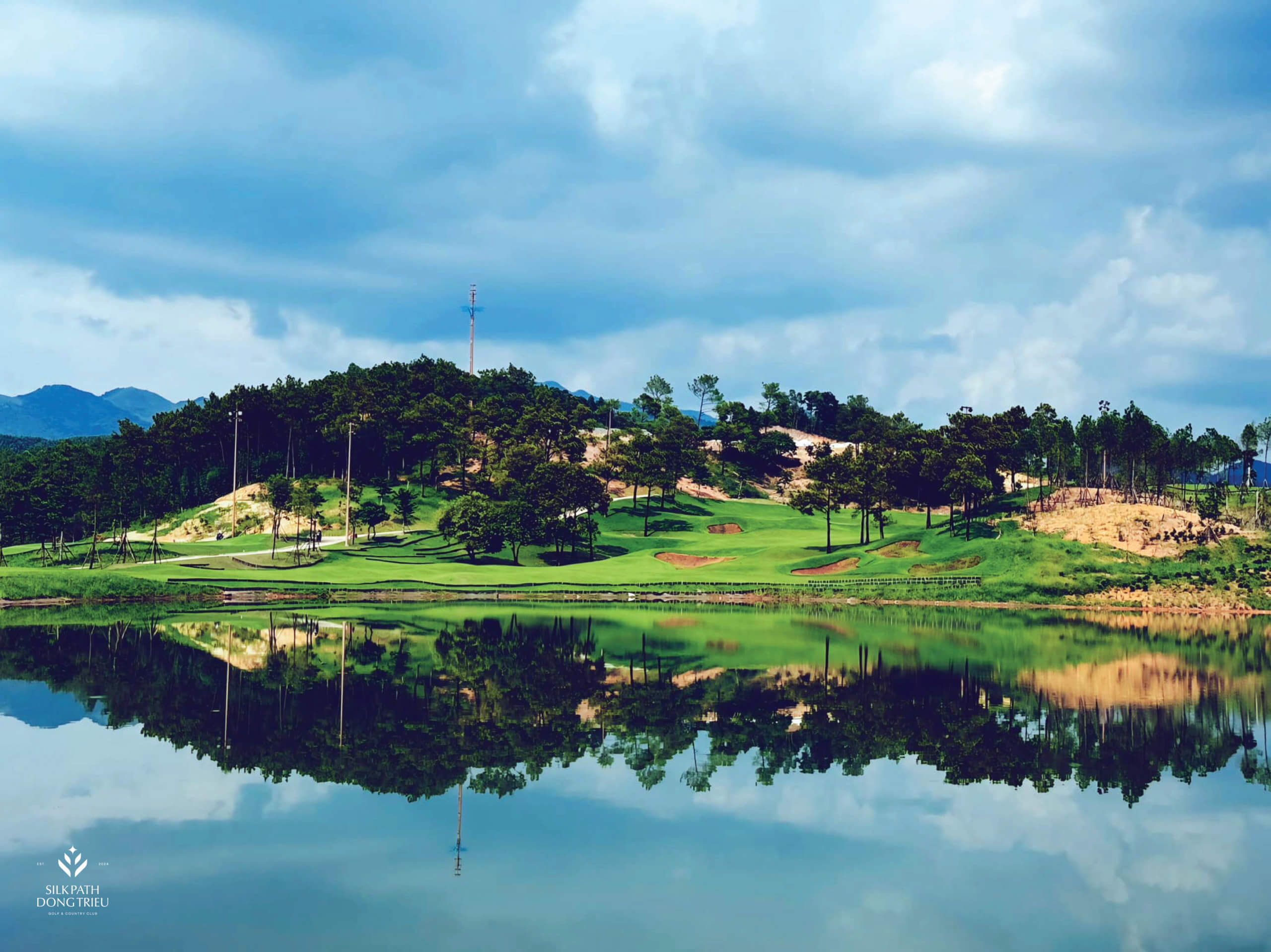
According to NGF, Vietnam has also become a hot spot for golf course development. Why? First, its government is encouraging golf development while creating its economic growth and tourism strategies. Second, its natural settings are perfect for golf: mountains, rivers, sandy coasts and valleys. And third, costs are low, while the middle and upper classes are growing.
Weed has also seen a rise in development throughout Asia-Pacific, the Caribbean, Central America and South America. Golf remains popular in the Middle East and United Arab Emirates. Whether these markets’ middle classes are increasing or incomes are rising, the boom will likely only continue in many of these countries and regions.
“The advent of male and female professional golfers competing on the world stage from these markets is fostering new interest in the game as well,” Weed said. “Great weather, interesting course designs and improved conditioning are also having positive impacts.”
Jason Straka, principal of Fry/Straka Global Golf Course Design, has observed a commonality among many golf course developers, whether overseas or in the U.S., as they often seek sandy sites. Many of these regions and countries have sandy areas that remain undeveloped. These areas are usually spacious, relatively straightforward to build courses on and inexpensive compared to sites that have clay, loam or rocks.
“Sand is typically well drained and provides an excellent medium to grow high-quality turf,” Straka said. “It’s also inexpensive to shape and irrigate, as opposed to clay and rock. And it offers visually dramatic golf.”
Factors attracting investment
According to Agustín Pizá, founder of Pizá Golf, golf is currently “experiencing one of the most dynamic and diverse periods in its history.”
Whether the growth is occurring in Texas or Vietnam (Pizá stresses that growth is especially occurring in Mexico and Portugal too), each region has numerous factors that are attracting investors, including demographics, economics and tourism.
“A common thread is a renewed desire for nature, wellness, outdoor recreation and memorable experiences,” Pizá said. “Today, success in golf development is no longer defined by whether a project is an 18-hole course or a short course or a resort hybrid or an indoor golf concept.”
He added, “In my opinion, the most successful projects are the ones that begin with a clear why — a purpose that aligns with the land, the market, the environment and the long-term vision for the community it will serve.”
Skinner said many new golfers have become involved with the game for an overall experience. They’re not only interested in golfing but desire many other amenities too, which are provided by many high-end, golf-anchored resorts.
“It’s up to course operators and owners to deliver amazing experiences through great golf courses and resorts and exceptional service,” Skinner said. “I tend to call it an ‘experience economy.’”
Weed said that there is still a niche market for high-end private clubs, which are often nestled in remote locales around the world. He recently constructed The Grove XXIII and renovated Medalist Golf Club in Hobe Sound, Florida.
Aside from these construction and renovation projects, older facilities are also being purchased by new owners, according to Weed, and transformed into marquee golf resorts or standalone golf destinations.
“In addition to championship course routings, owners are hiring us to advise on high-tech practice facilities, streamlined maintenance programs, clubhouse capabilities and sought-after membership amenities,” Weed said.
Projects being built
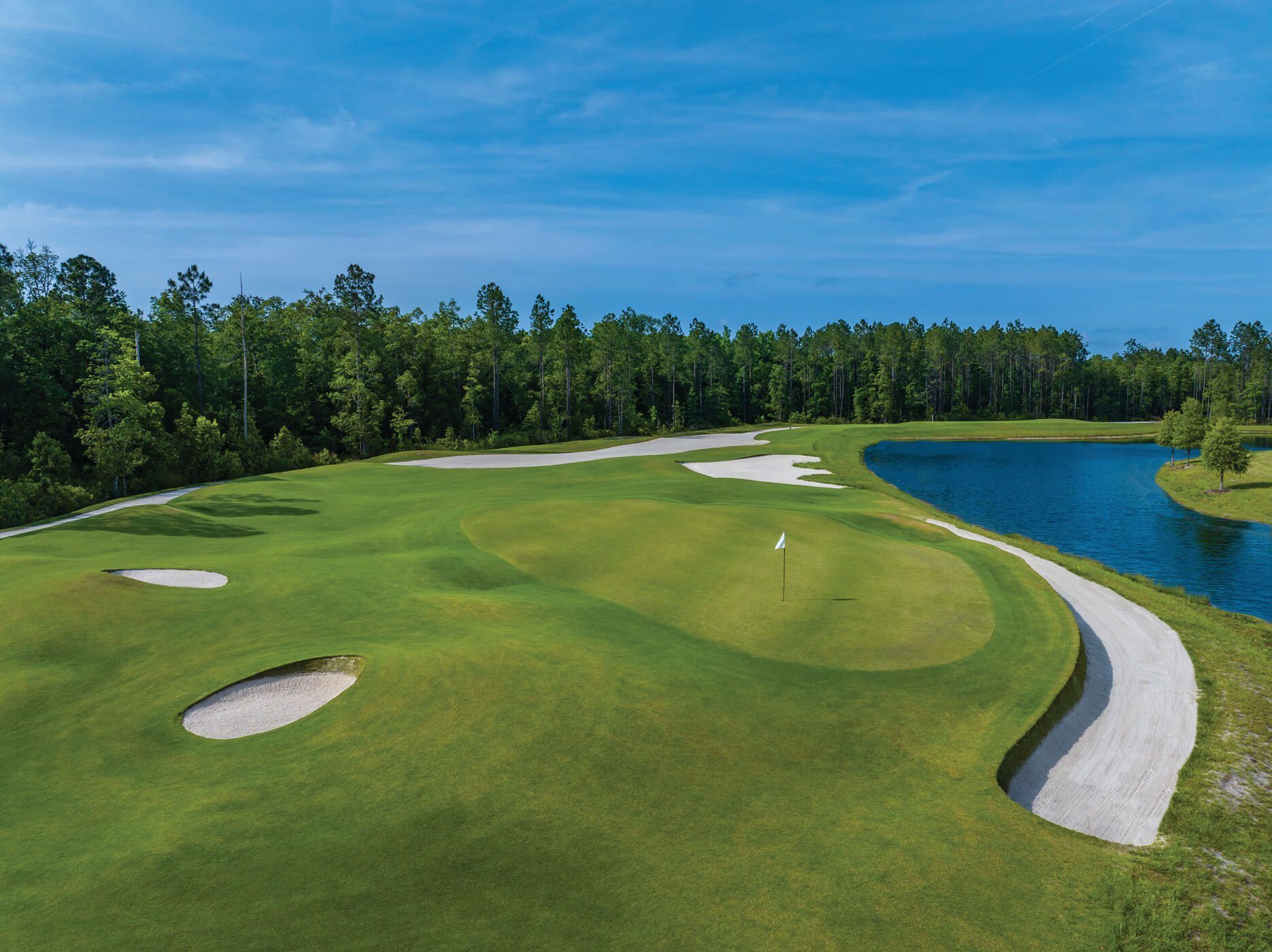
NGF has documented a mixture of projects, with golf-anchored resorts having the most significant economic impact. Within the U.S., a high proportion of projects is either high-end private, resort properties or short courses.
According to NGF, 42% of all U.S. course openings were short courses from 2021 to 2025. During that same timeframe, 44% of new courses were private. Currently, private courses comprise roughly 60% of all development projects.
“New development is noteworthy for the creative, fun and playable destination designs that are being built,” said Greg Nathan, president and CEO of NGF.
As owner of Mike Young Designs, Inc., Mike Young has witnessed a noticeable trend: Most new courses are being built as high-end destination resorts. He said when they aren’t being created for this purpose, they tend to be developed as small town clubs or municipal courses.
“I’ve seen 18-hole courses, along with a scattering of short courses,” Young said. “For high-end courses, sand seems to be the determining factor now when it comes to where they’re built.”
Larry Hirsh, president of Golf Property Analysts, has said that much of the new course development is occurring in the upscale private market segment, and he has observed a trend toward new short courses, particularly at existing clubs and resorts.
According to Hirsh, short courses offer golfers the ability to play in a shorter time period. They also provide golfers a “fun factor” that some 18-hole, regulation length courses don’t. Everyone can play them too, from experienced golfers to novices.
“Short courses are an awesome way to promote golf’s growth,” Hirsh said. “I think resorts will ultimately build (and have already begun to build) more short courses to accommodate more casual players.”
Straka said that a wide array of high-end destination clubs and destination resort golf courses are being built. Nonetheless, he added that the market is actually “wide open.” Since COVID-19, he has noticed that builders and owners are “taking advantage of the game’s current growth” by building myriad other courses as well, including community and residential.
Over the past five years or so, a “cool factor” has been added to the game, similar to the Tiger Woods era. Driven by social media, Straka stressed that younger generations are being encouraged to golf and maintain an interest in the sport.
“All types of courses are being constructed, yet paired more frequently together,” Weed said. “Real estate golf, in particular, is making a comeback as national homebuilders capitalize on golf as an amenity for age-designed communities.”
Bobby Weed Golf Design recently built an 18-hole layout, known as Stillwater Golf and Country Club. Based in St. Johns, Florida, the course has “loops of three, six, nine and 12 holes that start and finish near the clubhouse,” enabling faster play.
“Today, we live in a less formal society and have less disposable time than the generation before,” Weed said. “Short courses will likely fit into the lifestyles of more people moving forward.”
Adapting for the future
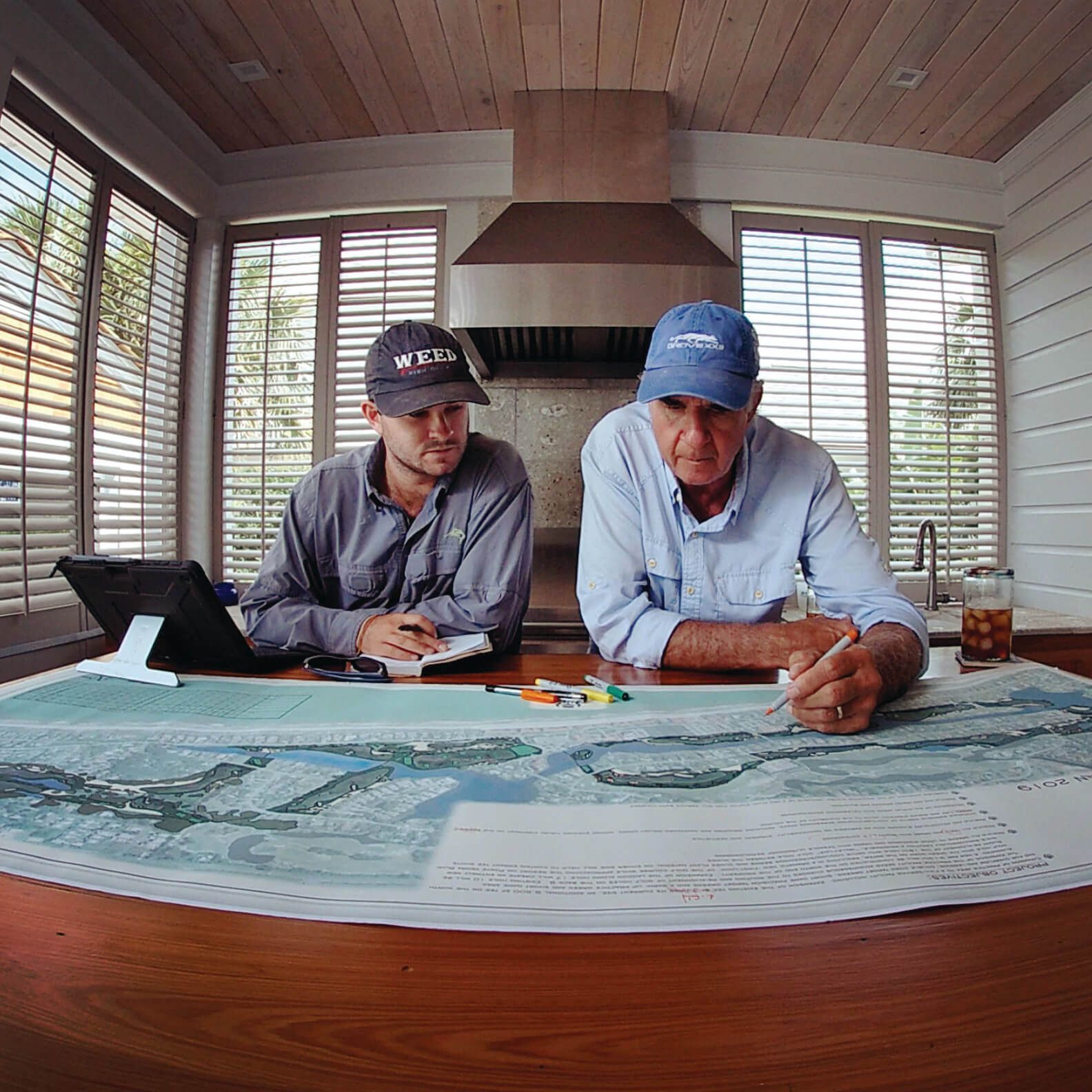
Owners are booking renowned golf architects for their next development projects years in advance, according to NGF. At the same time, many owners are also investing in renovations at their golf courses and facilities. NGF has estimated that more than $3.5 billion is being invested annually in discretionary improvements.
“We’re enjoying a virtuous cycle — more golfers playing more, and their greens fee support means courses can invest in more,” Nathan said. “It’s great to see golf course owners and operators running financially healthy properties and reinvesting in the courses golfers get to play.”
As he reflects on what’s to come, Pizá said the new era of golf course development will require course architects and developers alike to adapt constantly. It will be key for them to be creative, environmentally “sensitive” and innovative, while using new technology to the fullest extent possible.
Pizá added that efficient water management, native landscapes and reduced turf have become essential. The golf course design industry will continue to focus on “flexible formats,” including indoor and digital golf experiences, par-3 courses, putting courses and short loops. Architects and developers will have an opportunity to steadily expand golf participation throughout 2026 and beyond, ensuring the sport becomes more accessible than ever.
“Golf is no longer just one thing. It is a global ecosystem of experiences — digital, hybrid, modern, traditional and wellness driven,” Pizá said. “There is space for everyone, and there has never been a better time to imagine what golf can be next.”
He added, “Hence, one of our mottos is: ‘Imagine the future in order to design the present.’”
Weed has noticed architects and developers adapting in three primary ways: creating alternative golf opportunities via par-3 courses and 9-hole courses, lighted courses for night golf and 18-hole layouts that have unique internal routings. These ways are catering to golfers seeking affordability and faster rounds.
“High-end, no-budget” golf courses are still being built, according to Weed, and they’re being designed with more “dramatic sites” than in the past, often in remote areas, resulting in more “memorable golf experiences.”
Gavin Fazio, president of Fazio Golf Design and Consulting, said that architects and developers need more time to pre-plan their designs and developments than ever before. They previously required up to four months to plan. Now that figure has, at a minimum, doubled.
Several factors are involved with this rise in pre-planning time. First, more architects and developers are competing for projects today. Second, shortages in contractors, equipment and grass availability are steadily occurring.
“You can’t just start up a project within a couple months like it used to be,” Fazio said. “You need at least six to eight months of preparation to get everything on time and in order. A good year of lead time is ideal. You have to pre-plan well.”
Regardless of how much architects and developers must adapt or the amount of time they need to do so, Jay Karen, chief executive officer of the National Golf Course Owners Association, said they must remain focused on what matters today: the “premium that’s placed on fun.”
Karen said millions of new golfers aren’t drawn to golf to face its challenges and rules. They’re not all seeking low scores. And they aren’t investing time and money into mastering their golf swings yet. Instead, they want to enjoy themselves, plain and simple.
“The new crop of customers wants to socialize and have a good time,” Karen said. “The new designs and shorter formats are scratching that itch — and will continue to do so.”
This article originally appeared in the January/February 2026 issue.