
Any new golf course development is somewhat of a gamble. With such a huge investment, the end result better be worth the time, money and effort.
This year’s Development of the Year winners each had different goals in mind, but ultimately, they all strove for one all-encompassing purpose: to make the best golf course they possibly could.
Cabot Citrus Farms took first place with a gargantuan effort: four golf courses built simultaneously. This required a construction team numbering in the hundreds. The result is two 18-hole courses and two short courses that occupy the site of the former World Woods Golf Club.
“Cabot Citrus Farms is a celebration of elevation, nature and a landscape that is so unique to Florida we chose it as our first U.S. location,” said Ben Cowan-Dewar, CEO and co-founder of Cabot. “Our ultimate goal is to unite people through exceptional golf, outdoor adventures and a strong sense of community. It is an honor to have our team’s efforts recognized by Golf Inc., and we look forward to welcoming guests for generations to come.”
This year’s judges were Casey Paulson, general manager of Driftwood Golf & Ranch Club; Kevin Norby, ASGCA, RLA, of Norby Golf Course Design; and Darryl Bartlett, senior project manager of NMP Golf Construction.

FIRST PLACE
Cabot Citrus Farms
Brooksville, Florida
Owner/Developer: The Cabot Collection
Architects: Karoo – Kyle Franz; Roost – Mike Nuzzo, Kyle Franz, Rod Whitman and Ran Morrissett as golf course architecture adviser; The Wedge & The Squeeze – Mike Nuzzo
Contractor: GreenScape Methods
Cost: $35 million
The Cabot Collection wanted to build on the legacy of World Woods Golf Club by creating a destination for world-class golf, outdoor adventures and a strong sense of community, all while preserving the property’s distinct Floridian character and natural beauty.
This is Cabot’s first resort in the U.S. and the flagship for introducing its brand to a wider American audience. Cabot strives to build golf courses that stand the test of time, based on the idea that building great things is the best business model.
Cabot Citrus Farms features two redesigned 18-hole courses, Karoo and Roost, and two new short courses, The Squeeze and The Wedge. Crafted by a diverse team of architects, the courses embrace the area’s natural elevation changes and scenic beauty while employing innovative golf concepts for players of all skill levels.
The redesign of the existing courses was an extensive effort, repurposing materials and installing new infrastructure to enhance sustainability and playability. Each of the four courses offers a distinct playing experience.
The Karoo course is being called an “adventure golf” masterpiece, with some of the widest Bermuda fairways in the world, expansive greens, multiple routes to pins and bold contours to encourage creative play.
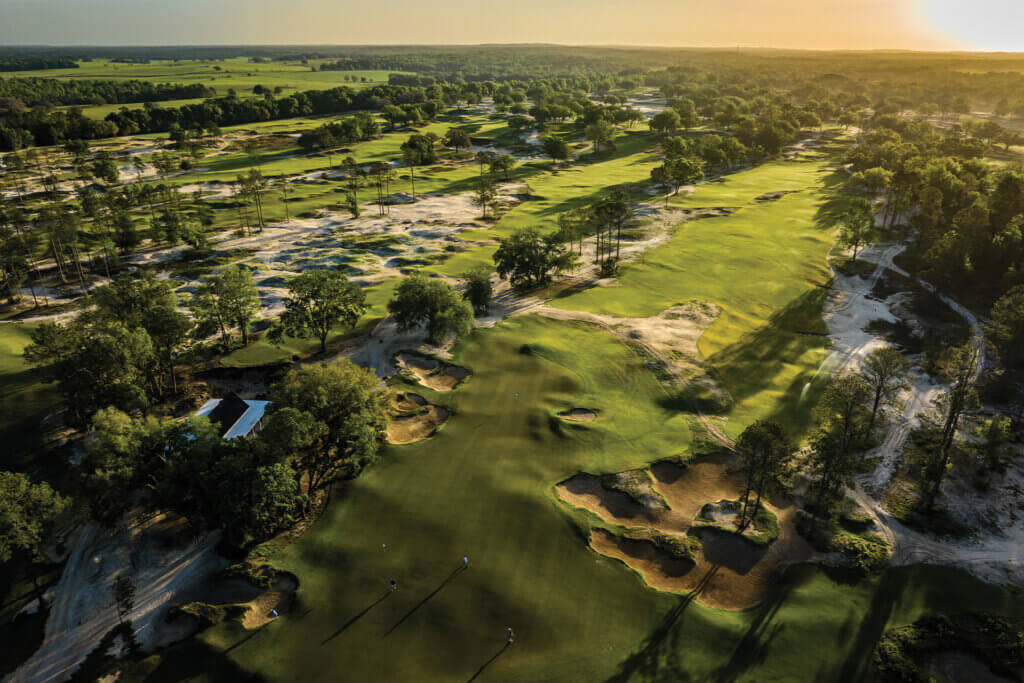
The Roost course features canopies of moss-draped trees and sandy soil in a tranquil setting that takes golfers back in time. It flows across sandy scrubland and rolling meadows with numerous 50-foot elevation changes and a 40-foot-deep sinkhole.
The 10-hole Squeeze course blends diverse, dramatic terrain with a relaxed atmosphere and features half-par holes alongside par-3s, par-4s and par-5s.
The 11-hole, par-3 Wedge course is described as “small on size but big on golf.” Its sloping greens and varied lies are combined with speakers and low-profile lighting to create a lively atmosphere and allow golfers to enjoy the course after dark.
The development includes a variety of residential units and allows homeowners to place their homes in a rental pool when they’re not in use.
Cabot Citrus Farms has applied for Audubon International Platinum Signature Sanctuary certification, making Cabot the first multi-property brand to enroll all its golf courses and their surrounding environments in the program.
What the judges said:
“Large development. Big scope. Golf courses are visually striking. Looks like great use of minimal elevation. Minimal vertical amenities. Development looks very golf focused.” – Casey Paulson
“Well-developed vision for the property, including lodging, amenities and golf. Golf course and building architecture blends well with the site. Dramatic shaping of fairways and golf course features. Expansive low-maintenance areas should help reduce water and fertilizer needs.” – Kevin Norby
“This place has it all: storybook housing, amenities galore and a wonderful collaboration on golf. It will be a winning destination for years to come.” – Darryl Bartlett
SECOND PLACE
Soleta Golf Club
Myakka City, Florida
Owner/Developer: 536 Single RE LLC
Architect: Nick Price
Contractor: Heritage Links
Cost: $20 million
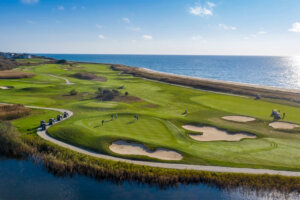
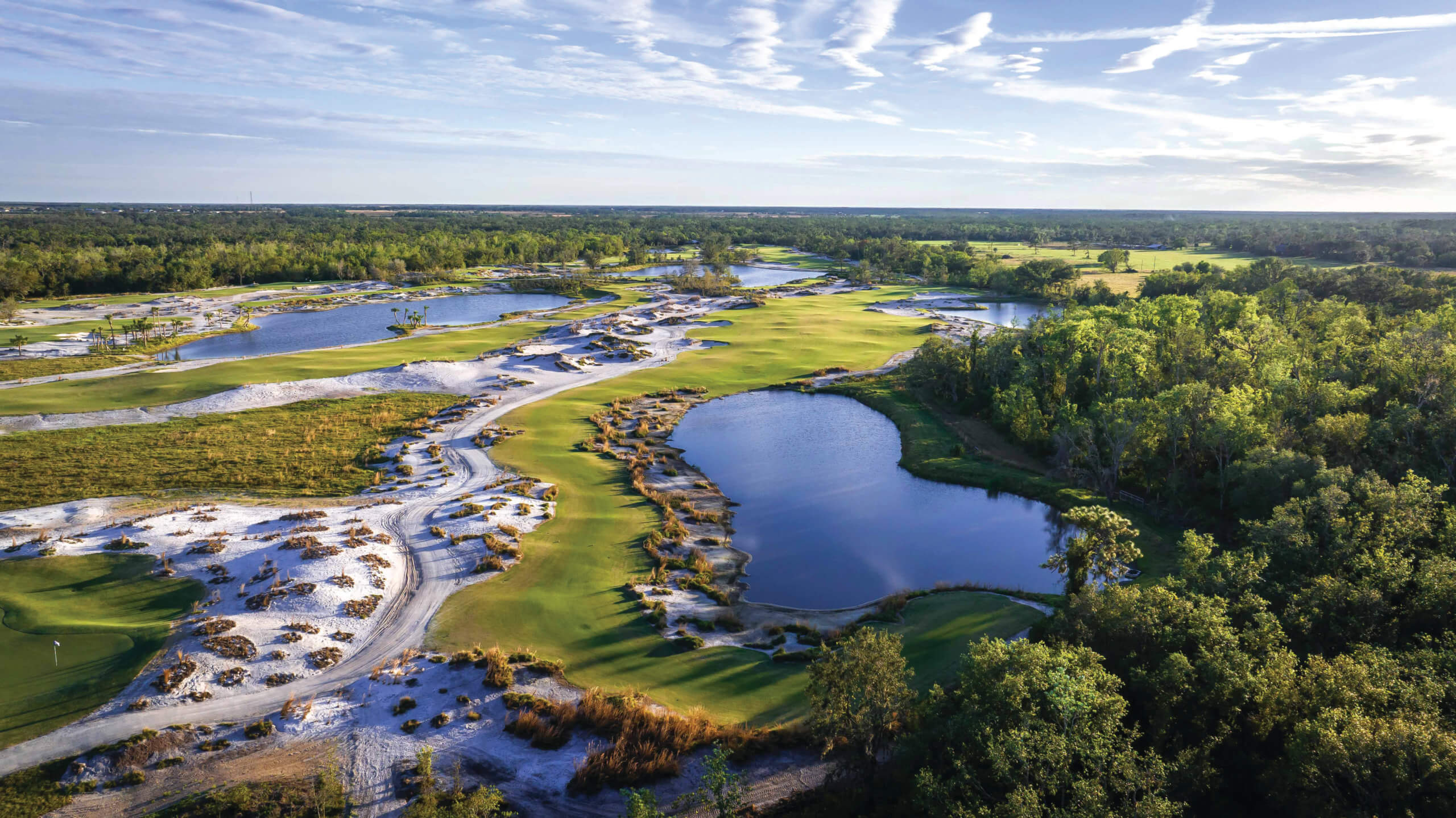
The developers of Soleta Golf Club had a vision of world-class quality, sustainability and innovation and came up with a low-profile design which minimized earthmoving. Unlike many Florida courses, this one avoids excessive water hazards, emphasizing instead the natural terrain and offering playability for all skill levels.
The fairways, inspired by British links, use Celebration grass for firm and fast playing surfaces, and there is no rough anywhere on the course. Shots that miss the fairway land in native sands and the forgiving greens have many shapes and tiers to give multiple pin locations, allowing the course to play differently every day.
Almost every facet of the course was designed to have as little impact on the surrounding environment as possible. The holes wind through undisturbed land, and much attention was paid to preservation of wetlands. Thousands of native trees and plants were relocated and reinstated, while sand from the site was used to shape dunes and fairways. Even tee markers are made from centuries-old petrified wood found on the property.
For water conservation, the design incorporates the Miakka River, which flows adjacent to the No. 5 green, to move water naturally. Lakes were engineered for natural flow, and the storm-drainage structures are all linked to the wetland system.
What the judges said:
“Great golf visuals. Golf course is beautiful. Great mix of turf and native areas.” – Casey Paulson
“Beautiful golf course design integrated nicely into the site. Sustainability is apparent throughout.” – Kevin Norby
“With a stunning design and serene setting, this golf course features endless native areas that soothe the soul — even for those who find themselves in the expansive waste bunkers. Once fully matured and built out, it is sure to become a favorite destination for many.” – Darryl Bartlett
THIRD PLACE (TIE)
Chhun On Golf Resort
Ponhea Lueu District, Kandal Province, Cambodia
Owner/Developer: Oknha Chetna Chhun
Architects: Curley-Wagner Golf Design
Contractor: In-house
Cost: Undisclosed
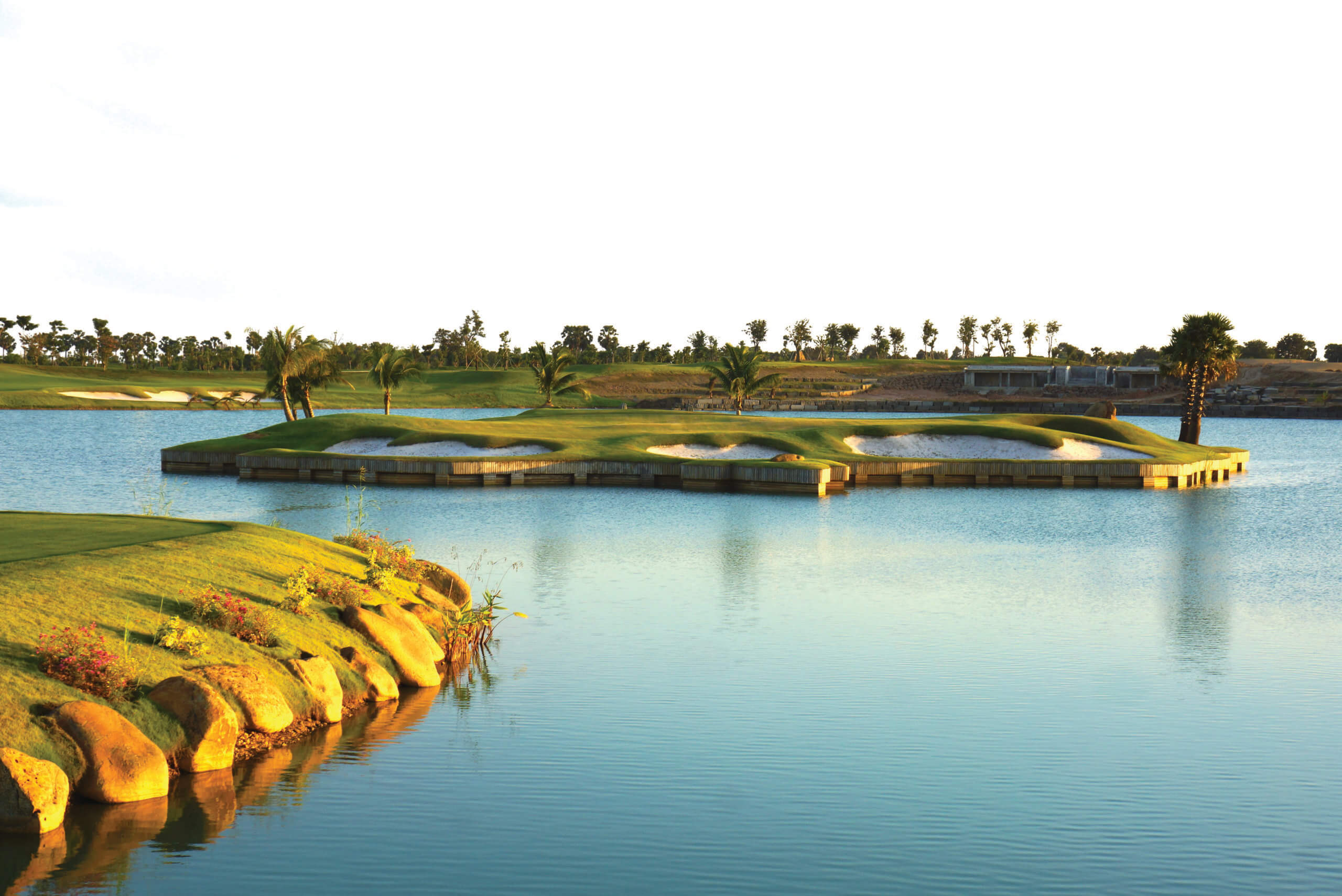
Chhun On Golf Resort sits on a former 495-acre floodplain. Its two 18-hole courses were designed with the goal of helping to establish the area near Phnom Penh as a leading golf tourism spot.
The resort integrates many elements of Cambodian culture into the design. The rumdoul, the national flower, is represented in the shape of the clubhouse. Native sugar palm trees are in abundance on the Palm course and are also featured in the garden-like landscape of the Lake course. Both courses end at the 19th hole, whose island green is in the shape of Cambodia.
Both courses were routed to emphasize north-south hole alignment, taking into consideration the abundant sunlight. The 36-hole complex is located north of Phnom Penh and will soon be easily accessible by way of a new highway.
The floodplain was a challenge to overcome. Substantial dirt moving created 30-feet-deep lakes and generated the fill needed to raise the level of the holes. A diversion channel around the southern perimeter sends water into the Mekong River.
What the judges said:
“This is a well-conceived development on a massive scale. The golf course is attractive with a wide variety of holes and shot options. The golf course routing indicates that the course is well-conceived, and the architect appears to have dealt with the constraints of the expansive floodplain.” – Kevin Norby
“An incredible transformation of wasteland. The design is outstanding, with well-placed bunkers and a layout that impresses at every turn. To top it all off, the clubhouse is insanely cool. This one’s a winner.” – Darryl Bartlett
THIRD PLACE (TIE)
The Hills at Promontory
Park City, Utah
Owner/Developer: Pivotal Group
Architects: Forrest Richardson Golf Course Architects
Contractor: Wadsworth Golf Construction Co.
Cost: $14 million
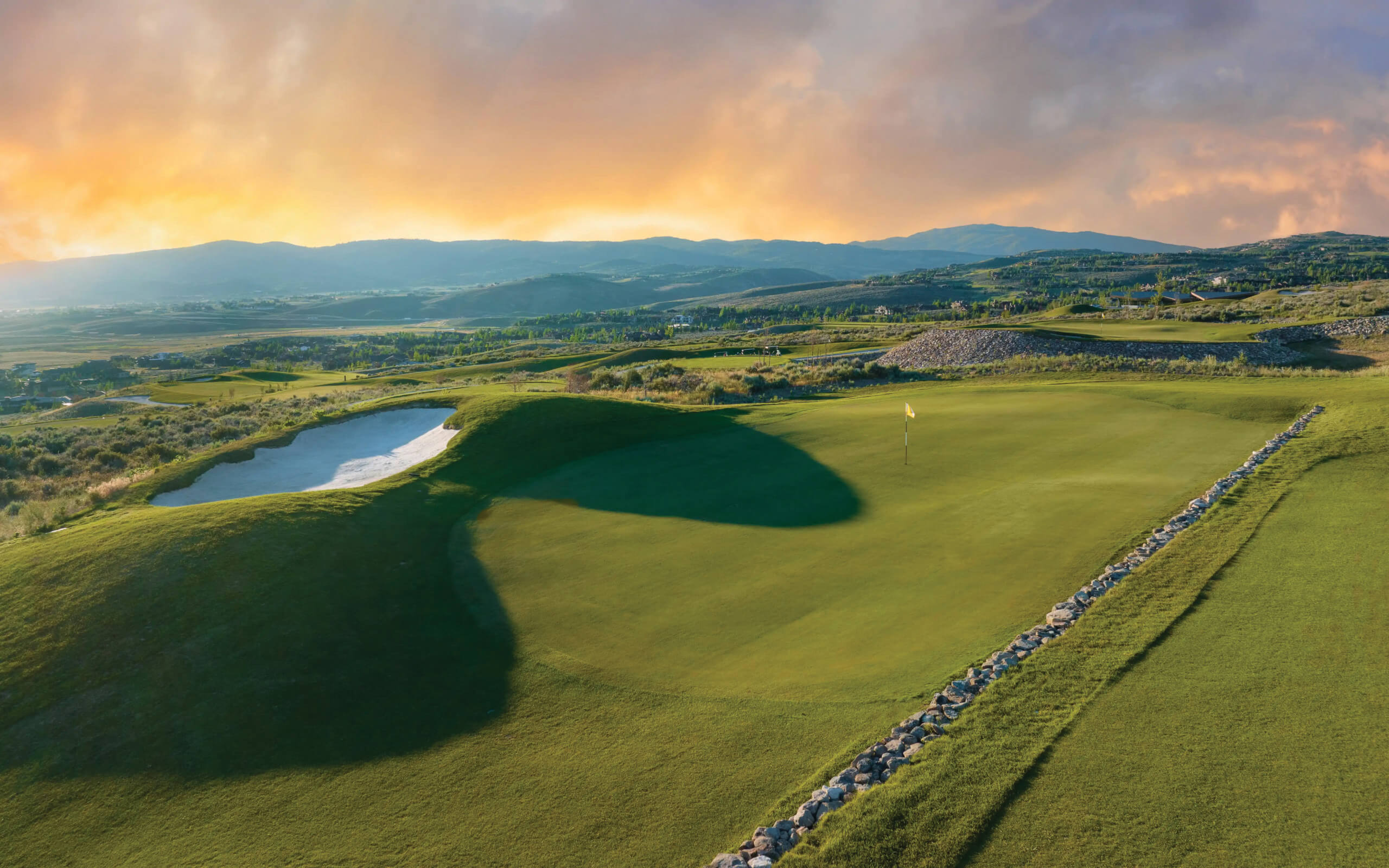
The Hills at Promontory already had two championship 18-hole courses but wanted to add a fun, time-efficient short course for its members. The new 18-hole course is made up entirely of par-3 holes, reducing turf area to 30 acres. It includes a 320-yard practice range with a cutting-edge golf academy.
The short course increases the club’s number of rounds since its par-3 format allows more play per day. Other advantages include less water use; a smaller turf footprint, which requires less maintenance; increased membership potential because of the higher capacity for play; and greater accessibility for families, beginners and seniors. The course preserves open space and doesn’t crowd golf holes into tight residential corridors, and designers were able to focus on quality features and materials because of the smaller footprint.
The surrounding natural land was left untouched. With all par-3 holes and minimal turf for each hole, the typical large expanses of turf were avoided.
The project efficiently preserved open space, maintained aesthetics and maximized revenue. It is estimated to generate 300% more revenue per yard than a traditional course while using only one-third as much water.
What the judges said:
“Great concept and addition to existing facility. Looks like a blast to play.” – Casey Paulson
 HONORABLE MENTION
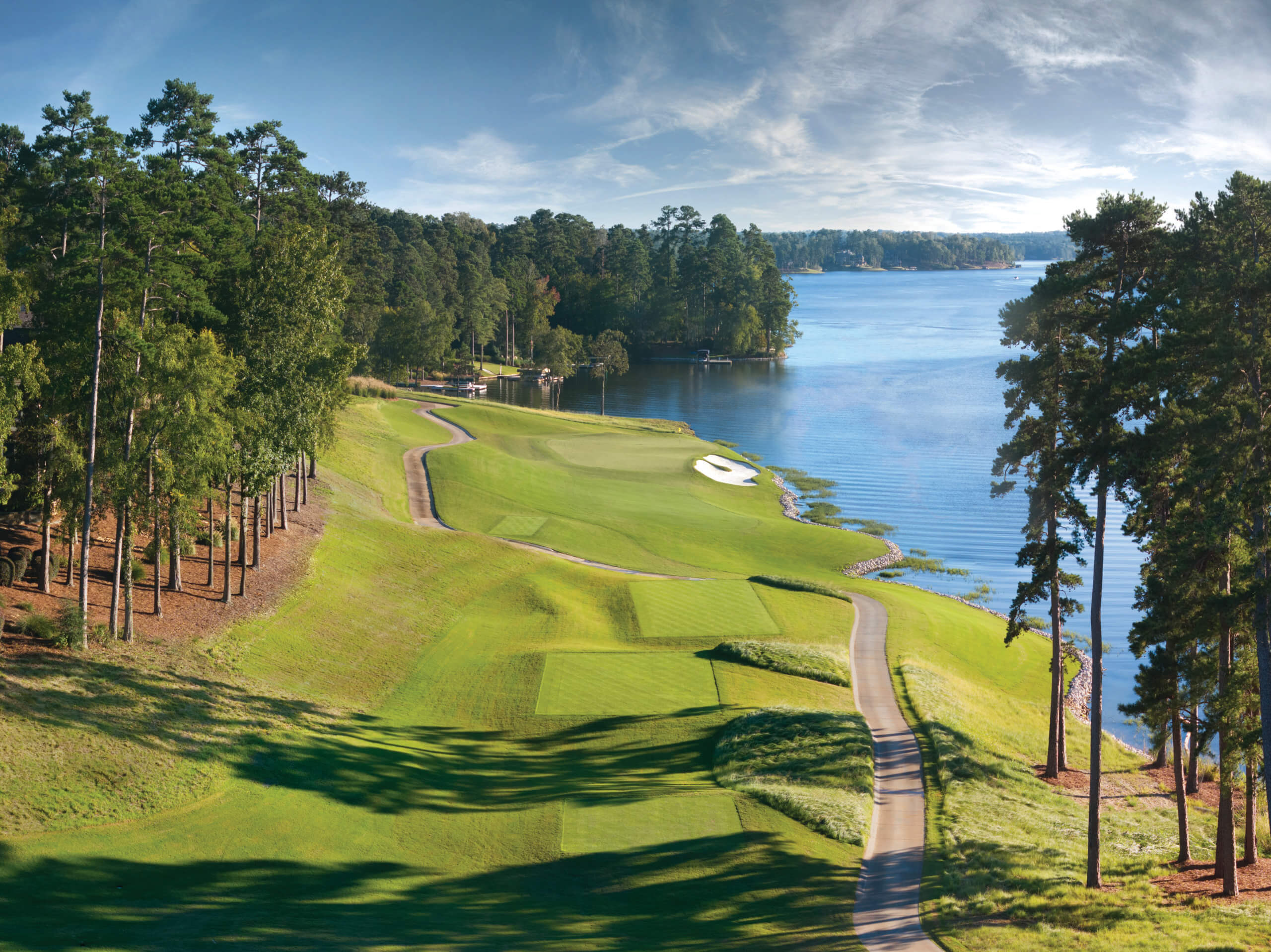
Reynolds Lake Oconee
Greensboro, Georgia
Owner/Developer: Oconee Land Development LLC
Architects: Tom Fazio
Contractor: Medalist Golf
Cost: $20 million
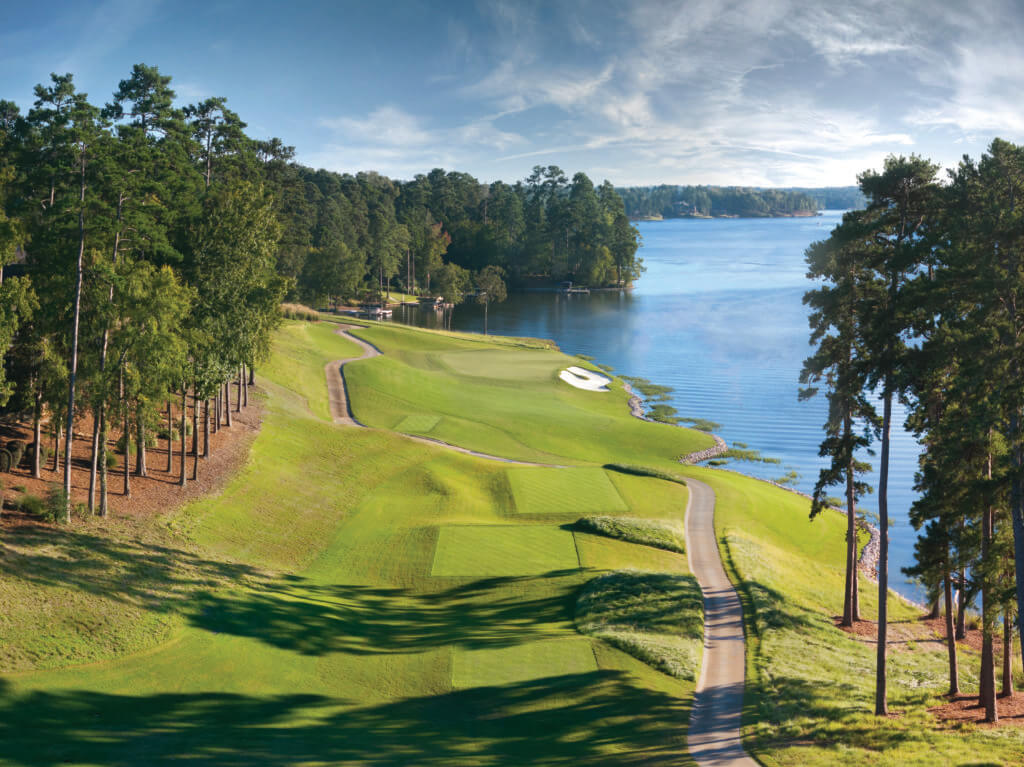
The new golf course at Reynolds Lake Oconee combines nine holes from the original course with new acreage to create an 18-hole layout.
The routing winds through a 500-acre neighborhood, which opened three years ago. The nine new holes — 6 through 14 — provide challenge with fescue-lined fairways, numerous bunkers and dramatic elevation changes.
The course’s location within the community and near a lake necessitated environmental sensitivity. This was achieved by using select turfgrass varieties such as TifTuf Bermudagrass and Weeping Lovegrass, which require less water and fewer chemicals. In addition, a new, more efficient irrigation system was installed.
Natural habitat areas were restored to frame the course and provide safe space for wildlife. The course is expected to become the seventh course in the community to be certified by Audubon International.
What the judges said:
“Nice routing and interesting vision. Building architecture is attractive and well-conceived.” – Kevin Norby
HONORABLE MENTION
Sedge Valley Course at Sand Valley
Nekoosa, Wisconsin
Owner/Developer: UNKNOWN
Architects: Tom Doak
Contractor: UNKNOWN
Cost: Undisclosed
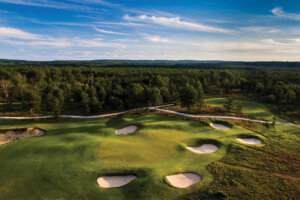
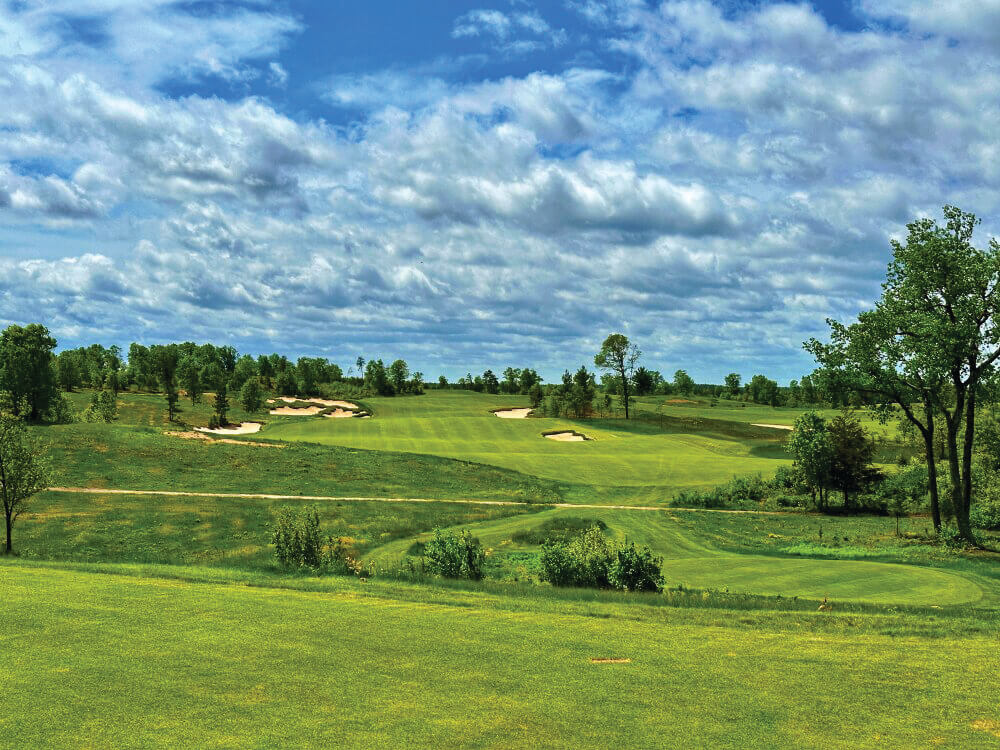
Sedge Valley is Tom Doak’s tribute to early 20th century courses that are popular in the London heathlands and throughout the U.K. His goal was to bring back a more intimate scale and build classically styled holes that golfers of any skill level can enjoy.
The par-68 course measures less than 6,000 yards, but there is still plenty of space to enjoy, with several fairways measuring more than 50 yards wide. The fairways roll down into formal bunkers, and the medium-size greens feature a variety of slope angles to allow for plenty of ball movement.
The course unfolds unpredictably with holes that might seem out of place but coalesce into a complete experience. The course is routed through hardwood trees, rather than through the pines that are prominent on the other Sand Valley courses. This created a sense of going out on a journey then returning home.
What the judges said:
“The par-68 concept is unique and very cool, progressive. Course aesthetics and general routing look awesome.” – Casey Paulson
(This story originally ran in the May/June 2025 issue of Golf Inc.)