

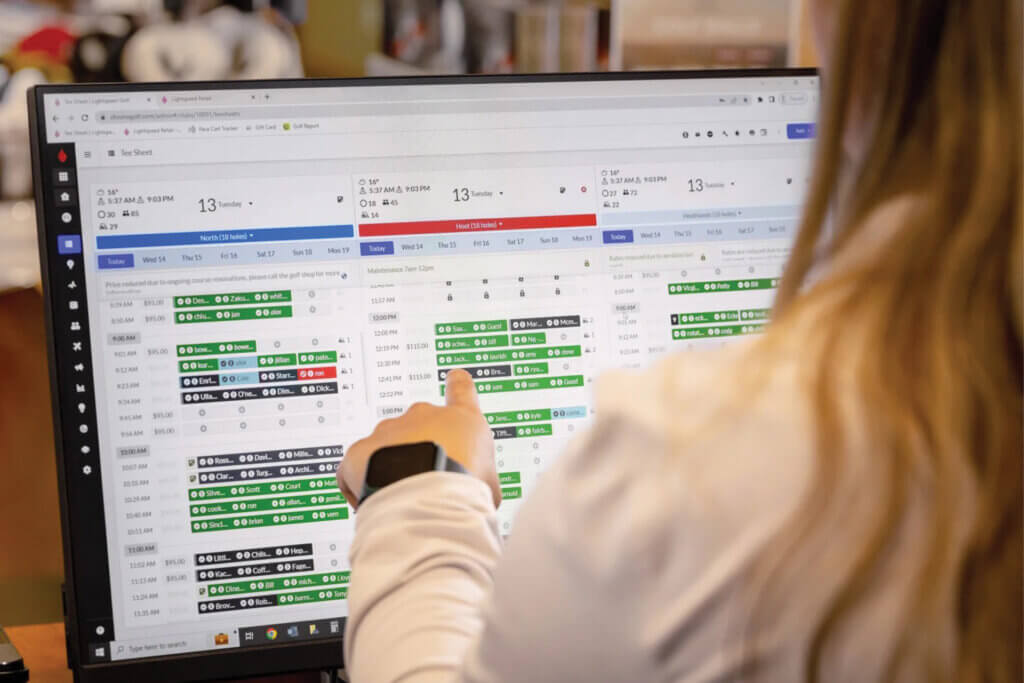
Tee sheets are transforming from simple booking tools into fully integrated digital command centers for modern clubs.
————
When golf’s most historic venue embraces new technology, it signals how quickly the industry is changing.
The St. Andrews Links Trust, home to many courses in St. Andrews, Scotland — most notably the Old Course — implemented a new tee-time system in late 2024 with the launch of its Home of Golf app.
The goal of the app was to better connect with mobile golfers, streamlining the overwhelmingly popular Old Course ballot process and integrating Clere Golf technology, which enables digitally live mapped hole locations.
The change also ended the long-standing overnight campout at the Old Course Pavilion, where single golfers once waited with sleeping bags to add their names to the paper “Casual Golf List.”
The move reflects the Trust’s broader push toward digital operations and improved access for golfers.
Platform integration
St. Andrews’ shift mirrors a global movement in which tee-time platforms are evolving into essential pieces of a club’s broader technology ecosystem.
Jim Oliver, chief operating officer at Heritage Golf Group, said last fall to Golf Inc. that these are the “must-haves” in 2026:
- A highly functional tee sheet with integrated payments
- Dynamic pricing capabilities
- Customer Relationship Management (CRM) and marketing automation
- Event/food and beverage management tools that connect to your operations
“These aren’t optional anymore — they directly impact revenue, service quality and operational flow,” Oliver said.
There are many constituents involved in this transformation, all recognizing that golfer expectations and operational demands have accelerated in recent years.
Greenlight Advisors’ “2025 Municipal Golf Study and Ongoing Benchmark Report” indicates that courses in the top 25% for profitability generated average net income margins more than double the median and focused on tee-time utilization, labor productivity and cost controls.
The tech shift
Jenn Burgess is director of marketing for Whoosh, one of several companies developing cloud-based systems designed to simplify club operations.
Burgess heard from one head professional “that it’s like going from a rotary phone to a smartphone” in the tee-time space.
Gretchen Weber also watched the shift up close. From 2019 to 2021, she worked at Sahalee Country Club in Washington. The venue was still running on paper and pencils.
Then the pandemic hit. Golf boomed. Tech expectations skyrocketed.
During that period, Whoosh founders Colin Read and Scott Peper presented their cloud-based system to the Sahalee staff. The club ultimately did not adopt the platform, but the experience influenced Weber’s career. Today, she serves as Whoosh’s chief of staff.
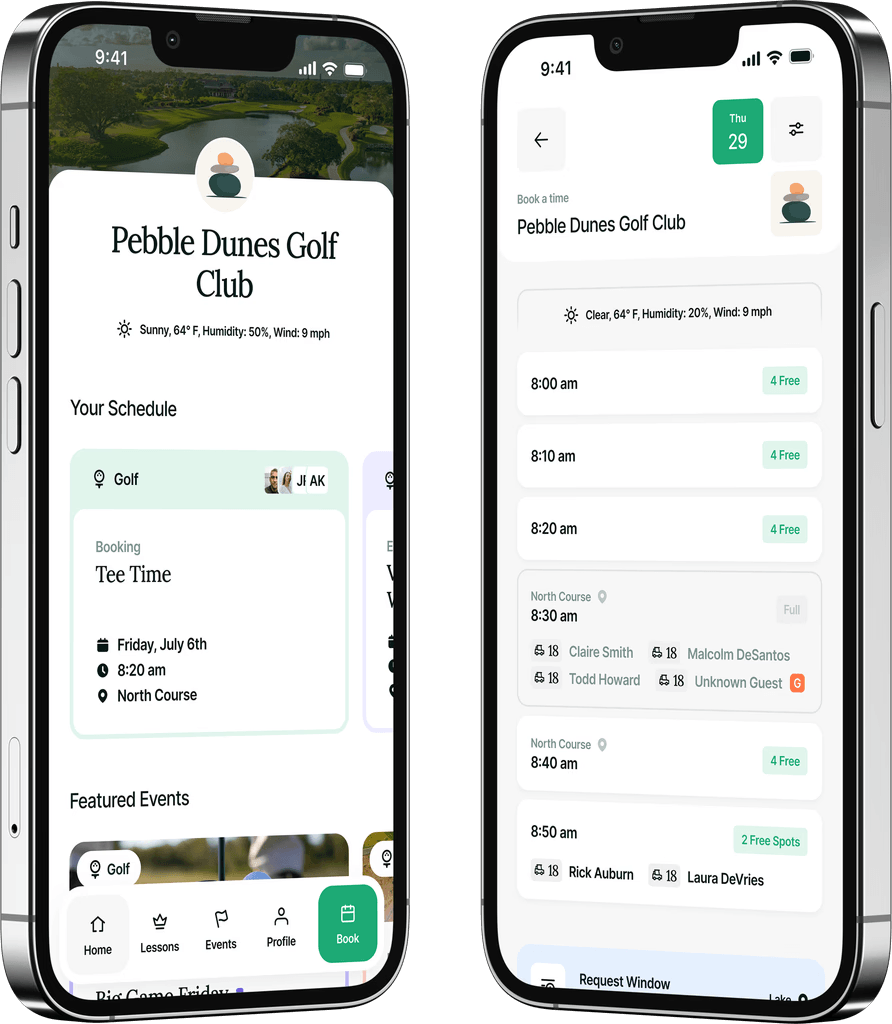
Weber said participation surged, significantly increasing operational demands.
“You must also consider that golf is appealing to a younger demographic with both green-grass and off-course golf,” Weber said. “It’s no secret that the younger generation is more tech savvy and demands better technology in all aspects of their lives.”
In 2025, Lightspeed and Whoosh developed a preferred partnership that brought the international company into the private-club sector for tee times, dining, spa bookings and pro shop purchases among other features such as lessons and course analytics.
Move toward digital
John Brown, CEO of GreatLIFE Golf, was frustrated with messy tee-time booking and third-party middlemen. His team built GolfBack, a homegrown system which launched in 2020.
When Brown Golf merged with GreatLIFE in 2022, the platform came with it. Today, GolfBack powers GreatLIFE’s 37 courses and is now available to operators well beyond their portfolio.
Brown said about 80% of all online rounds are made on mobile phones today so being mobile friendly is essential.
“We are fully entrenched on building a direct path to our customers,” Brown said. “When you can engage with the golf customer online, you can collect all the personal data and control price points.”
Wes Tucker, director of golf at St. Johns Golf Club in Elkton, Florida, had a similar transition when the county-owned course underwent a yearlong Erik Larsen-led course renovation in 2022. This came at the tail end of the pandemic.
With a year to figure out next steps, Tucker moved from GolfNow to foreUP for its tee-time system when the course reopened.
The system included built-in tier pricing for St. Johns County residents, in-state residents, out-of-state golfers and annual passholders.
“It’s been an unbelievable improvement,” said Tucker, whose Northeast Florida course recorded nearly 70,000 rounds in 2025. “We allow booking tee times in a seven-day window beginning at 12:01 a.m. By the time we walk in that next morning and open for business, it’s booked till 2 p.m. that week in advance.”
Tucker said the number of phone calls at the counter has gone down 90% and allows the staff to interact more with the customers at the course.
At the 114-year-old Hillandale Golf Course in Durham, North Carolina, baby steps are being taken when it comes to going digital.
Karl Kimball, director of golf at Hillandale’s municipal course, said their tee-time systems have moved from paper to a wonky phone-in system to the implementation of foreUP in 2012.
Although the course has ventured into the online tee-time system, he said he holds onto his customer service instincts.
“I want to be able to look at people’s faces and interact with them,” said Kimball, who encourages either online tee times or phone-ins. “If we strictly had online tee times I think we may miss those connections asking about our range, equipment purchases, rental clubs and other things that cannot be answered online. We are in the friendship-making business.”
The next frontier
The next front emerging in the golf industry involves artificial intelligence and along with it is the need for more technological understanding.
Brown said operators are watching closely as artificial intelligence evolves and begins to influence customer service, pricing and communication tools. He wonders about the dynamics and how we will interact and interface with this technology going forward, especially with AI bots and agents and fee structures for credit cards.
The app factor
Since launching the Home of Golf app, St. Andrews has recorded nearly 10,000 downloads. In 2024 alone, more than 3,600 golfers secured last-minute tee times through the new digital draw.
The overnight tradition for single players has also evolved. Instead of lining up outside the starter’s building, golfers now register in person the day before they wish to play, entering their information on a tablet and submitting a selfie. A random draw is held at 5 p.m., with notifications sent by text and email.
Demand remains strong. Of nearly 15,000 golfers who entered the singles draw in March 2024, about one-quarter secured a spot by joining an existing twosome or threesome.
Even as digital tools reshape access and operations, the traditions that define the game remain firmly in place.
————
This article originally appeared in the March/April 2026 issue.