

It’s been a record-breaking stretch for golf course sales — but the pace, the players and the priorities are shifting.
Valuations remain strong. Buyer interest is still high. But after a flurry of high-profile deals in 2023 and 2024, the market in 2025 is starting to look more selective. Trophy courses are trading less frequently. Financing is evolving. And new types of investors are eyeing the space, looking for value, scale and long-term upside.
Golf Inc. explores what’s next for the golf investment market. Jeff Woolson of CBRE kicks things off with a look at current trends and buyer behavior, followed by insights from leaders across brokerage, finance, operations and ownership. Together, they break down what’s selling, what’s slowing and what today’s buyers are really looking for.
If you’re planning a sale — or just want to better understand how top deals come together — this is where to start.
Golf course market in 2025: Still hot, but shifting gears

 By Jeff Woolson and Brandon Schempp
Managing Director and First Vice President
CBRE Golf & Resort Properties
After 35 years in the golf course brokerage business, the CBRE Golf & Resort Properties group has witnessed every cycle — booms, busts and everything in between. In 2025, we find ourselves in a unique and exciting chapter. Golf participation is soaring to record levels, and the game’s cultural relevance has never been stronger. While the pace of high-end, cash-flowing course transactions has eased following the rapid-fire activity of 2023 and 2024, the appetite for golf assets remains intense. Buyers are more plentiful than ever — and they’re still hungry. From private equity to family offices, it seems everyone wants a piece of the golf and golf tourism market.
Golf participation is still booming
Let’s start with the good news: golf is thriving. Participation across both on-course and off-course formats has never been stronger. In 2024, a record 47.2 million Americans played golf, including 28.1 million on-course golfers (the highest total since 2008) and 19.1 million who engaged exclusively in off-course formats such as simulators and entertainment venues. The game is reaching new demographics in a big way: youth participation has jumped 48% since 2019, female participation is up 41% and participation among Black golfers has surged by 123%. Off-course venues continue to bring new players into the fold, many of whom are transitioning to on-grass golf.
This surge in participation has translated into 545 million rounds played (marking the fifth consecutive year above the 500 million mark) and continuing strong demand for tee times, memberships and golf-related experiences. The cultural momentum behind golf is real and it’s not slowing down.
Market metrics: Sales slowing at the top
While participation is surging, the transaction market for high-end, cash-flowing golf courses has started to decelerate. After a flurry of deals in 2023 (our group’s most successful year) and 2024, many attractive assets have already traded hands. As a result, deal volume in 2025 has slowed, particularly for trophy properties.
That said, pricing remains strong. Revenue multiples are being held in the 1.25x to 1.7x range, and EBITDA multiples for top-tier assets are still commanding up to 9x but typical courses trade between 6x to 8x. Sellers are increasingly focused on timing and positioning to maximize value. In addition, many groups are enjoying positive cash flow and other benefits from their healthy clubs/club portfolios, and they are not in a rush to get them to the market. After all, who could blame them after years of battling to stay profitable?! In this environment, if a golf course is not profitable, there better be a real good reason it’s not.
Institutional capital is waiting in the wings
Although transaction volume in the golf sector has slowed, institutional interest remains strong. Major investment firms such as TPG, Apollo and Fortress have demonstrated that the golf business model, particularly in private club operations with recurring dues and a range of amenities, can generate stable and attractive returns. With sky-high construction costs and environmental restrictions on building new courses, the barriers to entry have never been higher.
As a result, more private equity and institutional investors are looking to enter the market. They are carefully observing the landscape and waiting for the right opportunities, especially those involving value-add strategies or portfolios that offer meaningful scale. The combination of a subscription-based revenue model and golf’s renewed cultural popularity is making the sector increasingly appealing to long-term capital.
Actionable insights on how to sell or buy in 2025
For sellers: If you own a well-performing course, now is the time to prepare for a strategic exit. Clean financials, strong membership retention and diversified amenities (fitness, pickleball, simulators) will help you stand out. Highlight your non-golf revenue streams and streamline predictable operations for diversified financial results.
For buyers: Be patient but ready. The best opportunities in 2025 may come from underperforming courses with upside potential or from owners looking to exit quietly. Focus on markets with demographic tailwinds and unmet demand. Cash remains “king” as we start to see unconventional debt enter the market for the first time in almost two decades.
The golf course market in 2025 is still strong — but it’s evolving. Whether you’re buying or selling, success will come to those who understand the trends and act with precision.
How fed rate hikes sparked investment in golf
 By Christopher Karamitsos
PGA Senior Managing Director & Partner
Leisure Investment Properties Group
Over the past two years, the Federal Reserve’s aggressive interest rate hikes have reshaped the investment landscape, especially in commercial real estate. As borrowing costs surged and returns in core CRE sectors (multifamily, industrial, office and retail — favorites of institutional capital) compressed, investors began rethinking their capital allocation strategies.
In May, BlackRock CEO Larry Fink said that investors had “$11 trillion parked in U.S. money market funds,” thus foregoing CRE altogether. However, not all capital sat on the sidelines.
The golf course transaction market has increasingly attracted private equity firms, family offices and high-net-worth individuals seeking yield, inflation protection and tangible value.
The Fed’s tightening cycle, which began in March 2022, saw interest rates rapidly climb more than 500 basis points to 5.5%. Traditional investment vehicles like equities and bonds became less attractive. Core CRE sectors saw cap rates remain compressed even as financing costs soared, leading to shrinking risk-adjusted returns and illustrating how a 100-basis-point increase can erode an investor’s equity by 9%.
Where to turn?
Many investors sought refuge in alternative assets that could deliver real income and operate independently of broader financial market movements. Golf courses, often overlooked in previous cycles, began to stand out. As hybrid assets combining real estate and operational businesses, they offered both land value and recurring cash flow — characteristics highly prized in a high-rate, inflationary environment.
The once-stagnant golf industry has undergone a complete transformation. Between 2006 and 2020, hundreds of underperforming courses closed, tightening national supply. But investors took notice of the COVID golf boom and the supply-demand equilibrium that ensued. With lower acquisition multiples compared to traditional real estate, and double-digit cap rates on historical as well as current income, golf courses became compelling. They offered the potential for operational turnaround through more innovative management practices such as modern pricing models and improved F&B programs. Unlike trophy office towers or luxury apartments, golf courses can be purchased at a discount to replacement cost, while still providing immediate cash flow and long-term appreciation.
Seller motivation
Many course owners, often private individuals or families who barely stayed afloat prior to the COVID pandemic, still faced operational challenges and increased cost of doing business. With buyer demand increasing and valuations improving, many opted to exit, further fueling transaction volume. By the end of 2024, the year-over-year price for golf assets had increased by 38%.
In summary, the Fed’s interest rate hikes disrupted the traditional capital allocation paradigm, prompting investors to seek out alternative assets with durable yield and growth potential, such as golf courses. However, with an estimated $1.6 trillion in CRE debt maturing over the next 12 months, the Fed may see the necessity for moderate to precipitous rate cuts, eventually slowing the sector’s velocity. Regardless, golf’s fundamentals are solid and should continue to attract investment capital through most of the current cycle.
Golf and country club partnership opportunities within the existing “arms race”
 By Jimmy Han
Principal of Business Development
Century Golf Partners
The golf and country club industry is enjoying one of the most successful booms in its history.
Following the COVID-19 pandemic, demand for outdoor recreation and lifestyle-driven amenities surged, fueling unprecedented growth for many private clubs. Memberships soared, waitlists to join grew and revenues from dues, golf and food & beverage reached record highs.
This wave of success has sparked what many describe as an “arms race” of capital reinvestment.
Flush with initiation fees and newfound earnings, club owners and member boards have been seeking to meet rising member expectations, investing in golf course and clubhouse renovations, expanded wellness amenities, elevated dining and technology-enhanced services. Around the country, large-scale capital projects have become common rather than the exception.
However, not every club is positioned to capitalize on this boom. Many continue to struggle with existing debt, under-capitalized reserves and operational challenges that limit their ability to reinvest. As competitors enhance their offerings, these clubs are falling behind, unable to modernize, remain relevant or attract new members at the same pace as their competitors.
Some clubs are facing difficult decisions: how to fund critical improvements without burdening their membership through assessments or dramatic price increases, and how to preserve their position in an increasingly competitive market.
In response, a growing number of clubs are quietly considering recapitalization through strategic partnerships. These conversations are often discreet, with boards and owners focused on identifying partners who will respect the club’s legacy and ensure long-term stability. There is a strong desire to avoid disruptive short-term equity turnover events and instead find solutions that align with the club’s culture, traditions and values.
This shift represents a unique window of opportunity for well-capitalized investors that are experienced club operators. The ability to bring immediate capital, professional management and a clear reinvestment strategy can be a welcome solution for clubs at a crossroad. While few of these opportunities are publicly marketed, many are being explored behind the scenes.
Over the next several years, we anticipate an uptick in private clubs seeking these partnerships, particularly those looking to remain competitive without compromising their identity.
For those with vision, capital, operational expertise and a passion for improving clubs, this could represent a rare chance to reshape the private club landscape, and to do so in a way that honors the past and respects the present, while securing the future.
Premium private golf clubs continue changing hands: a lasting trend
 By Jordan Peace
Senior Vice President
Concert Golf Partners
Ever since the pandemic, the private club industry has seen a clear and growing trend: Premium private clubs and trophy properties are increasingly trading hands.
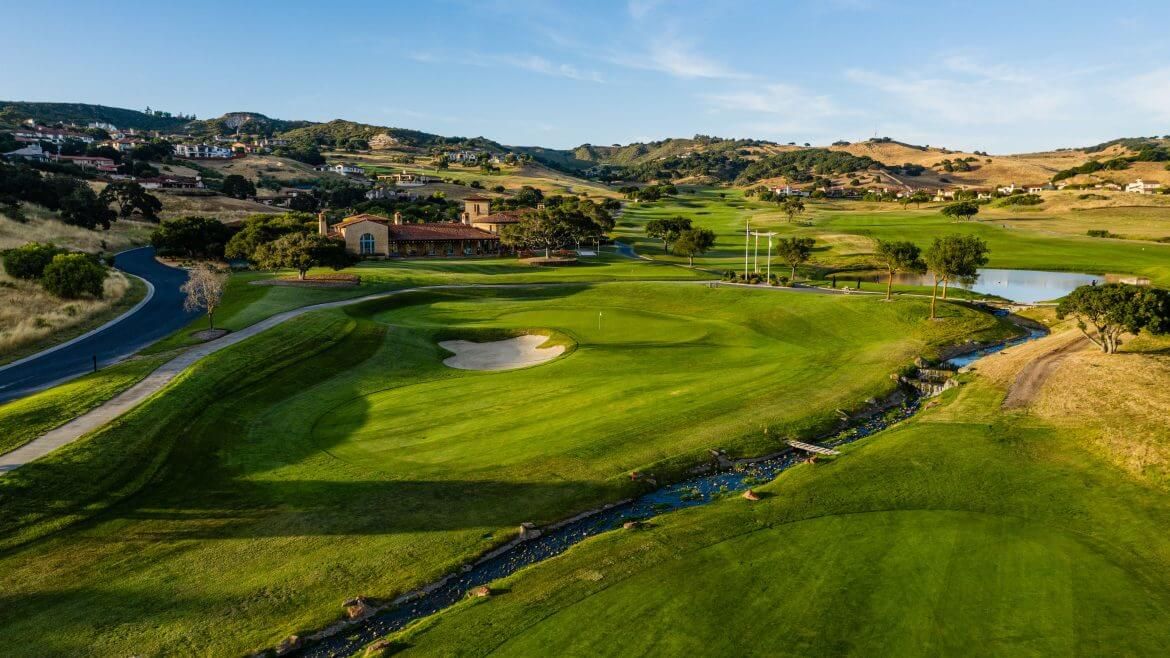
Some prime examples include premier clubs, such as Valhalla Golf Club and Canyata Golf Club, as well as upscale gems that Concert Golf Partners has recently added to our portfolio, such as TPC Jasna Polana, The Club at New Seabury and TPC Monterey at Pasadera (formerly The Club at Pasadera).
Why it’s happening
There are a few major drivers behind these ownership changes. One is succession. Members and owners of clubs that were founded decades ago are searching for a successor who will maintain the quality, traditions and culture of their clubs, while honoring their rich history. They want the club to remain exclusive and private, and they are able to find interested buyers, such as Concert Golf, that will commit to doing just that.
Another factor is the rising complexity of owning and operating premium clubs. Member expectations have risen. Modern golfers want more than just a pristine course. They expect luxury amenities, wellness offerings, engaging programs for the entire family and high-end hospitality services. Meanwhile, the complexity of running a private club has increased. Labor challenges, increased compliance issues and the inflated costs of capital improvements are making it harder for a single club to offer their members the very best service and product.
Additionally, the modern member wants simple governance. At premium private clubs, there is an increasing trend of younger members who only want to show up and regularly enjoy their club. They are not willing to sit on boards and subcommittees which make daily decisions that impact their club’s future. Instead, the growing preference is for their clubs to have strong, benevolent and experienced leaders that value the membership experience.
Impact on members
For club members, a change in ownership often brings questions and fear of the unknown. However, when premium clubs change hands, it often means upgraded facilities and amenities, expanded programming, financial strength and improved service. For example, at Concert, we are working on multi-million-dollar clubhouse and amenity upgrades at several clubs that we have recently acquired. This will improve the overall club experience and appeal, enhance the clubs, and allow them to thrive for decades to come.
Looking ahead
We have all seen the impressive National Golf Foundation data over the past five years that shows record high golf rounds each year and the number of new golfers, especially women, on the rise. As a result, private clubs are healthy and thriving. With continued high demand for private golf memberships and limited supply of top-tier properties, ownership changes are likely to persist.
Clubs seeking a long-term successor who will protect their history and traditions, along with clubs that seek capital, streamlined governance and/or operational expertise, will continue to turn to established owner-operators to pursue strategic deals. Those who are willing to preserve what is unique and special about the clubs and are able to put significant reinvestment capital back into these properties will be the ones who thrive in the years to come.
(This story originally ran in the September/October 2025 issue of Golf Inc.)