

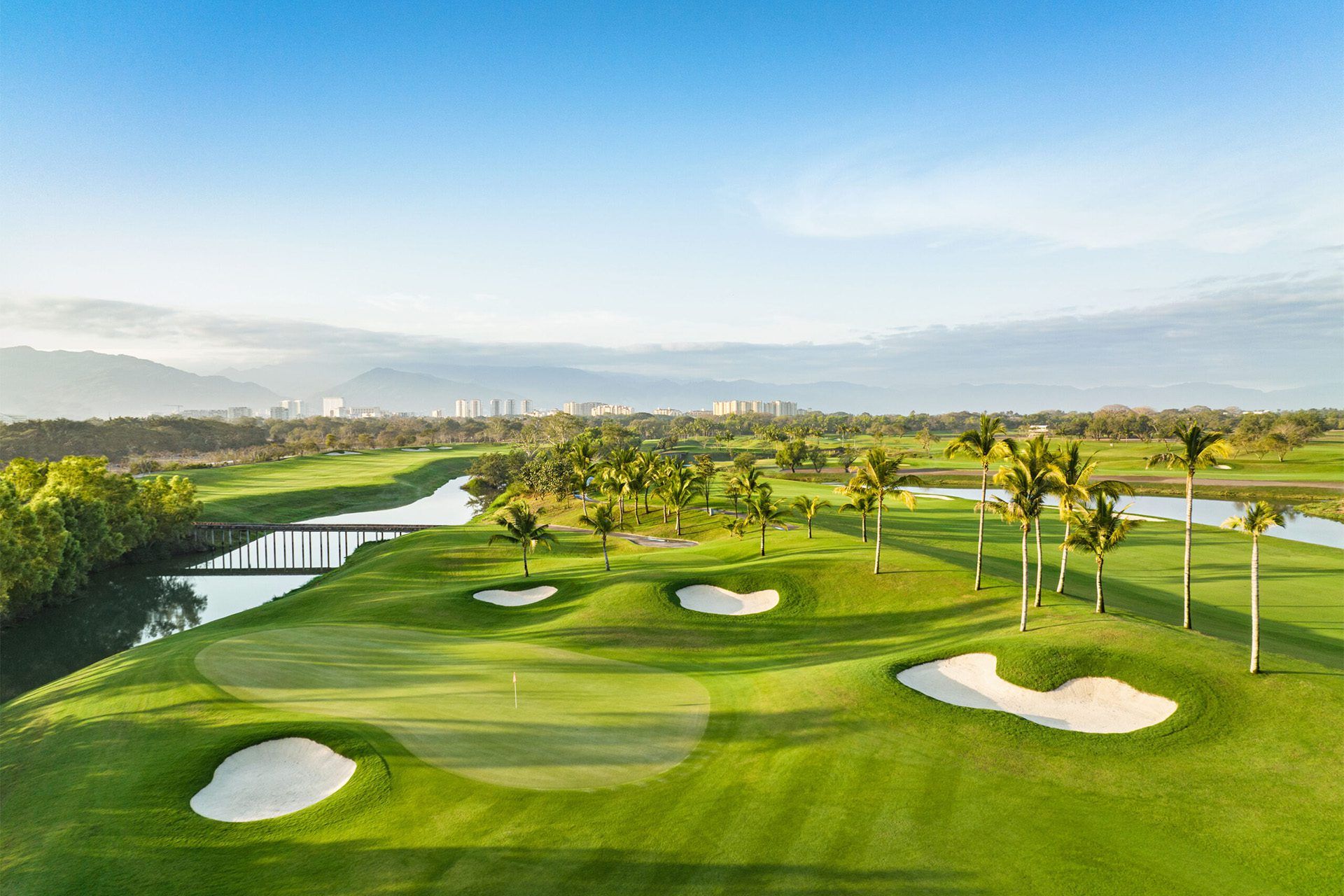
In November 2023 Tiger Woods’ first golf course design, El Cardonal Course at Diamante Cabo San Lucas, debuted as the site of the PGA Tour’s Worldwide Technology Open in the Mexican state of Baja California Sur.
The event brought the usually low-key PGA Tour tournament to life.
“I don’t think anyone else can move the needle like he has for us,” said Ken Jowdy, CEO and developer of Diamante. “Tiger brings it to another level.”
The success of Los Cabos and golf outside of the United States — but within the Americas — follows the track of golf’s continued growth.
The National Golf Foundation reported record numbers of U.S. golfers traveling to play the game, with more than 12 million Americans moving about each year since 2022, up from 8.2 million in 2018.
According to a study by market research company HTF Market Intelligence, the global travel market is projected to grow from $50 billion in 2023 to $130 billion by 2032. The global golf tourism market is on track for substantial growth, driven by interest in luxury travel experiences and golf-centric tourism activities worldwide.
Jason Deegan, managing editor at NBC Sports Next’s GolfPass, said the U.S. golf industry has always been a world leader when it comes to the game, leading to a trickle-down effect.
“As Americans get more comfortable with participating in off-course golf — simulators, Topgolf and other entertainment-based golf experiences away from an actual course — eventually other countries throughout North America will follow along,” Deegan said. “Plus, the dramatic rise in women and minorities playing golf post-pandemic can only help participation in other countries as well.”
The influence of professional and high-level amateur competitions is instrumental in building awareness for many destinations in the Americas outside of the U.S., beginning in 2010 when the Korn Ferry Tour (then the Nationwide Tour) started playing in South America in Bogotá, Colombia.
That led to the creation of PGA Tour Latinoamérica in 2012 by the PGA Tour in collaboration with promoters, clubs and national golf federations in Latin America, originally featuring 11 tournaments in seven countries in the Latin American region.
PGA Tour Latinoamérica and PGA Tour Canada merged to form PGA Tour Americas in 2024, with eight Latin American events in the first half of the schedule and nine Canadian sites for the second half. There was only one American venue.
The PGA Tour plays four events in the Caribbean, two events in Mexico and one in Canada in 2025. The LPGA plays once in Mexico and once in Canada. The Korn Ferry Tour began its 2025 season in the Caribbean and South and Central America with visits to The Bahamas (twice), Panama, Colombia, Argentina, Chile and Mexico.
Approximately 90 professional Latin American golfers compete regularly on the three tours run by the PGA Tour. A similar number of amateurs from Latin America are on Division I U.S. college men’s teams, a growing number that originates at the junior level. The Latin American Amateur Championship has been played since 2015 in Puerto Rico and countries such as Argentina, the Dominican Republic, Panama, Chile and Mexico, with the winner earning an invitation to the Masters, The Open Championship and, since 2023, the U.S. Open.
NGF also reports that in the past five years more than 40% of new golf course openings have had resort ties or are considered “destination” locations where golf is a prime focus.
Growth continues in Canada
Canada has consistently displayed its interest in golf, with the annual number of golfers at approximately 5.8 million (never below 5.5 million in the last decade) among its population of 40 million, according to Sporting Insights, a research and market intelligence firm that publishes the Global Golf Participation Report every two years in coordination with the R&A.
“This surge that we felt has stabilized with continued growth,” said Golf Canada CEO Laurence Applebaum to The Canadian Press in March. “Technological advancement, the shifting of lifestyles and the workweek has helped the participation side, as has the expansion of new formats for golf, like shorter formats [and] simulator golf.”
Adding to the excitement for Canadians and travelers are two new courses.
Located in Nova Scotia near the Atlantic Ocean, Fox Harb’r Resort celebrated its multi-million-dollar expansion with the opening of its new Ocean Course in May, designed by Canadian golf architects Doug Carrick and Tom McBroom.
Fox Harb’r is just around the bend to the west from Canada’s most famous resort golf at Cabot Cape Breton’s Links and Cliffs courses.
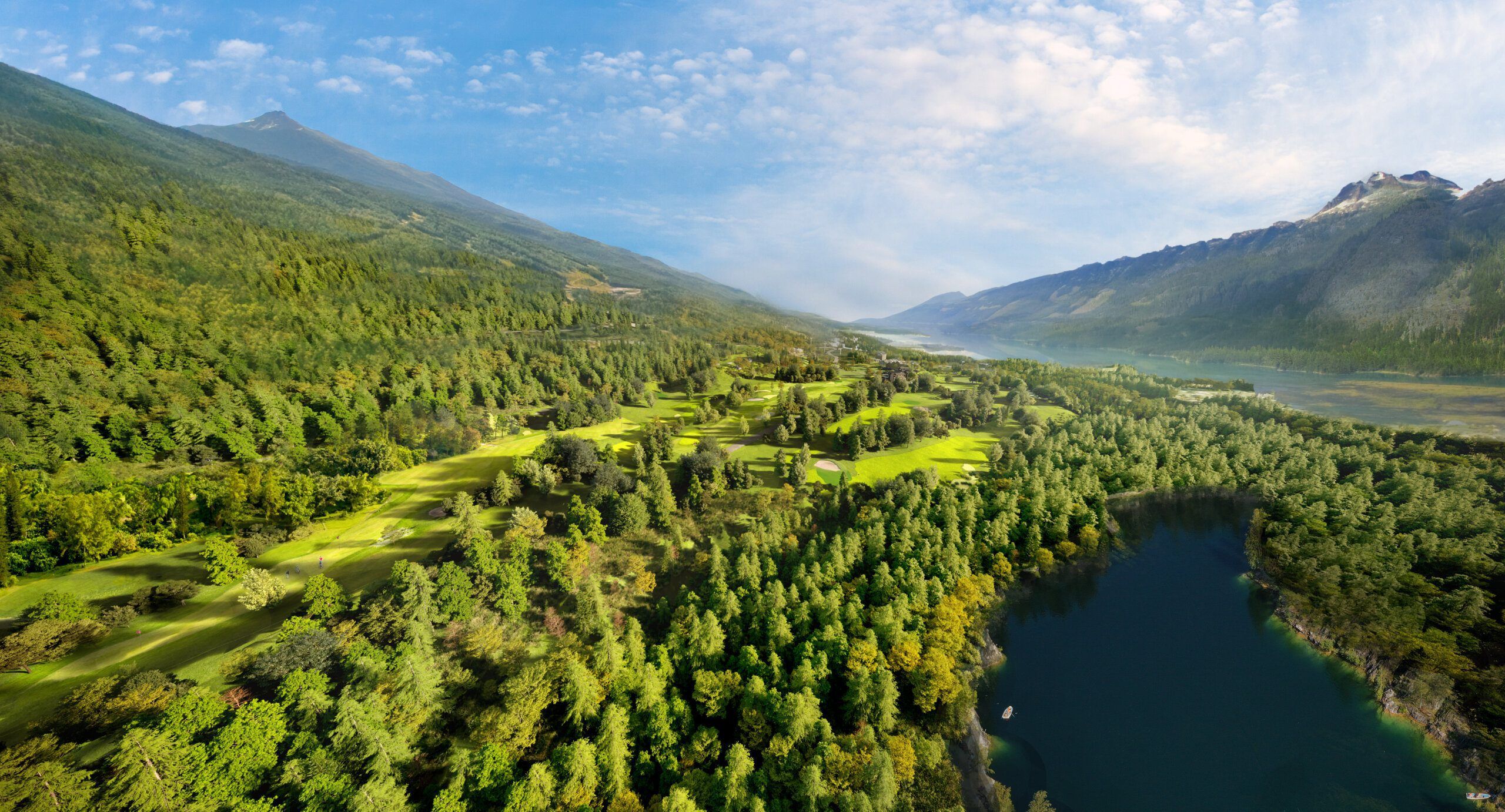
Soon to come on the far western side of Canada is another Cabot property, Revelstoke, with a course called Cabot Pacific. Set on a peninsula along the Columbia River in British Columbia, it is situated in an established mountain resort town known for hiking and skiing.
Come 2027, Revelstoke will be cut through the woodlands with terrific mountain scenery about halfway between Calgary and Vancouver. Alberta native Rod Whitman, who designed Cabot Links in 2011, is completing the Pacific course.
Jordan Vizena, director of membership & research for the National Golf Course Owners Association Canada said additions are going on at a trio of other courses: Golf La Tempete, south of Quebec City, opened a second 18-hole course in 2024; Bay of Quinte Golf & Country Club, two hours east of Toronto, is in the midst of building a second 18-hole course, with 12 of the new holes in play this year; and Tangle Creek Golf & Country Club, one hour north of Toronto, is currently building a short course.
Luxury projects in Puerto Rico
The Caribbean has one of the highest rates of golfer registration, according to the Global Golf Participation Report. The region is responsible for 37% of all golfers registered.
A location with increased activity is Puerto Rico, with the unearthing of two large golf projects following slow growth after hurricane damage: Moncayo Golf Club and Escenia.
Moncayo Golf Club is a private course designed by Tom Mackenzie and Martin Ebert. It is the centerpiece of a 1,100-acre residential and golf community on the island’s east coast, along with luxury hotel brand Auberge, a 9-hole short course, a 20-acre putting green and a golf performance center.
The second project is Escenia, a Rees Jones design, being built on the southwestern coast. It will feature 36 holes with amenities such as hiking, biking and a bilingual K-12 school. Escenia is pursuing the highest accolade in environmental stewardship, the Signature Platinum Certification with Audubon International, positioning it as the world’s largest Signature Platinum community by acreage. The project will take place in five phases, with completion in seven to 10 years.
The Pete Dye-designed Teeth of the Dog at the Dominican Republic’s Casa de Campo Resort & Villas is nearing the end of a facelift that began in January 2025 by resodding the course in Paspalum grass, which is ideal for its coastal setting. Bunker reconstruction, restoring the greens to their original size and sand capping fairways are parts of the work led by Jerry Pate Designs. The course is slated to reopen in November 2025.
Mexico promotes the game
American golfers are drawn to Mexican golf resorts in Los Cabos, Puerto Vallarta and Riviera Maya due to ease and cost. Off-course golf is taking hold with world leader Golfzon’s 18 locations and Topgolf’s first facility in Monterrey, built in 2020.
In March, the Mexican Golf Federation announced the launch of the National Golf School, an innovative program designed to promote golf in Mexico and bring the sport to new generations. The Mexico City location is slated to be first of 15 locations around the country.
Mexican golf received another boost in May with the inaugural Mexico Riviera Maya Open at Mayakoba, which marked the return of the LPGA to Mexico for the first time in eight years. The event became the first sporting event to have the Mexican brand as its title sponsor.
Scenic courses in Brazil and Argentina
Golf participation has more than doubled in the past decade in South and Central America, growing from 108,000 people in 2012 to 349,000 in 2022. Encouraging alternative formats is seen as a key to continued growth in the region.
“Golf tourism is gaining traction in Brazil and Argentina, offering scenic golf courses,” Deegan said.
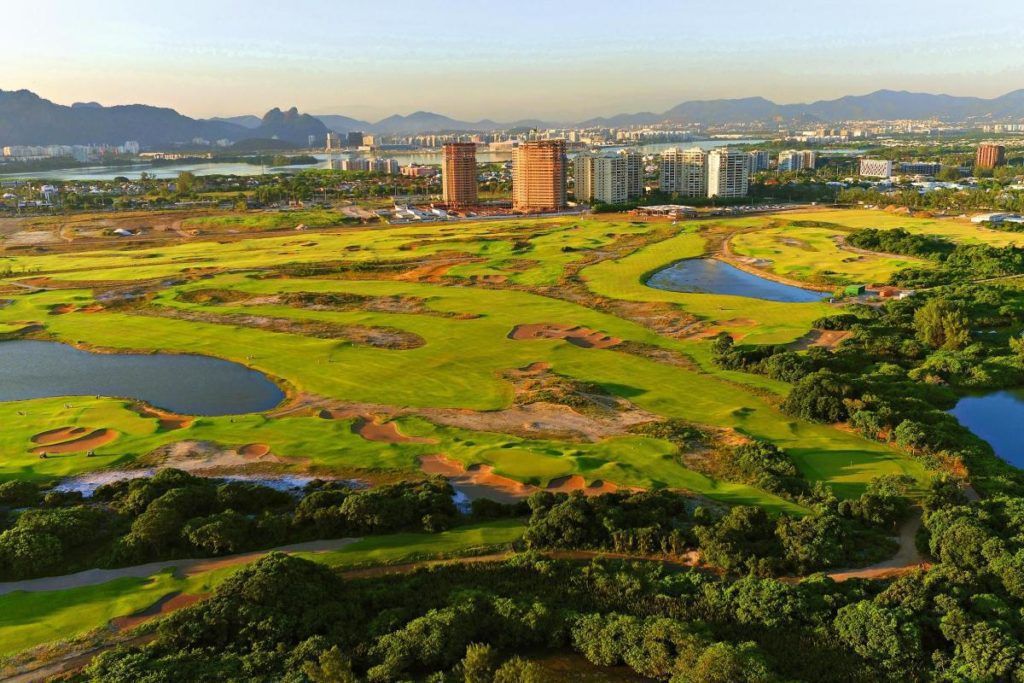
Most notable may be the Olympic Golf Course in Rio de Janeiro, Brazil.
In 2009, Rio de Janeiro, one of the 20 most populated cities in the world, had two publicly accessible courses for a population of more than 12 million people.
When the Olympic course was developed by architect Gil Hanse for the 2016 Rio Olympic Games, the course then transitioned into a public facility, operated by the Brazilian Golf Confederation and Rio’s city authority.
Green fees for Brazilian golfers are approximately $75 and the fee for international visitors is $150 to $225. The Olympic course has hosted the Brazil Open on PGA Tour Latinoamérica in 2016 and 2017 and in 2024-25 on PGA Tour Americas.
Argentina is the richest golf country in the southern hemisphere, with more than 300 courses and the most active golfers. The most famous course is The Jockey Club with its 36 holes north of Buenos Aires, designed by Alister MacKenzie, who also designed Augusta National alongside Bobby Jones. The Argentina Open on the Korn Ferry Tour is played at this course early every season.
(This story originally ran in the July/August 2025 issue of Golf Inc.)