
High participation, recurring membership revenue and under-optimized assets are drawing sophisticated capital to golf at an unprecedented pace.
————
Investors consider several metrics when identifying industries that can boost their financial gains and the golf industry is teed up to be an attractive wager.
With the rise in popularity of the game, there is currently a steady stream of customers eager for new ways to play. Expansive golf course properties mean appreciating real estate values and private equity firms are finding they can increase profitability with some operational improvements.
Steve Ekovich, executive managing director and partner of Leisure Investment Properties Group, said most investors — private equity, institutional equity and family office — are looking for the same thing and would love to have at least a $5 million top line.
“They want to find something that’s mismanaged, where they can go in and manage it and create accretive revenue immediately. Everybody wants the low-hanging fruit,” Ekovich said. “Mainly, they’re chasing yield, and they’re chasing a product type that seems to have a good 10-year run at a minimum and there are not any major storm clouds on the horizon.”
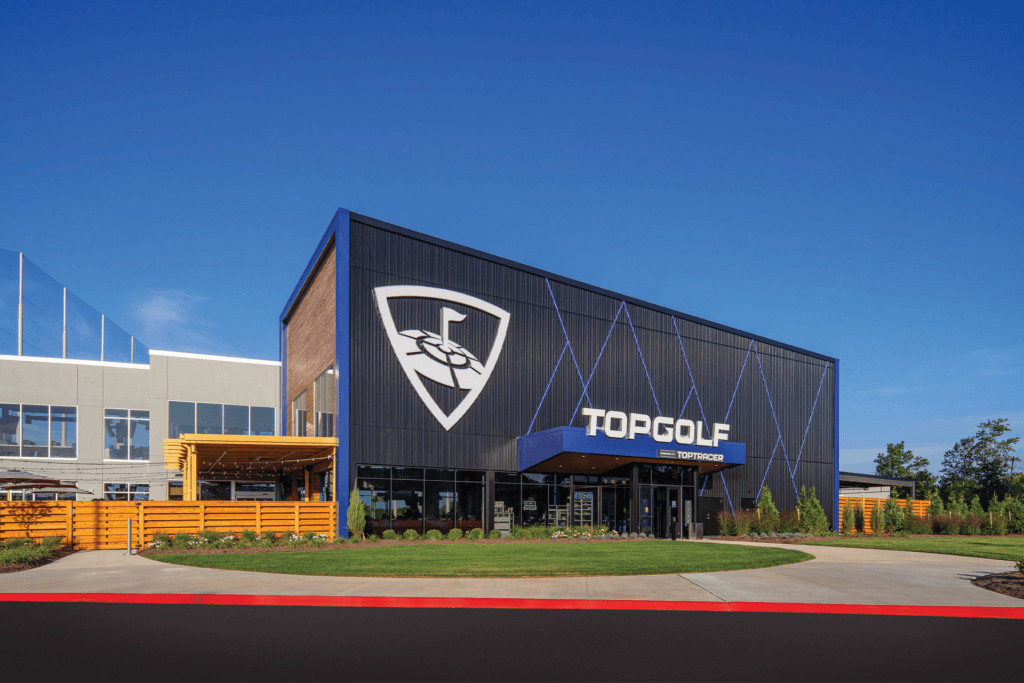
Industry watchers like David Hyland at The Business of Golf newsletter estimate private equity firms have put more than $5.5 billion into the golf industry in the past two years. One such example is Leonard Green & Partners, L.P.’s recent deal to buy a 60% stake in Topgolf and Toptracer from Callaway Golf Company (formerly Topgolf Callaway Brands Corp.).
The transaction values Topgolf at about $1.1 billion, with Callaway Golf Company to receive about $770 million in net proceeds.
The overall golf industry has proven itself to be an economic driver on par with many major industries. The National Golf Foundation and the American Golf Industry Coalition put golf’s United States economic activity at $101.7 billion annually. For comparison’s sake, the golf organizations report that the U.S. grain farming industry market is about $102.8 billion, and the global running shoe market is estimated at $48.4 billion.
Ekovich said volatility in the core commercial real estate market is driving investors to consider golf course properties. He said golf continues to offer compelling risk-adjusted returns relative to core CRE, with cap rates of 10% to 16% versus 5% to 9% for traditional core assets, and it doesn’t hurt that golf is a more fun investment than an industrial building or a big box retail property.

“People are incredibly passionate about golf,” Ekovich said. “Passion is an amazing driver in golf that other product types can’t match.”
Leisure Investment Properties Group offers brokerage and advisory services to leisure properties, including golf courses, marinas, master-planned communities, RV parks and resorts. The group is considered the largest leisure property broker in the country, having sold or underwritten $3.2 billion in properties since 2011.
It’s an education for those real estate investors looking to branch into golf, Ekovich said, and they need to understand the golf business, have an operator lined up and understand that golf courses aren’t scalable in the same way as apartment complexes or retail centers.
“There’s no scalability. If you want to buy 1,000 apartments or a $50 million or $100 million retail center, there are plenty of them out there, but you can’t buy 10, 20 or 30 clubs,” Ekovich said. “Those portfolios are nonexistent; most of those portfolios have already been bought up.”
Ekovich said investors see this huge arbitrage opportunity, and while there’s more risk in golf, they see this as a safer play because there’s such an excess demand over supply from the number of golfers to the supply of golf courses.
Setting the standard

Ideal golf investment properties have plenty of available acreage, a good location with a population that can afford to play golf, excellent course design and mild weather year round, Ekovich said.
Larry Hirsh, president and founder of Golf Property Analysts, said investor interest in the golf course industry is often geographically based.
“Every market is different because of how much competition there is, what type of competition there is and what pricing exists in that market,” Hirsh said. “Some investors are looking simply for properties that haven’t established EBITDA or net income. Other investors are looking for turnaround opportunities. Some investors are looking for golf courses that have a big food-and-beverage component. And others don’t like food and beverage. I don’t really see a favorite type of investment, per se.”
Golf Property Analysts has offered consulting, appraisal and brokerage services to the golf industry in the U.S. and abroad since 1980. Hirsh has brokered more than $125 million in golf course properties and authored the 2021 book “The Culture of Golf.”
Private clubs with annual memberships are perceived as less risky investments than daily-fee courses but changing golfer demographics and course amenities could alter that tenet.
“There’s really a lot of moving parts to what investors are looking for,” Hirsh said.
Scott Van Newkirk, chief development officer at Troon, works with potential clients to help them understand the value proposition of partnering with a management company.
Troon is considered the world’s largest golf and golf-related hospitality management company, operating in almost every U.S. state and more than 40 other countries. The Scottsdale, Arizona-based company provides services to private, daily fee, resort and municipal golf properties, as well as to homeowner associations and private residence clubs.
Van Newkirk concurs that private equity firms and institutional investors are seeking individual club assets capable of delivering greater-than-typical returns.
“The return expectations are high on their side. So, it must work financially,” Van Newkirk said. “It typically will come down to does the performance of the asset — and our involvement — improve the returns?”
Daily fee facilities are trying to generate more rounds, while private clubs are looking to add more members and increase their use of the club, Van Newkirk said.
New faces on the greens
“The most interesting thing to me was the COVID impact, where golf became cool,” Van Newkirk said. “People in the industry were concerned that it was a bump caused by COVID [closures] and it would kind of fall back once things reopened … what we’ve seen is not that.”
Van Newkirk said golf participation is at an all-time high, and because of that, the financial performance of many of the clubs is at an all-time high.
According to the American Golf Industry Coalition’s 2025 Annual Review, 136 million Americans over age six play, watch or read about golf, up 43% since 2016.
New demographics are discovering the game — women, various ethnicities, younger people — and longtime players have found their way back to the clubhouse. On-course participation in the U.S. is estimated at 29.1 million people, with growth across all segments.

“There are so many different ways that people can consume golf today, with all the growth in golf entertainment,” Van Newkirk said. “It’s in a really good spot, and I think this has led the interest of private equity to invest.”
Nontraditional golf experiences such as ball-tracing technology Toptracer and entertainment venue Topgolf are good for the sport, he said.
“Gamification of the driving range experience is super popular right now,” Van Newkirk said. “There’s a large portion of the population where that’s the only way they’re consuming the game.”
Van Newkirk said if somebody becomes extremely interested in the game, they eventually find their way to green grass.
Ekovich agrees that golf is “cool” again, as evidenced by the celebrity status of golfers such as John Daly and Rory McIlroy, who lend their likenesses to advertising outside the golf ecosystem.
New gamification offerings at golf courses and driving ranges make more subscription models possible, which “brings more stability to the income stream and therefore more private equity is more interested,” Ekovich said. “Investors love the stability. If it rains, it doesn’t matter if they have member status, right? If it snows, members pay dues.”
Hirsh said the changing clientele of golf courses means the amenities should keep pace. Younger players might want access to a fitness facility but be less interested in wearing a jacket to the on-site restaurant. The older crowd is increasingly interested in club add-ons such as paddle and pickleball.
All those renovations and added amenities come at a cost. He cautions against clubs that have spent beyond their means.
“If I were going to join a club now, and it were a member-owned private club, the first thing I would ask is, ‘How much debt do you have?’” Hirsh said. “I think there’s going to be a lot of clubs that could find themselves in a difficult situation because of their debt load, because in the past six years, a lot of clubs have spent a lot of money on improvements and enhancements because golf surged.”
Looking to the future
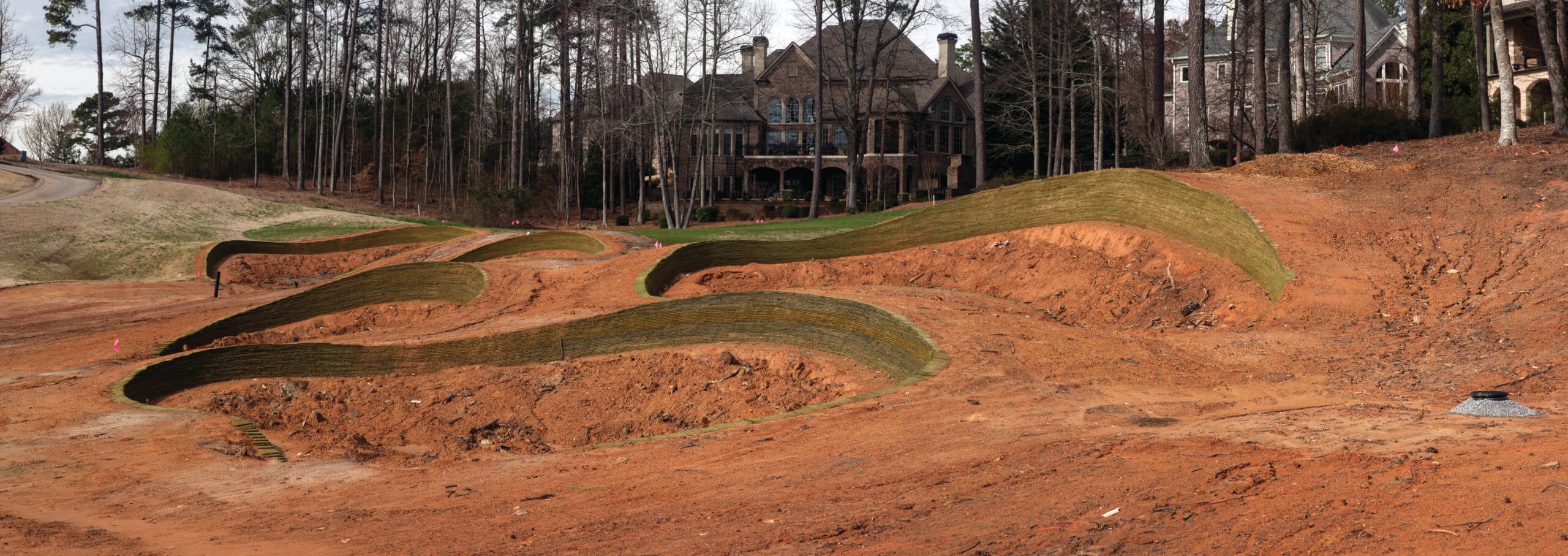
Pre-pandemic, the supply of golf courses in the U.S. was contracting each year. Now, it seems more courses are being planned or constructed. Van Newkirk said he hopes that it will moderate before there’s an oversupply in the market. Renovations to existing courses are attracting investment dollars too, as architects trend toward designs that are more entertaining and playable for varying skill levels.
“Back in the mid- to late-90s, they were trying to make courses as hard as it could possibly be in the design, and I think that’s definitely softened up,” Van Newkirk said.
Shifting weather patterns and economic volatility are risk factors in golf course investments, especially if membership rates flatten while the cost of fuel, water and labor continue to rise.
Ekovich said golf courses have so far been able to keep up with rising costs by increasing membership dues and raising green fees.
“The golf industry has been largely resilient amid economic pressures for the past 50 years or so,” he said. “As discretionary spending goes, people might be willing to forgo dining out if it means they can still socialize and enjoy nature on the golf course.”
On the flip side, as more investment in the golf industry leads to greater consolidation and professional management of courses, golfers might pay more to play.
“The junky club where you might have been able to play for $25, if somebody comes in and buys that — it’s got a great design, and they put a bunch of money into it — it’s no longer going to be $25. It’s going to be $95,” Ekovich said. “Golf will get more expensive with consolidation, but there will be better golf and better conditions.”
Hirsh said he’s concerned that the high cost to play golf, from equipment to memberships, might dissuade new golfers from continuing in the game if the U.S. economy falters.
“I just wonder whether the economics will discourage the next generation,” Hirsh said. “I’m not saying it will; I’m just saying I wonder.”
Bain Capital recently acquired Concert Golf Partners from Clearlake Capital Group in a deal valued at more than $1.3 billion, which could be a bellwether for the future of golf industry investments, Van Newkirk said. Concert Golf owns and operates private golf and country clubs in 39 U.S. locations.
“I think it’s because of the popularity and the improved financial performance, you’re going to continue to see more structured capital or private equity come to the space,” Van Newkirk said. “I think you’re going to continue to see more and more private equity trying to get into investments in and around the golf industry.”
Van Newkirk wonders if equity firms and institutional investors that previously focused on entirely different industries will now see potential in the golf industry.
“Companies that were focused on investing in healthcare or software, some of the headwinds that they see in those industries are less than the headwinds that they would see in the hospitality or golf-related hospitality industry,” he said.
————
This article originally appeared in the May/June 2026 issue.