


Few club executives witness a transformation from the inside out, but Ryan Glenn has lived one for more than a decade.
When he arrived at Lakewood Ranch Golf & Country Club in November 2013 as director of food and beverage, the Florida property was still under the steady ownership of its original developer, Schroeder-Manatee Ranch, Inc.
Today, Glenn sits in the general manager’s chair and the club he helps lead looks dramatically different.
That shift accelerated in March 2024, when Heritage Golf Group acquired the club and began reshaping its future.
“I’ve had a front-row seat to Lakewood Ranch’s evolution,” Glenn said. “What Heritage Golf Group has brought is structure, accountability and a willingness to invest where it matters most.”
Within a matter of months, Glenn started to notice a variety of positives at the club, especially from an operational perspective. For instance, its best practices began to be standardized across several departments, including agronomy planning, labor models and food and beverage cost controls.

“We’ve implemented more disciplined budgeting processes, better forecasting tools and clearer KPIs across the operation,” Glenn said.
Various measurable impacts have occurred as fundamental company training has been implemented, leading to a better food and beverage experience.
The club’s food and beverage offerings have also evolved as the club’s purchasing and menu engineering initiatives have been boosted.
Consistency has become the name of the game at Lakewood Ranch. Across every club amenity, operational consistency has risen, which has enhanced the members’ experience.
“That’s ultimately the driver behind everything we do,” Glenn said.
In this business, everything comes back to one thing: giving members and guests a better experience. And plenty of clubs are realizing they don’t have to tackle that alone.
More properties are teaming up with owner-operators and management groups that know how to move the needle. The early wins are already showing up on the ground, and the following stories highlight how these partnerships are making it happen.
Reaching a higher level
Over the past two years, Glenn believes Lakewood Ranch didn’t necessarily experience a turnaround as it had a firm foundation well before Heritage Golf Group was ever involved.
“Heritage followed through on its commitment to reinvest in the property, whether it’s golf course conditions, clubhouse enhancements or amenity upgrades,” Glenn said.
Through this commitment, Lakewood Ranch’s course conditions improved noticeably in a short time span, as its four 18-hole championship courses’ aesthetics became more consistent. This consistency then had a direct impact on members’ approval, as the club’s member satisfaction scores have increased year-to-year since March 2024. The steady rise in satisfaction is being noticed outside of the club too, since Glenn has also seen an increase in membership desirability the past few months.
“This wasn’t a rescue. It was an acceleration,” Glenn said. “Heritage has elevated Lakewood Ranch to a much higher level.”
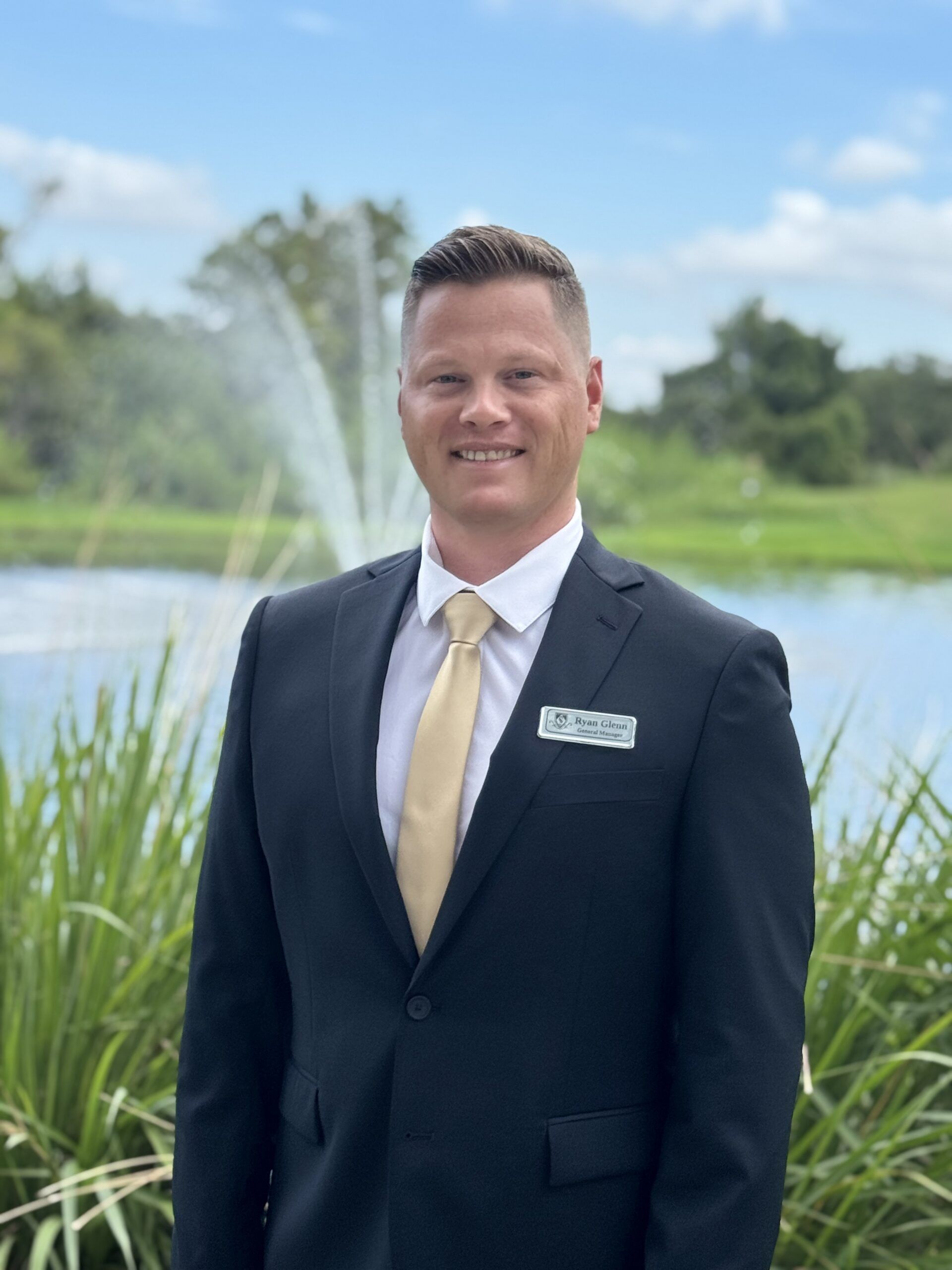
This higher level is being noticed on a revenue basis. With Heritage’s assistance, Lakewood Ranch staff members are now thinking more strategically about revenue than they ever did before. They’re not just seeking growth, but sustainable growth that’s experience driven.
Heritage has helped Lakewood Ranch revisit its membership structuring and pricing strategies. Staff members have learned how to improve the club’s programming across a wider array of offerings, from golf to racket and social events. Off seasons are no longer stagnant. Instead, amenities are being utilized more fully during off-peak times, resulting in more consistent revenue.
These types of strategies are often implemented at each of the clubs that Heritage partners with. And to ensure every club has a unique experience, Heritage focuses on why each club is distinct, especially when it comes to its location. With Lakewood Ranch’s Florida setting in mind, Heritage devoted its attention to two key offerings: golf and rackets.
“It helped Lakewood Ranch enhance its golf experiences, including instruction and technology integration,” Glenn said. “And it expanded its racket programming, as pickleball and tennis have both grown. Heritage has empowered us locally to execute what fits Lakewood Ranch.”
One aspect of Heritage’s influence has been noticed more than any other: the guest and member experience.
Since March 2024, a new 18-hole course has been added to the property, leading it to its present-day 72 holes. Amenities and service touchpoints have been upgraded too, as has the club’s training and overall culture — with a prime focus on hospitality.
“Heritage has made it very clear that every decision should be driven by the member experience, which has led to increased member retention and higher utilization of club amenities,” Glenn said.
When Heritage first partnered with Lakewood Ranch, it was mainly committed to understanding its operations and identifying unrealized opportunities. Now that the partnership has been firmly established, Heritage has a collaborative relationship with Lakewood Ranch based on alignment, trust and a shared vision.
“We have confidence in where we’re headed,” Glenn said. “There’s a clear vision and the resources to support it.”
Culture and operations shift
This year, Landscapes Golf Management is celebrating its 10th anniversary as the operator of King’s Deer Golf Club in Monument, Colorado. Throughout the past decade, King’s Deer has evolved in various ways.
Summer White, assistant general manager at King’s Deer, said the club has a firm foundation across every facet of its operations, including accounting, onboarding and recruiting.
“These anchors have brought consistency and clarity to how we operate day to day,” White said.
From a cultural standpoint, a noticeable shift has also occurred, as the club has integrated Landscapes Golf Management’s FISH! philosophy: Be There, Play, Make Their Day and Choose Your Attitude. With this people-first, culture-first mindset, staff members have been trained to provide guests and members with positive high energy before, during and after each of their experiences at the club.
The FISH! philosophy has helped King’s Deer create an environment that people genuinely want to work in. Team members truly care about what they do and how they treat others. They’re given opportunities to become leaders too, leading to a culture of employees that earn advancements based on their work performance.
Small operational details also matter at King’s Deer.

White said every interaction during members’ and guests’ journeys is considered with the club’s “big picture” in mind, resulting in the entire facility’s elevation. As an example, the club is focusing more on offerings such as its dueling pianos event, which has increased its energy and connected people beyond golf. Programming is expanding, while communication has been enhanced among members and guests and events are steadily being created to “make the club feel more alive.”
“We prioritize families,” White said. “Our PGA Junior League has taken off, optimizing participation and breaking barriers for boys and girls of all backgrounds in our community.”
Through ever-improving experiences — and an overall product at the club now — financial performance is augmented too.
Guests are more connected to the club than ever before, leading them to stay longer, become more engaged, increase their involvement in events and seek membership opportunities.
“Revenue growth has really been a byproduct of creating a place people want to be,” White said.
King’s Deer staff members work steadily alongside Landscapes Golf Management’s corporate and regional teams, receiving consistent guidance that has resulted in a high-performing team.
The last 10 years have required a “collective effort,” White said, and a “shared vision” that will remain intact well into the future.
“At the end of the day, our goal is simple. We want King’s Deer to be more than just a golf course,” White said. “We want it to be a place where people can step away from the noise of everyday life and connect, whether that’s through golf, events or time spent with others.”
She said Landscapes Golf Management has played a major role in helping the club work toward that goal.
In 2016, Landscapes Golf Management helped Winchester Country Club in Winchester, Virginia, achieve its goal. It was preparing to potentially close. But within 24 months, its entire outlook changed, as $500,000 of annual losses became more than $500,000 in earnings before interest, taxes, depreciation and amortization (EBITDA).
Over the past eight years, total rounds played have increased by 40%, while membership has risen from 343 in 2017 to 740 this year. Why? In Steve Iadarola’s opinion, Landscapes Golf Management’s experience across all departments had a substantial impact almost immediately.
As general manager, Iadarola personally witnessed the company’s introduction of operational efficiencies, implementation of standard operating procedures and elevation of service standards.
Potential leaders have been developed through Landscapes Golf Management’s best management practices programs. Its Principles of Leadership and Foundations of Management courses (part of its “LUniversity”) have influenced the club as well, as members’ experiences have improved, positive word of mouth has risen and membership has steadily increased.
“Annual dues revenue has also grown by roughly 300%, and the club scored an impressive 92 on its member’s survey this year,” Iadarola said. “Trust has been built and reinforced over time, and it remains central to our partnership with Landscapes Golf Management and its success today.”
A transformation beyond traditional golf
Last year, 11 years after acquiring Cowboys Golf Club in Grapevine, Texas, Arcis Golf decided the club didn’t just need a renovation; it required a meaningful transformation.
The owner-operator of Cowboys Golf Club chose to close it and begin to reinvest in it considerably. After being closed for nearly 12 months, the club reopened earlier this year, offering guests and members a rebuilt, modernized golf course that will “support a more premium product” long term.
Jeff Levine, senior vice president of operations at Arcis Golf, said this move is an evolution in how the company operates and what it can deliver day to day.
“That alone has created a different operating baseline,” Levine said. “At the same time, we also expanded its model beyond traditional golf.”
A Toptracer-enabled range has been added, as has an 18-hole putting course. Food and beverage offerings have been enhanced too, allowing the club to operate for more hours every day while also serving a wider array of customers. As a result, the club’s customer base is increasing, including non-golfers. Expenditures per visit are rising as well, and the club has more successful group and event activities than it previously did.
“Cowboys Golf Club has a more balanced operating model with multiple ways to drive performance,” Levine said.
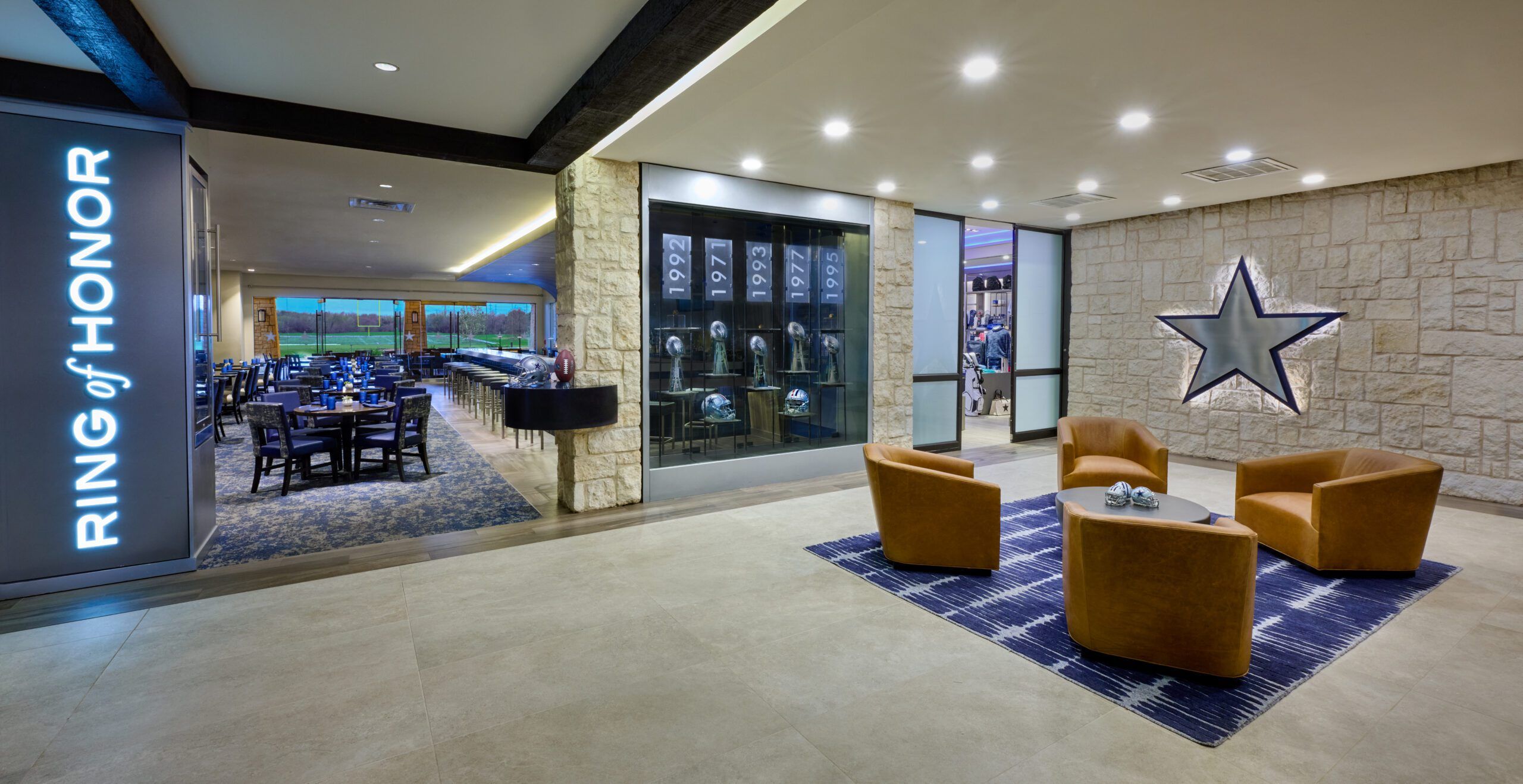
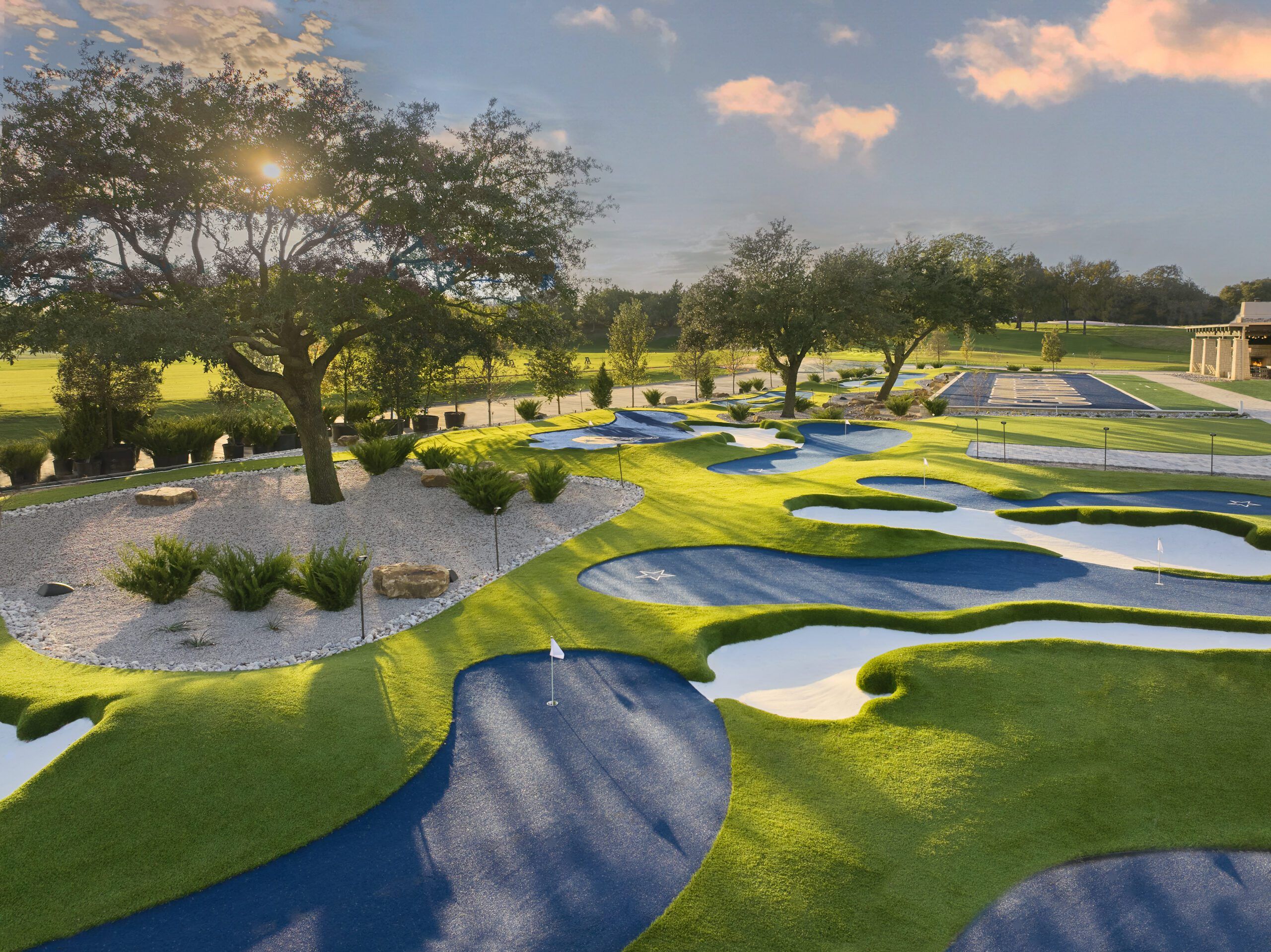
This variety of performance drivers is associated with the club’s repositioning from a traditional daily fee course to a hospitality and golf experience.
“Our intent is clear. Instead of relying solely on rounds, we’re creating numerous reasons to visit — practice, putting-course play, dining, events and group experiences,” Levine said. “That changes how often people come out, how long they stay and how they use the property.”
The club’s golfing activity is rising beyond typical tee time windows. Group and corporate business have been increasing. More people are becoming engaged with the club across an assortment of customer segments. And the alignment between golf and food and beverage performance is more noticeable than it’s been in years.
Revenue is rising sharply too, not when it comes to rounds, but with regard to every single visit. Simply put, people aren’t only spending money on golf. They’re also buying more food and beverages, using the club’s technology-driven practice facilities more regularly and purchasing memberships, which are presently structured to support repeat play.
“Golf is still the foundation, but we’ve added additional layers,” Levine said. “The property feels more connected.”
Everything works together now, according to Levine, from the course and practice facilities to the events and social opportunities. Members and guests have more well-rounded experiences than they did prior to the transformation.
“The foundation is in place. The focus now is to build demand, refine the experience and grow into the opportunity over time,” Levine said. “We see unlimited upside as the model continues to mature.”
Choosing partnership over a sale
During the uncertainty of the pandemic, Travis Pointe Country Club in Ann Arbor, Michigan, found itself at a crossroads.
Like many private clubs, Travis Pointe experienced membership losses during COVID-19. As revenues declined, club leadership began exploring long-term options, including a potential sale to a private-equity-backed club owner. The proposal ultimately fell short of the two-thirds member approval required to move forward, prompting the board to reassess the club’s future.
“We kind of sat back and said, ‘Well, okay. So we did not get the majority we needed to do this. What really is the future of the club?’” said Joe Golden, president of the club’s board of directors.
As board members evaluated the proposal, they concluded that while a sale offered operational expertise, it also raised concerns about preserving the club’s long-term vision as a member-owned facility. Instead, they began exploring whether they could gain many of the same operational benefits without giving up ownership.
After researching several management companies, Travis Pointe selected Bobby Jones Links.
Golden said the partnership provided expertise in areas where volunteer boards often struggle, including financial management, human resources, staff development and operational planning. At the time, the club had experienced recurring operating losses that resulted in annual member assessments.
“We needed discipline,” Golden said.
Under the management partnership, Travis Pointe implemented stronger budgeting practices, operational processes and performance measurements.
The club also gained access to purchasing efficiencies and industry expertise that would have been difficult to develop independently.
One of the most significant changes has been the club’s ability to measure member satisfaction and operational performance more consistently. Staff training and service standards have also become more structured, helping create a more consistent member experience across golf, dining and other amenities.
The improved financial position has allowed the club to think more strategically about its future. Travis Pointe recently completed a clubhouse renovation and is beginning work on golf course improvements as part of a broader long-term vision for the property. The club secured member approval for a multi-million-dollar investment program that includes upgraded dining venues, enhanced gathering spaces and significant golf course improvements. Golden said the goal is to position the club for long-term growth while creating an experience that appeals to both existing members and future generations.
“It gave us the confidence that we had a management team partner who would help us through this process,” Golden said.
Today, Golden views the management relationship as a way for the board to focus on long-range planning while relying on experienced operators to execute day-to-day operations.
This article originally appeared in the July/August 2026 issue of Golf Inc.