

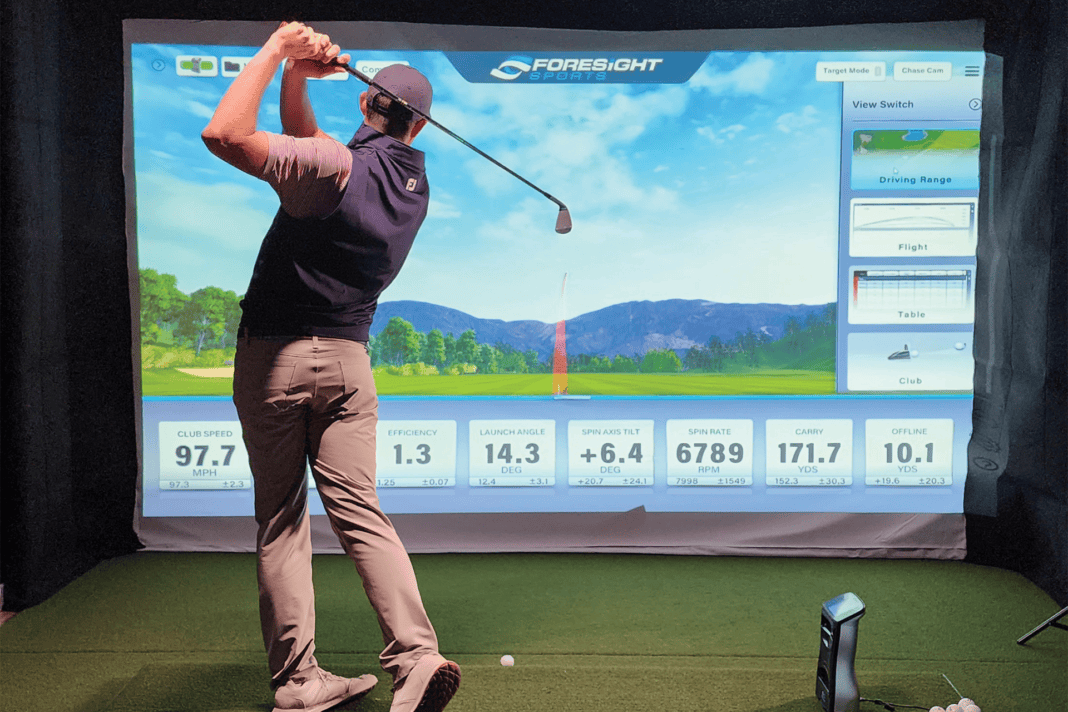
Mrs. Moreman watched her husband play golf two or three times a week, but she did not play. Then she began hitting balls in a simulator bay at Hurricane Creek Country Club in Anna, Texas, avoiding many of the pressures of a first trip to the course.
Simulator sessions led to lessons, her own set of clubs and occasional rounds with her husband. The couple has also signed up for a couples golf event.
“She did not play golf at all before,” said Will Haughey, PGA golf professional at Hurricane Creek. “She now has her own set of clubs; it all started from playing in the simulator.”
Her progression shows why indoor golf has become more than an offseason diversion.
Simulators give beginners a gentler introduction to the game, help committed players improve and keep members connected when weather interrupts outdoor play. The same bays can support instruction, leagues, events, food and beverage, club fitting and retention.
A bridge to green grass
Golf can intimidate beginners with unfamiliar rules, etiquette and pace-of-play expectations. A simulator removes much of that pressure and requires less time.
“You can take those first baby steps and have a good time in a consequence-free, fun environment,” said Jon Sherman, author of The Four Foundations of Golf and co-host of “The Sweet Spot” podcast. “A current golfer can bring friends who are non-golfers. It gives them a taste of what it is about.”
Some guests will prefer the social outing. Others will want to see their shots outdoors. Sherman said the accuracy and graphics of modern systems strengthen that bridge, particularly for women and juniors who may find the traditional golf environment intimidating.
Rupe Taylor’s experience shows how far indoor practice can carry a player. After building a home studio in Virginia Beach three years ago, he practiced almost exclusively there and used Trackman winter tournaments to create repetition under pressure. That work helped him qualify for the 2025 PGA Championship.
“I started playing some of the best golf of my life,” said Taylor, now head golf professional at Old Trail Golf Club in Virginia. “I honestly don’t think I would have done that if it wasn’t for having a golf simulator in my home.”
At Old Trail, Taylor wants the club’s swing lab to become more than a place to log practice time. He plans to use the space to help beginners understand why the ball behaves as it does and to make technology part of their development. That guided instruction, he believes, can build the knowledge and confidence players need before stepping onto a course. For facilities without a dedicated room, Taylor has seen PGA professionals temporarily rearrange carts and create a winter teaching bay in the cart barn.
Taylor also compares simulators to bowling alleys because they feel approachable.
“As beginners become comfortable hitting a ball and understanding the game, visiting a golf course becomes a more natural next step,” he said.
Justin Carlson of The Indoor Golf Shop sees a similar opportunity with younger, time-pressed players. A simulated round can take about 45 minutes, letting them sample the game without lost balls or pace-of-play worries.
“There are a lot of new golfers who are not intimidated by the indoor space,” Carlson said. “Once they become comfortable there, it can be a natural transition into the outdoor game.”
Keeping the club relevant
Hurricane Creek’s simulator strategy began as the 475-member, member-owned club prepared to close its course for a yearlong rebuild by Beau Welling. Members would play elsewhere during the closure, but the club needed reasons for them to keep visiting and stay engaged.
The club installed one commercial-grade bay in an existing swing room off the golf shop, preserving space for a second. Demand quickly justified adding the matching bay.
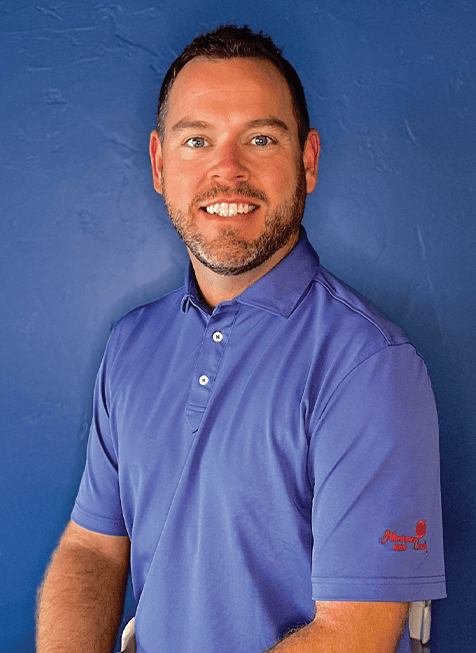
Before the closure, staff introduced the simulator through tournament closest-to-the-pin contests. Moving players from 18 holes to a famous virtual par-3 hole familiarized them with the technology.
During the rebuild, simulator nights offered three Wednesday and Thursday time slots, rotating 9-hole formats and a quarterly points competition. A Whoville par-3 contest at the holiday party broadened the bays into a family activity.
Flat-screen televisions and seating turned the room into a social space where about six players per bay can play golf, watch football and order food and drinks.
“It has been a huge hit for us,” Haughey said. “You can have football going on and members playing the back nine at Augusta, having a burger and a beer and enjoying the night.”
Haughey estimated the bays average an 85% to 90% booking rate and reach 100% at times.
Texas has no conventional northern offseason, but Haughey said extreme heat, unpredictable winters and washouts create similar demand. Members reserve indoor time when temperatures reach 105 degrees or it’s a rainy weekend.
Revenue is part of the ROI
Hurricane Creek invested about $30,000 per commercial bay. Each installation took one to two days once the room was ready.
“The club does not charge members a separate bay fee, so the return is measured as an amenity rather than a direct payback calculation,” Haughey said.
The amenity supported tournaments and social programming during the closure and gave prospective members a visible point of differentiation. Now full with a waitlist, the club does not credit the bays alone, but Haughey said they helped demonstrate value while the course was unavailable.
Other facilities can build a direct revenue model around food and beverage, lessons, leagues and club fitting, Sherman said. Instruction can fill afternoons and weeknights, while leagues and group play drive evening and weekend demand.
Carlson said cold-weather courses can convert underused banquet rooms or storage areas into seasonal simulator spaces. Equipment can be installed for winter and removed when outdoor demand returns.
Carlson said a prepared room can house a functional setup for roughly $10,000 to $20,000. Higher-end systems may reach $40,000 to $50,000, while elaborate custom rooms cost more. Operators should match the system to expected use and revenue.
Offseason progress engine
For instruction, indoor golf provides immediate, repeatable data on launch angle, carry distance, club path and other measures. A coach can request a small change and evaluate the next swing without waiting for ideal weather or relying only on ball flight and feel.
“That feedback keeps teaching professionals productive in the offseason and helps clubs maintain relationships with golfers who might otherwise disappear until spring.” Sherman said. “Software games and performance challenges also make practice more engaging.”
For operators, the opportunity may be less about installing the most sophisticated simulator and more about determining what role indoor golf should play at the facility. A teaching bay, winter league space or year-round social venue can require different investments, but each can extend the relationship between the golfer and the club beyond an 18-hole round.
Sherman has seen the transfer in his own game. Winter practice with a home launch monitor helped him reach a higher competitive level without beginning each outdoor season rusty.
“It offers a consequence-free environment to improve,” Sherman said.