

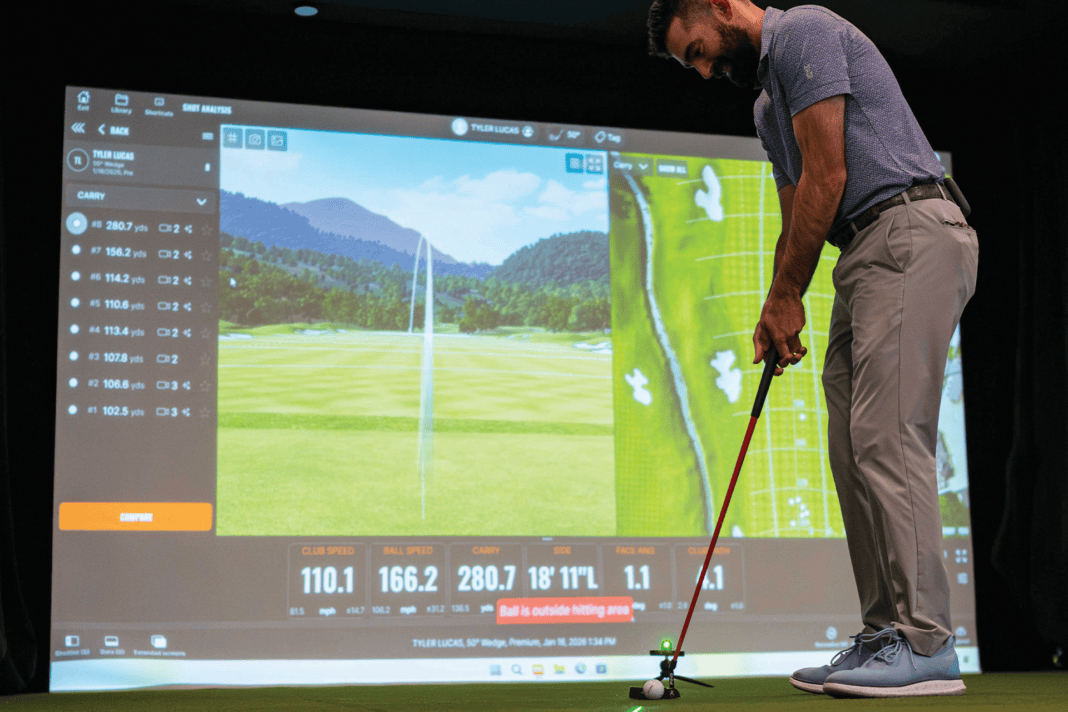
Golf simulators offer golf facilities opportunities to extend the playing season, improve instruction, increase revenue and create new member amenities. But determining which technology to purchase requires more than comparing launch monitors and software features.
The Golf Club at Yankee Trace in Centerville, Ohio; Raceway Golf Club in Thompson, Connecticut; and Myers Park Country Club in Charlotte, North Carolina, approached their investments with different priorities. One focused on replacing an unreliable system and building a stronger winter business. Another incorporated simulators into a broader dining and entertainment destination. The third created a dedicated environment for instruction and club fitting.
Their experiences show why successful simulator investments begin with a clear understanding of the facility’s goals, followed by careful consideration of technology, space, finances and customer experience.
Start with a clear purpose
At Myers Park Country Club, Tyler Blaschak, PGA, director of golf, wanted to transform an existing space into a year-round resource for instruction, player development and club fitting.
The studio would also provide members with an indoor golf option regardless of weather or daylight, particularly during an upcoming renovation shutdown affecting the club’s practice facilities and golf course.
“We evaluated how the space would primarily be used and determined that instructional value, club fitting capabilities and member simulator use were our top priorities,” Blaschak said.
After reviewing several leading platforms, Myers Park selected Trackman. The club prioritized accuracy, reliability, software performance, customer support and ease of use. Its familiarity with Trackman 4 units and established relationship with the manufacturer also influenced the decision.
The investment was intended primarily to enhance the member experience rather than generate simulator rental revenue. Blaschak said the studio has increased engagement in lessons and club fitting, while creating opportunities to generate additional hard-goods sales.
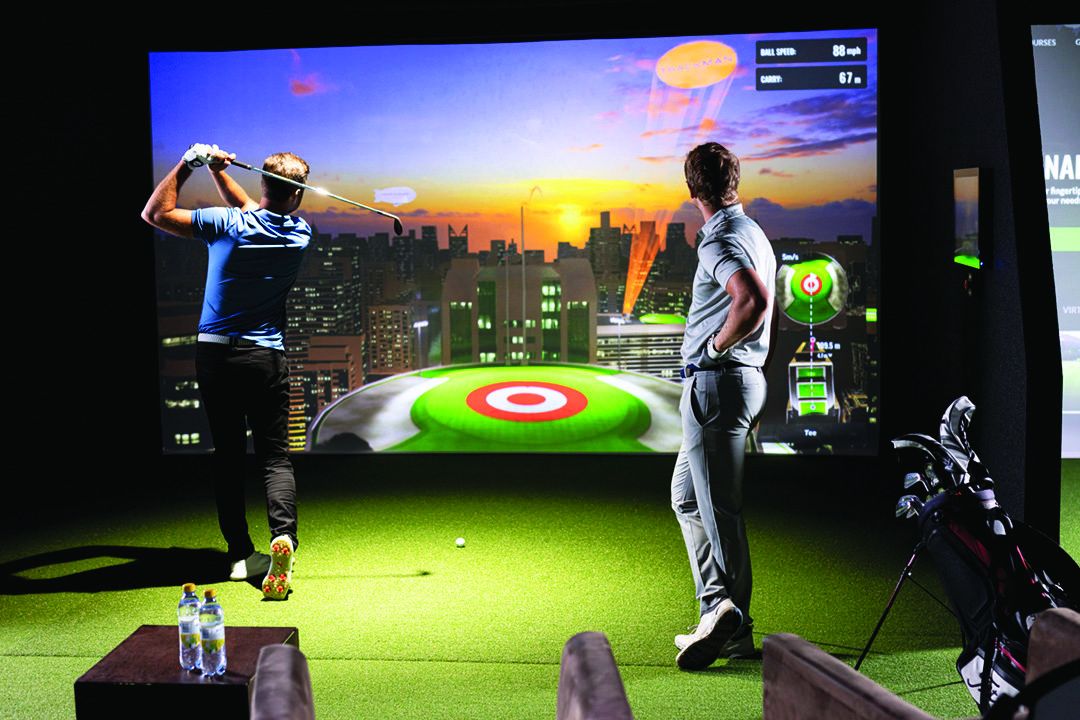
At Yankee Trace, the decision to invest in new technology followed problems with the facility’s original installation. The municipal golf course had installed three simulators in a spacious lower-level tornado shelter in 2019. Interest and usage were strong, but a subsequent software change introduced inaccuracies in yardage readings and ball-flight patterns. Customer service was slow, and the problems remained unresolved.
The introduction of Trackman iO, which can operate in a more limited amount of space, offered an opportunity to upgrade the technology without changing the existing location.
Steve Marino, administrator and PGA head professional, and Brian Fennen, PGA assistant professional, worked with city management to evaluate options and make the case for the new investment.
Their objectives included generating winter revenue, offering year-round golf and providing golfers with additional opportunities to improve their games. The technology also offers swing analysis, club-bag mapping, AI-assisted coaching and access to hundreds of virtual courses.
For both facilities, identifying the primary purpose of the space helped establish which features mattered most and how the investment would fit into the overall golf operation.
Beyond the simulator
Accuracy remains essential, but successful installation also depends on the surrounding environment, customer experience and operational requirements.
At Myers Park, Blaschak wanted the studio to feel elevated and special while remaining comfortable and functional for golfers of all skill levels. Accomplishing that vision required significant renovations, including reconfiguring the space, enclosing exposed ceiling pipes and installing a tongue-and-groove wood ceiling.
The work helped create an environment suited to regular instruction, club fitting and member use. Blaschak cautions clubs against cutting corners during construction. A well-designed space can remain an appealing amenity for years.
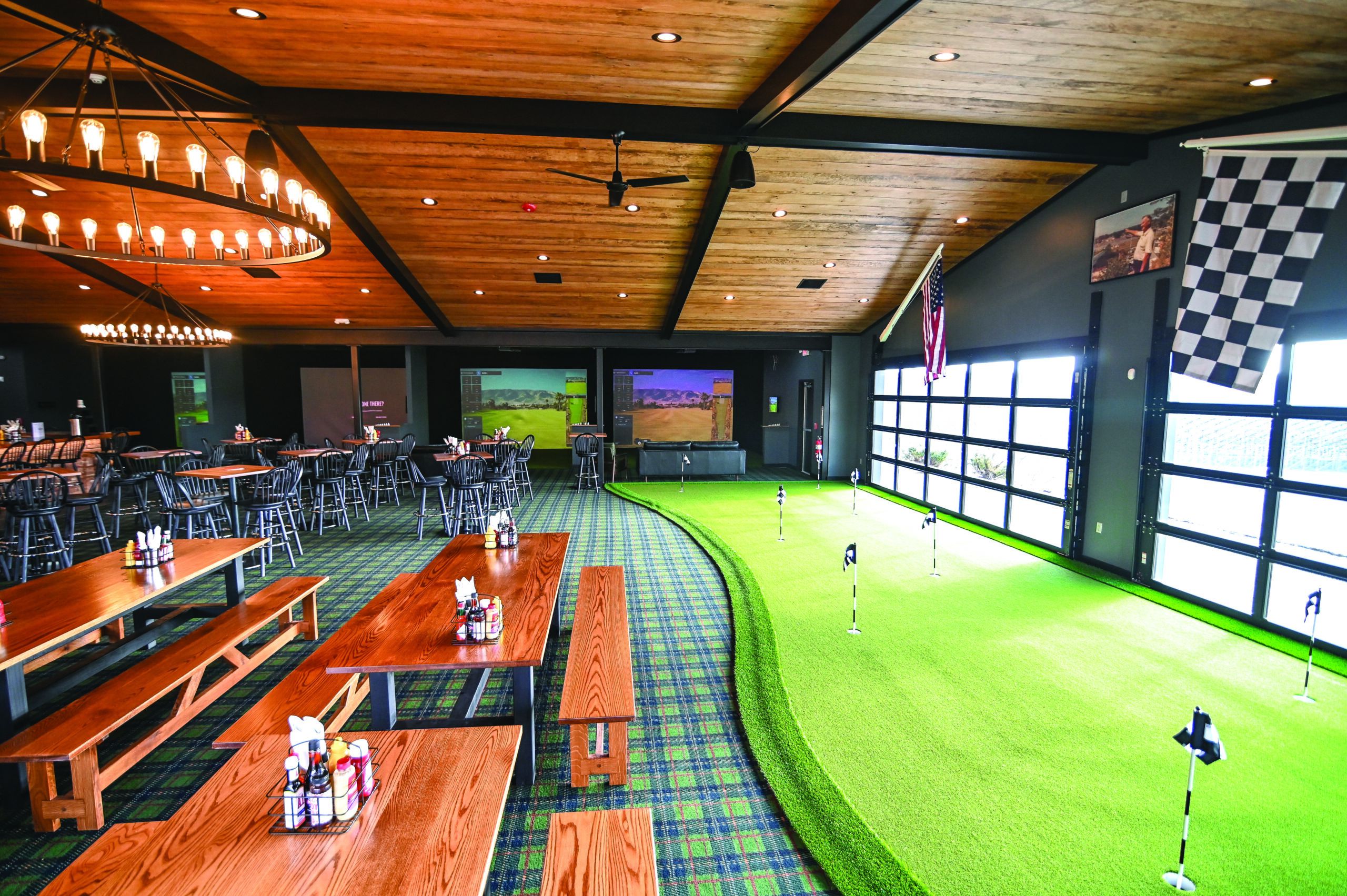
Raceway Golf Club took a different approach by incorporating four golf simulators into an approximately $850,000 clubhouse addition that expanded its restaurant space.
Mike Jezierski, PGA, head golf professional, said the club had discussed adding simulators for years to maintain golf-related revenue during the offseason while supporting food-and-beverage sales.
Raceway evaluated several options before selecting Trackman. The company’s reputation for accuracy, graphics quality, software updates and reliability helped distinguish it from competitors. The club also plans to add Trackman technology to its outdoor driving range.
Four bays fit the available space and, the club believed, could accommodate its established customer base during winter. Raceway also installed a racing simulator, connecting the new entertainment space with the facility’s motorsports identity.
For Jezierski, that broader experience is central to the investment’s potential. Standalone simulator businesses can struggle with seasonality and competition, he said, while combining indoor golf with dining, drinks and entertainment gives customers more reasons to visit.
“We’re getting much more, ‘Let’s go to Raceway for dinner and drinks,’ instead of just, ‘Let’s eat food after our round,’” he said.
The shift illustrates how simulator technology can support a facility’s existing business rather than operate as an isolated revenue source.
Realistic expectations
The financial case for simulator technology varies by facility. Some operators prioritize rental revenue, while others emphasize instruction, equipment sales, member satisfaction or increased spend-ing elsewhere on the property.
The replacement project at Yankee Trace was initially approved for $177,195.75 but ultimately increased to $186,195.75 when the existing projectors proved incompatible with the new equipment. Trackman worked with the facility to find a solution.
Evaluating infrastructure before finalizing a budget is incredibly important. Bay dimensions, projection systems and installation requirements can affect project costs, even when an existing space is being reused.
The original installation established a promising financial precedent, however. Fennen said the initial simulator investment, including improvements to the tornado shelter, was paid off in less than three years.
Yankee Trace charges $35 to $40 per hour and budgets for $45,000 in simulator rental revenue from November through mid-March. Its highest reported revenue reached $80,000, while the facility averages approximately $60,000 when all simulators are operating full time.
Those figures exclude additional food-and-beverage sales.
The new system also creates opportunities for online booking, simulator leagues and competitions connecting players around the world. The facility is preparing to implement Trackman’s booking software, which should help streamline reservations and provide additional information about usage.
At Raceway, the financial strategy focuses on the broader business. The simulators were intended primarily to strengthen winter revenue, but they have also been useful on rainy days, during hot weather and for junior programming. A discounted summer practice special provides another opportunity to encourage use during the traditional outdoor golf season.
Jezierski believes the key is developing a complete experience rather than relying exclusively on hourly simulator rentals.
Myers Park’s approach differs. Its primary objective is to enhance instruction, club fitting and member engagement, with additional equipment sales a potential longer-term benefit.
Each approach can work, provided operators establish realistic expectations and determine which measures best reflect success.
Turn tech into results
Once the technology is installed, staff training, vendor support and programming become essential to maximizing its value.
At Yankee Trace, ease of use was a priority because many customers were relatively new to simulator golf. Reliability and customer service also weighed heavily on the decision to switch vendors.
Fennen recommends evaluating the service organization behind the equipment, not just its technical capabilities.
“Go with a company that not only has the latest technology but has a local representative that can provide quality and timely service,” he said. He also encourages operators to visit facilities using the systems under consideration and gather feedback from golfers before committing.
Raceway has had challenges integrating simulator activity with food-and-beverage operations, educating employees about the technology and resolving occasional technical issues. These require coordination between departments and should be addressed during the planning process.
For Myers Park, the focus remains on ensuring the studio supports the club’s instructional and fitting priorities while providing an enjoyable member experience. The upcoming renovation shut-down will offer another opportunity to use the space as a dependable alternative to outdoor practice.
Across all three facilities, the advice is consistent: Establish the intended use, select technology that aligns with the facility’s goals, account for construction and ongoing support and develop a plan to encourage repeat use. The best simulator investment is not necessarily the one with the most bays or the longest list of features.
For Myers Park, that means elevating instruction and club fitting. For Yankee Trace, it means combining year-round access with a measurable winter business. For Raceway, it means making indoor golf part of a broader hospitality destination.
Different strategies, but one shared principle: Technology works best when the business plan comes first.
This article originally appeared in the November/December 2026 issue of Golf Inc.