

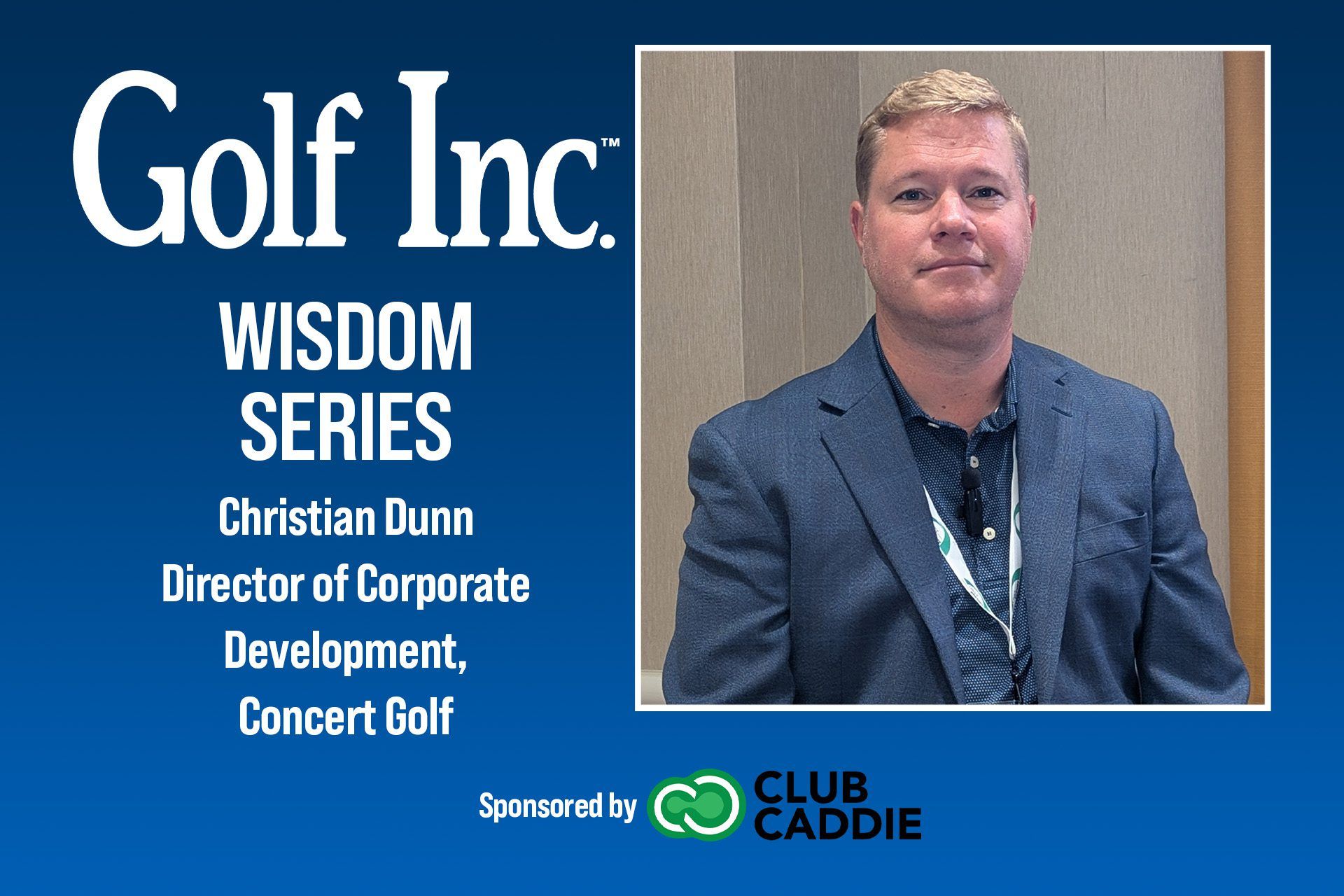
We sat down with Christian Dunn, director of corporate development for Concert Golf, at the Golf Inc. Summit in September 2025 and talked about private clubs, the current trends shaping them, how to preserve a club’s traditions while implementing modern improvements and more.
Full transcript below (lightly edited for clarity):
From your perspective, what’s the biggest trend shaping private clubs right now?
I think what we’re seeing primarily is a big shift towards family memberships. The old boys club golf world has dissipated a little bit. There’s a lot more amenities that are obviously geared towards family utilization. So I think from our perspective, big time, is the pickleball, fitness, health and wellness, junior golf, tennis programs, aquatics, and just a move maybe not away from golf, but to accommodate more different opportunities for our members to use the clubs.
When you look at a potential acquisition, what makes a club a good fit for Concert Golf?
We look at culture first. We want to make sure that clubs align with our goals long term. We certainly look from just a health of business standpoint. We want to have a flourishing membership for a long time. And so we pay attention to all those details. But a club and a membership that has history and aligns very much with Concert’s goals, I think, is first and foremost to us.
What’s one operational change you think more clubs should be making right now to remain financially healthy?
Call Concert Golf Partners. All kidding aside, there’s so many good experts in the field. I wouldn’t give myself a root canal. I’d leave that to the dentist. So I think in our field with all the resources we have, professional businesses that do this for a living all day and every day, sometimes when we look at the old-school, board-governed equity model, it just feels a little antiquated. And whether it’s Club Benchmarking gathering data or a professional organization like ourselves, I think there’s a lot of good resources out there. And so I’d say, especially to accommodate some of the additional amenities and the size and scope of the business versus just a golf club — which so many private clubs, which is our space — seem to be today, I think I would involve the professionals and kind of let them make your experience in life a little easier.
How do you strike a balance between preserving a club’s traditions and modernizing for today’s members?
I think that’s our proudest reputation. The culture that has been established at a club is what really makes it unique. And so when you look at the traditions, the programming, the social attendance at their functions, the golf tournaments, that’s the stuff that really makes the club desirable. That’s why people are members there, and that’s why they pay so much money to be a part of that family. So we focus really hard on, “What makes the club special? What makes it unique? And how do we make sure that we continue those traditions?”
The modernization piece is really important. I mean, right now in golf, we’re seeing a boom with everybody loves to talk about AI, but just simple things, tee sheet software, all of the different opportunities where you can incorporate, like I said, health and wellness into a club where it didn’t used to exist. And so just being familiar with all of the new era kind of functionality options at a club is really important. And I think that’s what members are looking for. I think if you talk to one of our membership directors, you’d find that when they give tours, 90% of the questions are coming from the woman in the household, not the traditional male golfer interested party. So being aware of what those opportunities look like, being aware of what your competitors are offering, it really helps clubs position themselves intelligently in the marketplace.
What are members asking for today that they weren’t five years ago?
Pickleball, pickleball and more pickleball. We’ve built or upgraded the racket interests, specifically pickleball or in the Northeast, paddle. So that’s a big one. I think health and wellness is another area of opportunity where it wasn’t quite a focus. I’d say those are probably the big two opportunities.